

Most advice about flea and tick prevention for dogs assumes every dog is the same: pick a monthly chew, give it on the first, done. In practice, an Australian Shepherd with a drug-sensitivity gene, a Lab who swims in the American River every weekend, a 9-week-old puppy, and a terrier with a history of seizures may each need a different plan. If you are looking for a vet near me who will tailor prevention to your dog instead of handing over whatever is on the shelf, this guide from Del Paso Veterinary Clinic in North Sacramento walks through the main product types, the risk factors that change the choice, and how to build a safe year-round plan.
Why One Product Does Not Fit Every Dog
Fleas, ticks, and heartworm are year-round concerns in the Sacramento Valley. Mild winters let fleas survive outdoors, mosquitoes breed in irrigation runoff and backyard water, and the Companion Animal Parasite Council notes that the western black-legged tick, which can carry Lyme disease and anaplasmosis, stays active through most of the year, with adults most likely to feed in the cooler months.
That part is simple: almost every dog needs protection all twelve months. The harder part is choosing which product. Three things drive the decision:
- Genetics. Some breeds carry a mutation that changes how certain drugs reach the brain.
- Medical history. A seizure disorder, skin allergies, or other conditions can rule some products in or out.
- Lifestyle. Age, swimming, bathing frequency, hiking, and whether cats share the home all matter.
For a broader overview of fleas, ticks, heartworm, and intestinal worms, our guide to parasite prevention for dogs covers the basics. This post goes deeper on the special cases.
The Main Types of Flea and Tick Prevention
| Product Type | How It Works | Covers | Water Exposure | Worth Knowing |
|---|---|---|---|---|
| Oral isoxazoline chews (afoxolaner, fluralaner, sarolaner, lotilaner) | Absorbed into the bloodstream; parasites die after biting | Fleas and ticks; some combination chews add heartworm and intestinal worms | Not affected by swimming or bathing | FDA label warning about neurologic reactions |
| Topical spot-ons (selamectin, fipronil, imidacloprid blends, permethrin blends) | Applied to the skin, spread through skin oils or absorbed | Varies widely by product | Many labels limit bathing or swimming around application | Permethrin products are toxic to cats |
| Medicated collars (imidacloprid and flumethrin) | Release active ingredients slowly over months | Fleas and ticks | Water resistant, but frequent swimming can shorten protection | Fit matters; must stay snug |
| Heartworm preventives (ivermectin, milbemycin, moxidectin) | Kill heartworm larvae picked up in the past month | Heartworm, often intestinal worms | Oral forms unaffected | Most flea and tick only products do not prevent heartworm |
Every option above is effective when used correctly. The goal is matching the right one to the dog in front of you.
1. Herding Breeds and the MDR1 Gene
What MDR1 Means
The MDR1 gene produces a protein that acts like a bouncer at the blood-brain barrier, pushing certain drugs back out of the brain. Dogs with the mutation have a faulty bouncer. Some medications then build up in the brain and cause drooling, wobbling, tremors, blindness, seizures, or coma. One copy of the mutation is enough to cause sensitivity, so there is no such thing as a harmless “carrier” here.
Which Breeds Are Affected
According to the Washington State University MDR1 testing program, the mutation shows up at these approximate rates:
| Breed | Approximate MDR1 Frequency |
|---|---|
| Collie | 70% |
| Australian Shepherd (standard and mini) | 50% |
| Long-haired Whippet | 50% |
| McNab | 30% |
| Silken Windhound | 30% |
| Chinook | 25% |
| English Shepherd | 15% |
| Shetland Sheepdog | 15% |
| German Shepherd | 10% |
| Herding breed cross | 10% |
| Old English Sheepdog | 5% |
| Mixed breed | 5% |
| Border Collie | Under 5% |
Mixed breeds matter more than people expect. A shelter dog with a merle coat or one blue eye could carry the gene without looking like a Collie at all.
What This Means for Parasite Prevention
The good news: WSU reports that the major heartworm preventives, including ivermectin, milbemycin, and moxidectin products, along with selamectin and the common oral isoxazoline chews, have been tested in MDR1 dogs and are considered safe at label doses. The danger comes from:
- Higher doses, such as ivermectin used off-label for mange
- Livestock dewormers, including horse paste, given at home
- Eating manure from recently dewormed horses, cattle, or sheep
- Non-parasite drugs, such as loperamide (Imodium) and some sedatives
A simple cheek-swab test tells you your dog’s status for life. If you own a herding breed or herding mix, testing is worth doing once and noting in every vet and boarding record.
2. Dogs With a Seizure History
The Isoxazoline Warning
In 2018, the FDA asked manufacturers of isoxazoline flea and tick products to add label warnings about muscle tremors, wobbliness, and seizures. The FDA fact sheet on isoxazoline products is clear on two points: most dogs never have a reaction, and these products remain approved as safe and effective. It also notes that seizures can occasionally occur in animals with no prior history.
How Vets Approach It
For a dog with epilepsy or past seizures, the conversation usually covers:
- How well the seizures are controlled and whether medication doses are stable
- Non-isoxazoline alternatives, such as certain topical products or medicated collars
- Exposure risk, since a heavily tick-exposed dog faces real danger from tick-borne disease too
- A seizure log before and after any new product, so changes are easy to spot
There is no single right answer. Some well-controlled epileptic dogs do fine on isoxazolines with monitoring, while others are better served by a different class. This is exactly the kind of decision that should never be made from a pet store shelf.
3. Puppies
Age and Weight Minimums
Every product has a label minimum for age and weight, and they vary a lot. Some products can start around 6 to 8 weeks, while others are not approved until a puppy is several months old. Our clinic typically starts prevention as early as 8 weeks, depending on the product and the puppy’s size.
Heartworm Starts Early Too
The American Heartworm Society recommends starting heartworm prevention as early as the label allows and no later than 8 weeks of age. Puppies under 7 months can begin without a heartworm test, because an infection takes about six months to show up on a test. A first heartworm test for dogs then follows around 7 months of age, and yearly after that.
Puppy Tips That Prevent Mistakes
- Weigh before every dose. Puppies can jump a weight band in a few weeks.
- Never split adult-dog products. The drug is not always spread evenly through a tablet or tube.
- Pair prevention with deworming. Puppies are commonly born with roundworms passed from their mother.
- Line it up with vaccine visits. Booster appointments are a natural time to adjust doses.
Our guide to puppy vaccinations near me lays out the first-year visit schedule, which works well as a parasite prevention calendar too.
4. Swimmers and Frequently Bathed Dogs
Does Water Wash Prevention Away?
It depends on the product. Oral chews work from the bloodstream, so swimming and bathing have no effect. Many topical spot-ons need a dry window around application, and some lose strength with frequent water exposure. Collars are generally water resistant, but dogs who swim several times a week may need replacement sooner than the label interval.
For Labs, retrievers, doodles, and any dog who heads straight for the river, an oral product often makes the most sense. The same applies to dogs who are bathed weekly for skin conditions or grooming.
The Environmental Side
There is another reason to think twice about topicals for swimmers. California’s Department of Pesticide Regulation has been studying fipronil and imidacloprid, two common spot-on ingredients, after detecting them in wastewater across the state. Pet products account for more than half of the fipronil sold in California, and residues wash off during baths and swims. Choosing an oral option for a water dog protects local creeks and rivers as well as your dog.
Swimmers Need Lepto Protection Too
Dogs who swim in rivers, ponds, or standing water also face leptospirosis, a bacterial infection spread through water contaminated by wildlife urine. It is not a parasite, but it belongs in the same conversation. Read our guide to the lepto vaccine for dogs if your dog spends time in the water.
5. Hikers and Trail Dogs
Dogs who hike the American River Parkway, the foothills, or Tahoe trails face more ticks than backyard dogs. Strong tick control in Sacramento for these dogs usually means a product with a fast tick kill, plus a hands-on tick check after every outing. Check ears, armpits, between toes, under the collar, and around the tail. Spring hikes bring foxtails as well, so our guide to foxtail season in Sacramento is worth a read for outdoor dogs.
6. Homes With Cats
If a cat shares the home, avoid permethrin-based dog products unless your vet specifically approves it. Cats cannot break down permethrin, and even close contact with a freshly treated dog can cause tremors and seizures in a cat. Oral products for the dog avoid the issue entirely.
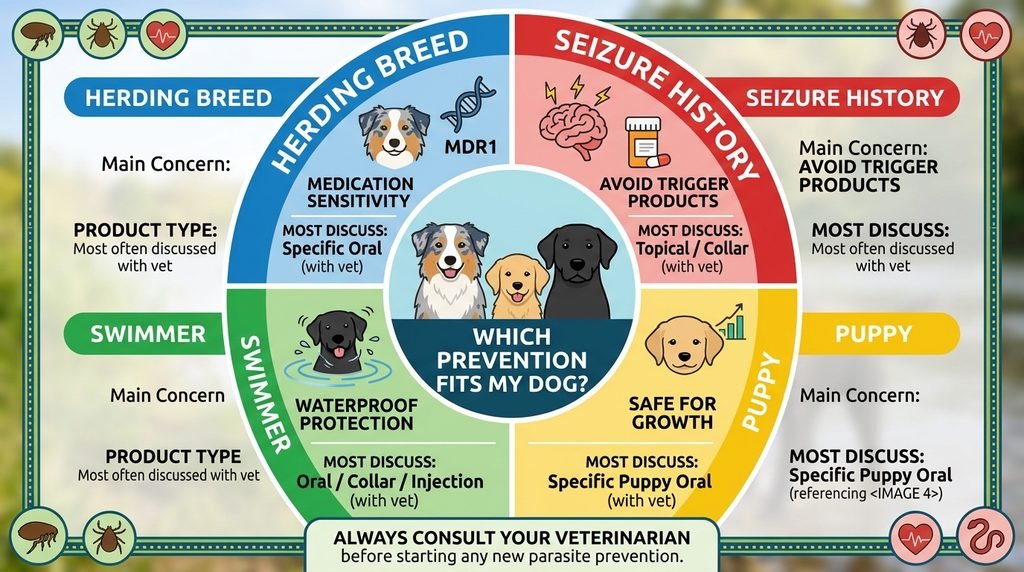
Quick Comparison by Dog Profile
| Dog Profile | Main Concern | Options Often Discussed | Extra Step |
|---|---|---|---|
| Herding breed or merle mix | MDR1 drug sensitivity | Label-dose preventives confirmed safe for MDR1 dogs | One-time MDR1 cheek-swab test |
| Seizure history | Isoxazoline neurologic warning | Non-isoxazoline topicals or collars, or isoxazolines with monitoring | Keep a seizure log |
| Puppy under 6 months | Age and weight minimums | Products labeled for young puppies | Weigh before each dose |
| Swimmer or weekly bath | Topicals washing off | Oral chews | Lepto vaccine discussion |
| Hiker | Heavy tick exposure | Fast tick-kill products | Tick check after every outing |
| Lives with cats | Permethrin toxicity | Oral products | Read every label |
Natural Remedies and Over-the-Counter Products
Plenty of owners ask about coconut oil, essential oils, and garlic. Our article on does coconut oil kill fleas goes through the evidence, but the short version is that none of these offer reliable flea or tick protection, and some essential oils are toxic to pets. Over-the-counter products can work, but they vary in quality and are easy to misdose, especially for small dogs, puppies, and breeds with special sensitivities. Veterinary-grade parasite prevention medication for dogs is dosed by weight and chosen with your dog’s history in mind.
When Fleas Cause Skin Problems
Some dogs react to a single flea bite with intense itching, hair loss over the lower back and tail base, scabs, and hot spots. This is flea allergy dermatitis, one of the most common skin problems vets see. These dogs need prevention that kills fleas quickly and consistently, with no gaps. If your dog is still itchy on prevention, our animal dermatology service can look for other causes, such as environmental or food allergies.
Case Study: Building a Plan for a Complicated Dog
The example below is a composite based on how these cases commonly unfold in general practice. It does not describe a specific patient.
The dog: A 4-year-old Australian Shepherd mix adopted from a shelter, with two seizures in the past year now controlled on daily medication. The family hikes most weekends and the dog swims in the river all summer. A cat lives in the home.
The concerns: Possible MDR1 mutation, seizure history, frequent swimming, heavy tick exposure, and a cat sharing the house.
The plan:
- MDR1 cheek-swab test submitted at the first visit
- A non-isoxazoline option discussed first because of the seizure history, with the owner keeping a seizure log
- Permethrin products ruled out because of the cat
- A water-resistant collar chosen, with a reminder to check fit and replace early if swimming is frequent
- Monthly heartworm prevention at label dose, plus a lepto vaccine discussion
- Tick checks after every hike, with any attached ticks saved for identification
The takeaway: No single product would have suited this dog off the shelf. Ten minutes reviewing history and lifestyle produced a plan that addressed every risk without adding new ones.
Building Your Dog’s Year-Round Plan
A good plan answers five questions:
- Which parasites does my dog actually face? Fleas, ticks, heartworm, and intestinal worms all need coverage.
- Are there genetic or medical limits? MDR1 status, seizures, skin disease, and age.
- How does my dog live? Swimming, hiking, boarding, dog parks, and other pets.
- Which format will I actually give on time? A product you remember beats a perfect one you forget.
- When is the next test? Annual heartworm testing and fecal checks confirm the plan is working.
Our heartworm prevention near me service includes in-house heartworm testing with same-day results, annual fecal testing, and veterinary-grade products available at our on-site pharmacy, so the whole plan can come together in one visit.
Talk to Dr. Khabra About Your Dog’s Prevention Plan
Dr. Khabra brings 18 years of veterinary experience to every parasite prevention visit and will review your dog’s breed, history, and routine before recommending a product. We serve families in Del Paso Heights, North Sacramento, Natomas, Arden-Arcade, West Sacramento, and surrounding neighborhoods. New to the clinic? Visit our new patient center, call (916) 925-2107, or stop by 924 Del Paso Blvd, Sacramento, CA 95815.
Frequently Asked Questions
-
What is the safest flea and tick prevention for dogs?
There is no single safest product for every dog. The safest flea and tick prevention for dogs is the one matched to your dog’s age, weight, breed, medical history, and lifestyle, then given on schedule at the correct dose. A healthy adult Lab, a puppy, and an epileptic Collie may each be best served by a different product. Your veterinarian can review your dog’s records and recommend an option that balances parasite protection against individual risk.
-
Is flea and tick prevention safe for dogs with the MDR1 mutation?
Yes, when the right products are used at label doses. Washington State University reports that common heartworm preventives and widely used flea and tick chews have been tested in MDR1 dogs without problems at label doses. The danger comes from higher doses, livestock dewormers, eating manure from dewormed animals, and certain non-parasite drugs. Testing your herding breed once with a cheek swab removes the guesswork for every future prescription.
-
Can dogs with seizures take flea and tick medicine?
Many can, but the choice needs care. Isoxazoline products carry an FDA label warning about possible tremors, wobbliness, and seizures, so vets often consider non-isoxazoline topicals or collars first for dogs with a seizure history. Some well-controlled epileptic dogs still use isoxazolines safely with close monitoring. Keep a seizure log before and after any new product, and report any change to your veterinarian right away.
-
When can puppies start flea and tick prevention?
It depends on the product. Some are labeled for puppies from about 6 to 8 weeks of age, while others require a puppy to be several months old or reach a minimum weight. Heartworm prevention should begin no later than 8 weeks. Because puppies grow quickly, weigh them before every dose and never split a product made for adult dogs. Your vet can line up doses with vaccine visits during the first year.
-
Does swimming wash off flea and tick prevention?
Oral chews are not affected by swimming or bathing because they work from inside the body. Many topical spot-ons need a dry window around application and may weaken with frequent water exposure, while collars are water resistant but can wear out faster in dogs who swim often. For water-loving dogs or those bathed weekly, an oral option is usually the most reliable. Always check the specific label for bathing guidance.
-
Do dogs in Sacramento need flea and tick prevention all year?
Yes. Sacramento’s mild winters let fleas survive outdoors year-round, mosquitoes that carry heartworm stay active in many months, and western black-legged ticks are often most active in the cooler season. Stopping prevention in winter leaves gaps that fleas and ticks easily exploit. The Companion Animal Parasite Council recommends year-round, lifelong protection, and our clinic follows the same approach for every dog.
The best flea and tick plan is not the most popular product on the shelf; it is the one built around the dog who will actually wear it.