
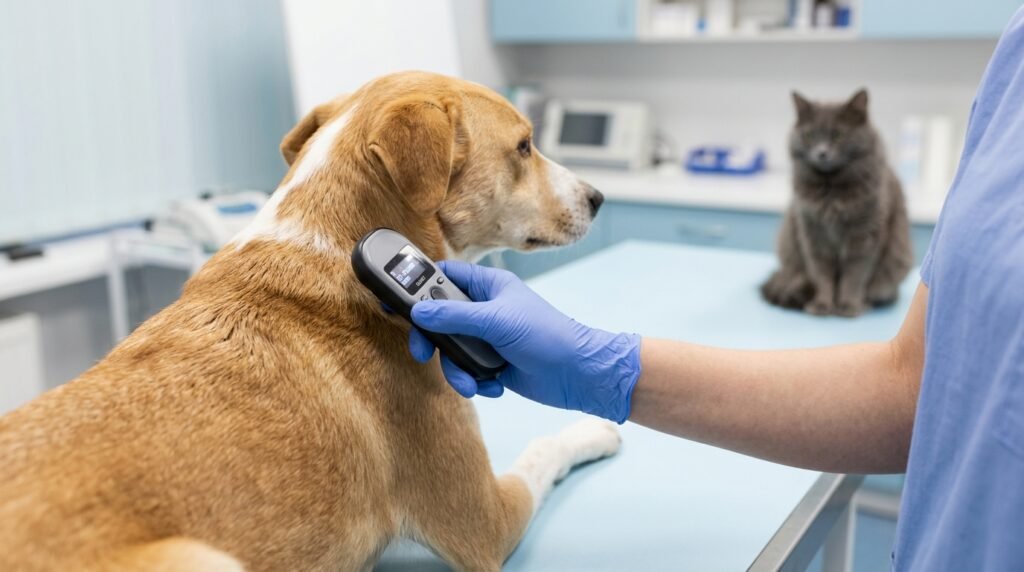
A microchip is only as useful as the information attached to it. Thousands of chipped pets end up in shelters every year with chips that point to an old phone number, a previous owner, a rescue group, or nothing at all. A pet microchip lookup takes about two minutes and tells you which registry holds your pet’s chip, so you can confirm it is registered to you and that your details are current. If you are searching for a veterinary clinic near me that can scan your pet and help sort out a confusing chip record, this guide from Del Paso Veterinary Clinic in North Sacramento walks through checking, registering, and updating a chip, plus what to do if you find a lost pet.
How Pet Microchips and Registries Work
A pet microchip is a passive transponder about the size of a grain of rice, usually placed under the skin between the shoulder blades. It has no battery and no GPS. When a scanner passes over it, the chip sends back a single ID number. That is all it stores.
The number means nothing until it is linked to you in a registry database. There is no single national registry in the United States. Instead, dozens of private companies keep their own databases, and a chip from one manufacturer can be registered with a different company entirely. This is why so many chips fail to bring pets home.
The numbers show how much registration matters. In a large study of 7,704 stray animals at 53 shelters, published in the Journal of the American Veterinary Medical Association and cited by the AVMA, microchipped dogs returned home 52.2 percent of the time compared with 21.9 percent for dogs without chips. For cats the gap was even larger: 38.5 percent versus 1.8 percent. Yet only 58.1 percent of the chips shelters looked up were actually registered, and the most common reason owners could not be reached was a wrong or disconnected phone number.
What a Pet Microchip Lookup Actually Does
The best-known tool is the free AAHA Universal Pet Microchip Lookup, run by the American Animal Hospital Association. You enter a chip number and it searches the databases of participating registries, then lists which ones have that chip on file.
It is important to understand what the tool does and does not do:
| The AAHA Lookup Will | The AAHA Lookup Will Not |
|---|---|
| Show which participating registries have the chip on file | Show the owner’s name, phone, or address |
| Show the most recent registration update first | Let you register or edit your details |
| Point to the manufacturer if the chip was never registered | Search registries that have chosen not to participate |
| Help shelters and vets know who to call | Track your pet’s location |
AAHA also notes that some chips, particularly those starting with 900, may not trace back to a single provider. For those, the registry that sold the chip or the clinic that implanted it is often the best lead.
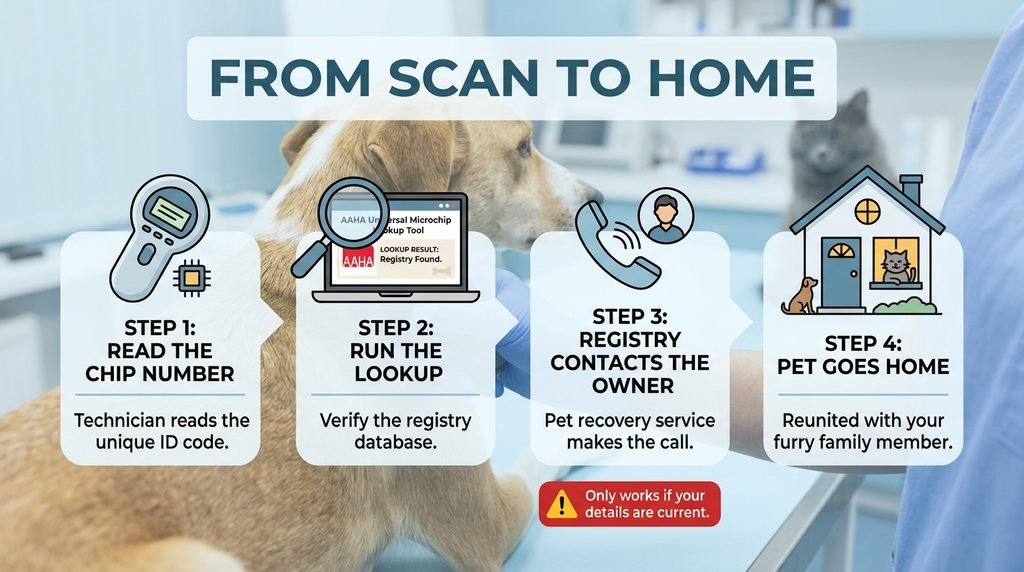
Step-by-Step: How to Check Your Pet’s Microchip
Step 1: Find the Chip Number
You likely already have it somewhere. Check:
- Adoption paperwork from a shelter or rescue
- Breeder documents or the puppy or kitten packet
- Vaccine certificates and vet records
- The sticker sheet that came with the chip when it was implanted
If you cannot find it, any veterinary clinic or shelter with a scanner can read it. At Del Paso, our team scans pets during wellness visits and can give you the number on the spot.
Step 2: Run the Number Through the Lookup
Enter the full number with no spaces or dashes. Most chips implanted in the US today are 15 digits long, while older chips may be 9 or 10 digits or include letters. If the lookup returns a registry, write down its name.
Step 3: Contact That Registry
Log in or call the registry listed. Confirm that:
- Your name is listed as the owner
- Your current mobile number and email are correct
- Your home address is current
- At least one backup contact is listed, such as a family member or neighbor
Step 4: Fix What Is Missing
If the chip comes back registered to a shelter, rescue, breeder, or previous owner, ask that registry about transferring ownership. If it comes back unregistered, register it with the manufacturer’s registry or another reputable one.
Step 5: Set a Yearly Reminder
The AVMA and AAHA promote August 15 as Check the Chip Day. Pick that date, or your pet’s birthday, and recheck the record every year.
Dog Microchip Lookup vs Cat Microchip Lookup
The process is identical for dogs and cats. The same chips, scanners, registries, and lookup tools apply to both. The difference is in how often owners skip it.
Many people microchip a dog but assume an indoor cat does not need one. Cats slip out open doors during deliveries, moves, and house guests, and they rarely wear collars. A chip that is registered and current is often a lost cat’s only ticket home, which is exactly why the reunion gap between chipped and unchipped cats in that shelter study is so large.
Understanding Chip Numbers and Scanner Frequencies
Not every chip reads the same way, which matters if you ever buy a pet microchip scanner or travel internationally.
| Chip Type | Typical ID Format | Frequency | Notes |
|---|---|---|---|
| ISO standard | 15 digits | 134.2 kHz | International standard and the most common type in US pets today |
| Older 125 kHz chips | 9 or 10 characters | 125 kHz | Some are encrypted and need a compatible scanner |
| 128 kHz chips | 10 characters | 128 kHz | Less common; still found in some older pets |
According to an Ohio State University fact sheet, the US market historically used several frequencies and encryption methods at once, which is why universal scanners that read all of them became essential for vets and shelters.
Can You Use a Phone or Home Scanner?
A smartphone cannot read a pet microchip. Phones use NFC at a much higher frequency than pet chips, so no app can scan one, no matter what its description says. Consumer handheld scanners do exist, and some owners and rescue volunteers buy them, but a cheaper model may miss older or encrypted chips. For a reliable read, a veterinary clinic or shelter with a universal scanner is the safest option.
Why Scans Sometimes Miss a Chip
- Chip migration. A chip can shift away from the shoulder blades over time. Scanners should sweep the shoulders, sides, and legs.
- Scanning too fast. A slow, overlapping pattern works best.
- Thick coats or wriggling pets. Both can weaken the signal.
- Rare chip failure. Uncommon, but a reason to have your vet confirm the chip reads at each visit.
How to Register or Update Your Pet’s Microchip
Registering a New Chip
When a chip is implanted, you receive the number and the manufacturer’s registration details. Register the same day if possible. Clinics give you the information, but the owner completes the registration, so do not assume someone else has done it. The same goes for breeders who microchip dog and cat litters before sale: buyers should get the chip number and transfer instructions in writing.
If you are adding a chip at the same time as another procedure, many families pair it with a spay or neuter. Our cat neuter near me service can place a chip while your pet is already under anesthesia for surgery.
When to Update Your Details
Update your microchip registration whenever any of these change:
- You move, even across town
- You change your phone number or email
- You adopt a pet with a chip already registered to someone else
- You rehome a pet
- A listed backup contact changes their number
Adopted a Pet? Transfer the Chip
Shelter and rescue pets often arrive chipped and registered to the organization. Some groups transfer it for you, others hand you paperwork and leave it to you. Since a 2020 law, California requires public and private shelters to microchip dogs and cats before adoption or return to an owner, with limited exceptions, so most pets adopted in the Sacramento area should already have a chip. Run a lookup within a week of adoption to confirm the registration is in your name. Our guide to booking your first vet visit explains what else to bring and check at that first appointment.
Found a Lost Pet? What to Do Next
If a dog or cat shows up at your door, a microchip check is the fastest way to find the owner.
- Check for a tag. A collar tag with a phone number is still the quickest route home.
- Get the pet scanned. Most vet clinics and shelters will scan a found pet. Our guide to finding a walk in vet near me can help if you need a clinic quickly.
- Run the lookup. Enter the chip number in the AAHA tool and note the registry.
- Call the registry. Registries will not usually give out the owner’s details, but they will contact the owner for you.
- Report the found pet locally. In Sacramento, that means contacting Front Street Animal Shelter for city addresses or Bradshaw Animal Shelter for unincorporated Sacramento County, plus posting on local lost-and-found groups.
California law requires shelters to scan stray dogs and cats for a microchip and make reasonable efforts to contact the owner, so a shelter report is never wasted.
| If You Lost a Pet | If You Found a Pet |
|---|---|
| Call your microchip registry and report the pet missing | Get the pet scanned at a vet or shelter |
| Confirm your phone number is current | Run the chip number through the AAHA lookup |
| Contact Front Street and Bradshaw shelters | Call the registry so they can reach the owner |
| Visit shelters in person, since descriptions can be inaccurate | File a found report with the local shelter |
| Alert nearby vet clinics | Keep the pet safe and separate from your own pets |
Case Study: A Chip That Pointed to the Wrong Person
The example below is a composite based on how these cases commonly unfold in general practice. It does not describe a specific patient.
The situation: A family adopted a 3-year-old cat from a rescue and assumed the chip was taken care of. Eighteen months later, the cat slipped out during a move.
What happened: A neighbor found the cat and took it to a local clinic, where it was scanned. The lookup showed the chip was still registered to the rescue, whose old phone line had been disconnected. The clinic posted a found notice, and the family eventually reunited with the cat after nearly a week of searching shelters.
What fixed it: At the next visit, the clinic helped the family confirm the chip number. The family transferred the registration, added two backup contacts, and set an annual reminder.
The takeaway: The chip worked perfectly. The record did not. A two-minute pet microchip lookup right after adoption would have turned a week of searching into a same-day phone call.
Where to Microchip a Pet in Sacramento
If your pet is not chipped yet, the procedure is quick and done with a needle similar to a vaccine, with no anesthesia required. For a deeper look at the procedure, placement, and comparisons with tags and GPS collars, read our guide on how to microchip a pet in Sacramento.
Many owners add a chip to an existing appointment so it does not require a separate trip. A chip can go in during a vaccine visit through our cat vaccinations near me service, and existing chips are scanned to confirm they still read during pet wellness exams.
Get Your Pet’s Chip Scanned or Placed at Del Paso
Our pet microchipping near me service uses ISO-standard microchips for dogs and cats, and Dr. Khabra and our team verify every chip with our scanner before you leave. We also scan existing chips, give you the number, and help you check that your details are on file. We serve families in Del Paso Heights, North Sacramento, Natomas, Arden-Arcade, West Sacramento, and nearby neighborhoods. Call (916) 925-2107 or visit 924 Del Paso Blvd, Sacramento, CA 95815.
Frequently Asked Questions
-
How do I look up my pet’s microchip number?
Find the chip number in your adoption papers, breeder documents, or vet records, then enter it into the free AAHA Universal Pet Microchip Lookup. The tool shows which participating registry has the chip on file, but it will not display owner details. Contact that registry directly to confirm your information. If you cannot find the number, a veterinary clinic or shelter can scan your pet and give it to you in a few seconds.
-
Can a pet microchip lookup show the owner’s information?
No. Lookup tools like AAHA’s only show which registry holds a chip, not the owner’s name, phone number, or address. This protects owners’ privacy. If you found a pet, call the registry listed in the results and give them the chip number. The registry will then contact the owner directly. Vets and shelters follow the same process, so the owner’s contact details stay private throughout.
-
How do I update my dog’s or cat’s microchip information?
Run your pet’s chip number through a lookup tool to confirm which registry holds the record, then log in to that registry’s website or call them. Update your phone number, email, and address, and add at least one backup contact. If the chip is still registered to a shelter, rescue, or previous owner, ask the registry about a transfer of ownership. Recheck the record once a year and after every move.
-
Can my phone scan a pet microchip?
No. Smartphones read NFC tags at a much higher frequency than pet microchips use, so no phone or app can detect a pet chip. To read a chip, you need a dedicated pet microchip scanner. Veterinary clinics and animal shelters use universal scanners that read all common chip frequencies in the US, which makes them the most reliable place to have a chip checked for a lost or newly adopted pet.
-
What if my pet’s microchip is not registered anywhere?
If the lookup returns no registry or only the manufacturer, the chip was likely never registered. Contact the manufacturer listed, or the clinic, shelter, or breeder that implanted it, to find out how to register it in your name. If you cannot trace it at all, you can register the existing number with a reputable registry. Ask your vet to confirm the number first so the record matches the chip.
-
Do indoor cats need a microchip?
Yes. Indoor cats slip out during moves, deliveries, and visits more often than most owners expect, and they rarely wear a collar or tag. A registered microchip gives a lost cat a permanent ID that shelters and vets can read. In a large shelter study, microchipped cats went home 38.5 percent of the time compared with only 1.8 percent for cats without chips, which shows how much difference one small chip makes.
A microchip brings a pet home only when the record behind it is current, so check yours today and again every year.