
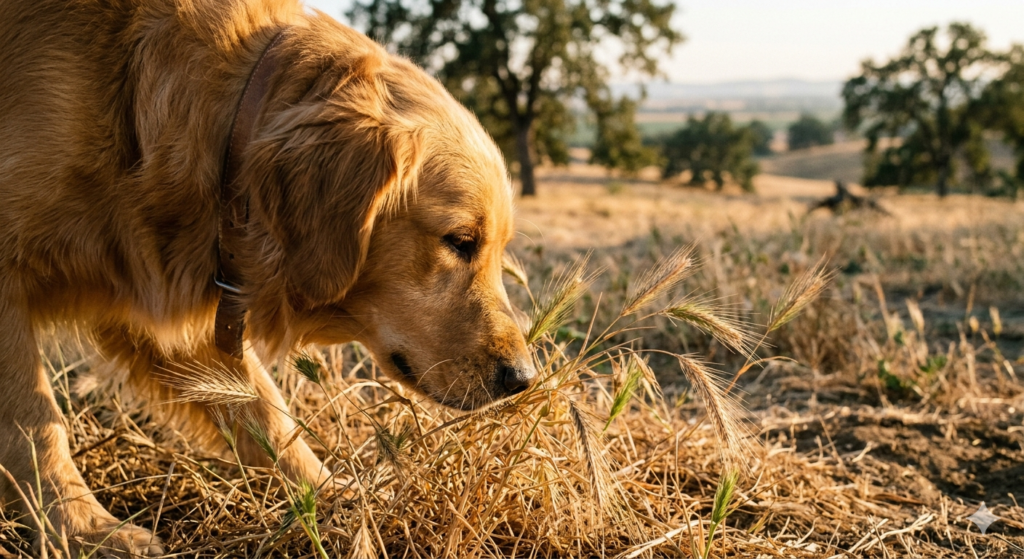
Every summer in Sacramento, veterinary clinics see a sharp rise in one specific type of visit: foxtail injuries. These small, barbed grass seed heads grow everywhere across the Central Valley, and they cause more pet emergency Sacramento visits between May and October than most owners would ever guess. At Del Paso Veterinary Clinic, Dr. Khabra and the team treat dozens of foxtail cases each season, and many of those cases could have been avoided with earlier action or a simple post-walk body check.
This guide breaks down what foxtails actually are, why Sacramento’s climate makes them especially dangerous, where they grow in your neighborhood, and exactly when a foxtail goes from a minor nuisance to a genuine veterinary emergency.
What Are Foxtails and Why Sacramento Dogs Face Higher Risk
Foxtails are the seed heads of several wild barley and brome grass species that are native to California. They look like small, bristled arrows, usually between half an inch and two inches long. Each seed head has microscopic barbs that point in one direction, which means the seed can only move forward once it attaches to fur, skin, or soft tissue. It cannot back out on its own.
Sacramento sits in the middle of some of the most foxtail-dense geography in the country. The combination of hot, dry summers and mild, wet winters creates ideal growing conditions for the wild grasses that produce foxtail seeds. By mid-May, those grasses have dried out and the seed heads begin to detach. From that point through late September, foxtails are loose, airborne, and waiting in every undeveloped lot, trail edge, and patch of unmowed grass in the region.
Unlike burrs or other sticky seeds that sit on the surface of a dog’s coat and cause mild irritation, foxtails actually burrow. The barbed design means that body heat, movement, and moisture all push the seed deeper into tissue. A foxtail that enters the ear canal on Monday can reach the eardrum by Wednesday. One that slips between the toes can travel up the leg within days. And a foxtail inhaled through the nose can migrate toward the lungs.
This is not a theoretical risk. According to the UC Davis School of Veterinary Medicine, foxtail migration injuries are among the most common warm-weather emergencies in Northern California veterinary practices.
Where Foxtails Hide in Sacramento Parks and Neighborhoods
Foxtails grow in predictable places, and knowing where to look is the first step in protecting your dog.
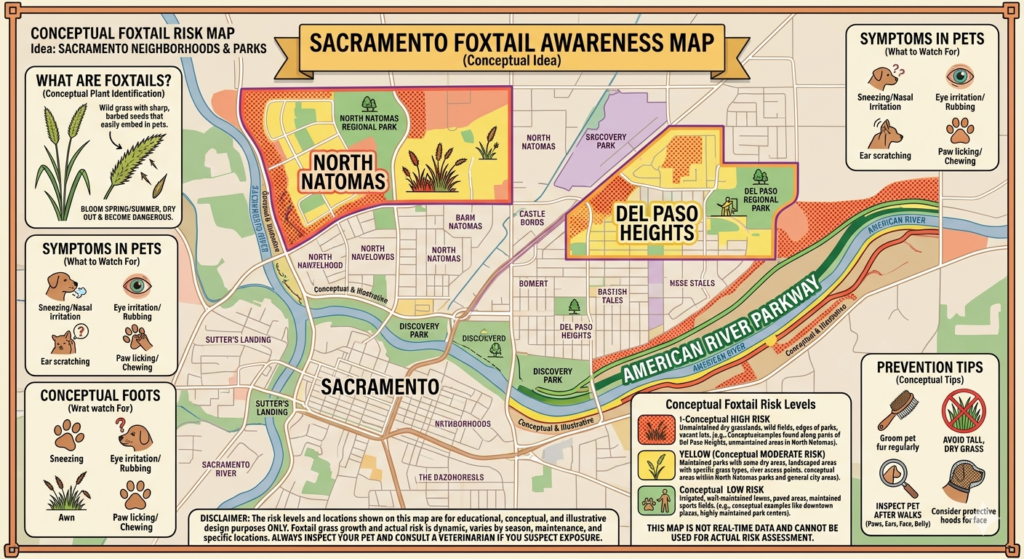
- Undeveloped lots and roadside margins. Any unmowed strip along Del Paso Boulevard, Norwood Avenue, or the American River levee system is likely loaded with foxtails by June.
- Trail edges at local parks. Woodlake Park, Haggin Oaks, North Natomas Regional Park, and the American River Parkway all have stretches where maintained trail meets wild grass. Dogs that wander even a few feet off-trail are walking through prime foxtail territory.
- Backyards with ornamental grasses. Some common landscaping grasses, including fountain grass and feathertop, produce seed heads that act almost identically to wild foxtails.
- Open fields and levee paths. The Sacramento River and American River levees are popular walking routes, and they are lined with dried grass for months each year.
- Dog parks with unmanaged perimeters. Even well-maintained dog parks often have unmowed edges or adjacent vacant land where foxtails grow freely.
How Foxtails Enter Your Pet’s Body
Foxtails do not need an open wound to cause damage. They are designed by nature to penetrate, and they do it remarkably well.
Ears
This is the most common entry point. A foxtail drops into the ear canal while a dog runs through tall grass, and the barbs prevent it from falling back out. Within hours, the dog begins shaking its head, pawing at the ear, or tilting to one side. Left untreated, the foxtail can puncture the eardrum and cause a deep middle-ear infection.
Nose
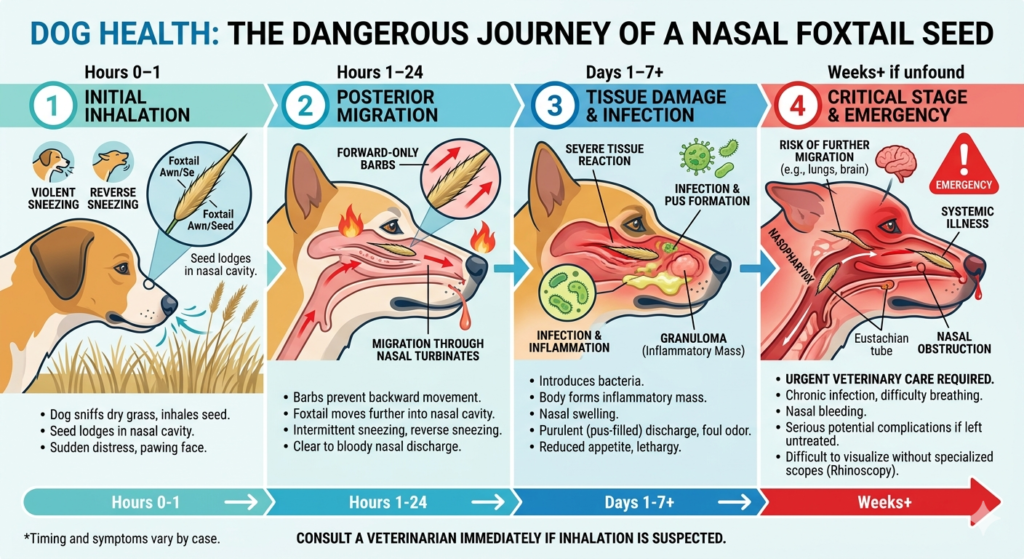
Dogs that sniff along the ground in foxtail-heavy areas can inhale a seed directly into the nasal passage. The result is sudden, violent sneezing, often with blood. Nasal foxtails are painful and almost never resolve on their own. They require sedation and scoping to remove.
Eyes
A foxtail that lodges under the third eyelid or against the cornea causes immediate redness, swelling, tearing, and squinting. If the seed scratches the cornea, it can lead to an ulcer that threatens your dog’s vision. Eye foxtails are a true emergency.
Paws
Between-the-toes foxtails are sneaky. A dog may start limping slightly, licking one paw, or developing a small swelling between the toes. The problem is that paw foxtails travel. They can migrate up the leg, into the chest wall, or toward internal organs if they are not removed early.
Skin and Underbelly
Long-coated and double-coated breeds are especially vulnerable. Foxtails attach to the belly, groin, armpits, and genital area, then work their way through the skin and into the subcutaneous tissue. These often show up as small abscesses that drain and heal, then reappear, because the foxtail is still inside and still moving.
Warning Signs That Your Pet Has a Foxtail Problem
Recognizing symptoms early is the difference between a quick removal and a complicated surgery. Here is what to watch for based on where the foxtail has entered.
| Entry Point | Early Symptoms | Delayed/Advanced Symptoms | Urgency Level |
|---|---|---|---|
| Ear | Head shaking, ear scratching, head tilt | Discharge, odor, hearing loss, balance issues | High |
| Nose | Sudden sneezing fits, bloody nasal discharge | Chronic sneezing, facial swelling, nasal infection | High |
| Eye | Squinting, tearing, redness, pawing at face | Corneal ulcer, swelling shut, vision damage | Emergency |
| Paw | Limping, licking between toes, small swelling | Draining abscess, swelling up the leg | Moderate to High |
| Skin/Underbelly | Red bump, localized swelling, licking one area | Recurring abscess, draining tract, fever | Moderate |
| Inhaled/Internal | Coughing, lethargy, loss of appetite | Persistent cough, fever, organ infection | Emergency |
If your dog shows any combination of these symptoms after spending time outdoors during foxtail season, do not wait to see if it gets better. A foxtail will not dissolve, and it will not work its way out. It only goes deeper.
Case Study: Bella the Lab Mix and a Foxtail in the Nasal Passage
In July 2025, a Sacramento family brought their four-year-old Labrador mix, Bella, to the clinic after she started sneezing uncontrollably during a walk along the American River Parkway near Discovery Park. The sneezing began within seconds of Bella pushing her nose into a patch of dried grass beside the trail.
By the time the family got Bella home, the sneezing had slowed but there was blood on the floor. They called Del Paso Veterinary Clinic and described the symptoms. Dr. Khabra recommended bringing Bella in right away.
Under sedation, a rhinoscopy revealed a single foxtail lodged approximately three centimeters into Bella’s left nasal passage. The barbs had already begun irritating the mucosal lining, and the tissue was inflamed. Dr. Khabra removed the foxtail intact using endoscopic forceps. Bella was sent home with a short course of anti-inflammatory medication and made a full recovery within five days.
The family later mentioned that they walk the parkway three or four times a week and had never thought about foxtails before. That one visit changed their routine. They now check Bella’s nose, ears, and paws after every walk from May through September.
When a Foxtail Becomes a Pet Emergency in Sacramento
Not every foxtail encounter requires emergency care, but several situations absolutely do. Knowing the difference can save your dog’s life and spare you a much larger veterinary bill.
Seek immediate care if your dog shows:
- Sudden, violent sneezing with blood, especially after outdoor activity
- An eye that is swollen shut, producing heavy discharge, or visibly red and painful
- Rapid swelling between the toes or along the leg that develops within hours
- Persistent coughing or difficulty breathing after running through dry grass
- Fever, lethargy, and loss of appetite following any known or suspected foxtail exposure
Sacramento pet owners searching for an urgent care vet near me should know that same-day appointments are available for exactly these situations. Foxtail injuries worsen quickly, and early intervention almost always means a simpler, faster, and less invasive removal.
When a foxtail has migrated deep enough to require imaging, the veterinary team will use digital X-rays or ultrasound to locate it. Clinics with in-house diagnostic capabilities can run these scans immediately rather than sending you to a separate facility, which saves critical time during a vet emergency near me situation.
If the foxtail has caused an abscess or has migrated into the chest cavity, abdominal wall, or near an organ, surgical removal under general anesthesia becomes necessary. These are not rare cases. The American Veterinary Medical Association notes that foxtail migration into the thoracic cavity has been documented in dogs across the western United States, and Sacramento’s foxtail density places local dogs at elevated risk.
What Happens at the Vet During a Foxtail Removal
Understanding the process can reduce anxiety for owners and help you make faster decisions when your dog needs care.
Step 1: Examination. The vet inspects the suspected area. For ears, this means an otoscope. For noses, a visual check and potentially a scope. For paws and skin, palpation and sometimes a probe of the draining tract.
Step 2: Sedation or anesthesia. Most foxtail removals require at least light sedation. Ear and nasal foxtails almost always need the dog to be still and relaxed for safe extraction. Deep or migrated foxtails require general anesthesia.
Step 3: Removal. Using alligator forceps, hemostats, or endoscopic instruments, the vet extracts the foxtail. The goal is always to get the entire seed out in one piece. A broken foxtail fragment left behind will continue to migrate and cause infection.
Step 4: Post-removal care. Depending on location and severity, your dog may go home with antibiotics, pain management, anti-inflammatories, or wound care instructions. Follow-up appointments are usually scheduled within one to two weeks.
For cases involving urgent care for dogs where the foxtail has caused significant tissue damage or infection, Dr. Khabra may recommend additional preventive care measures to support healing and catch any complications early.
How to Protect Your Dog During Foxtail Season in Sacramento
Prevention is always better than extraction. These steps significantly reduce your dog’s foxtail risk.
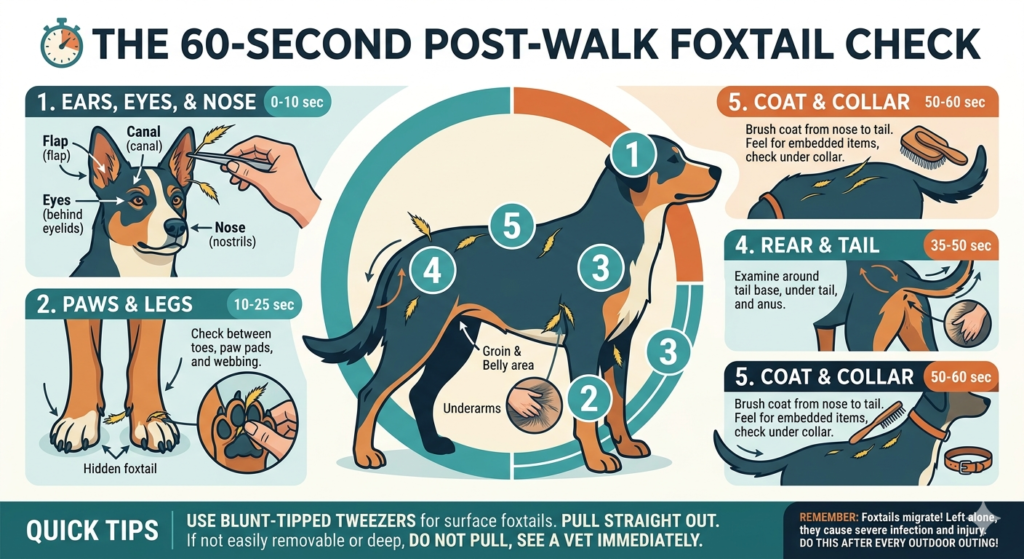
- Check your dog after every walk. Run your hands over the entire body, focusing on ears, nose, between toes, armpits, belly, and groin. Part the fur and look for attached seed heads.
- Keep your yard mowed. If wild grass grows on your property or along your fence line, mow it before the seed heads dry out and detach. Mid-April through early May is the ideal window.
- Stick to maintained trails. During peak foxtail months, avoid letting your dog explore off-trail areas, vacant lots, or overgrown paths.
- Consider protective gear. Mesh foxtail hoods that cover the ears and nose are available for dogs who spend a lot of time in rural or undeveloped areas. Booties can protect paws, though many dogs resist wearing them.
- Trim the fur between toes. Long-haired breeds benefit from regular trimming of the fur between their paw pads, which reduces the chance of a foxtail catching and burrowing.
- Schedule a mid-season wellness check. Even if your dog seems fine, a brief exam during foxtail season can catch problems that are not yet causing obvious symptoms. Foxtails that enter the skin sometimes travel for weeks before producing visible signs.
Routine visits, including your dog’s annual walk-in vaccine clinic in Sacramento appointment, are also a good time to ask your vet about seasonal hazards and get a quick body check before the worst of summer hits.
Foxtails vs. Other Common Summer Pet Hazards in Sacramento
Foxtails are not the only seasonal risk, but they behave differently from other warm-weather dangers. Here is how they compare.
| Hazard | How It Harms | Self-Resolving? | Requires Vet Visit? |
|---|---|---|---|
| Foxtail seed | Burrows into tissue, migrates, causes infection and abscess | No, never | Yes, always |
| Burrs and stickers | Attach to coat, cause surface irritation | Yes, with brushing | Rarely |
| Heatstroke | Organ damage from overheating | No | Yes, emergency |
| Rattlesnake bite | Envenomation, tissue necrosis | No | Yes, emergency |
| Foxtail inhalation | Lung abscess, chronic cough, potential organ migration | No | Yes, emergency |
| Hot pavement burns | Pad blistering and pain | Sometimes mild cases | Often |
The critical difference with foxtails is that they never resolve on their own. Every other hazard on this list can either be prevented by changing behavior or, in some mild cases, managed at home. Foxtails cannot. Once embedded, they require professional removal.
Sacramento Neighborhoods and Trails with Elevated Foxtail Risk
Based on local terrain and vegetation patterns, these areas consistently produce the highest foxtail activity each summer.
- American River Parkway from Discovery Park to Nimbus Dam, particularly off-trail sections
- North Natomas open spaces and undeveloped lots near Arena Boulevard
- Del Paso Heights and the Del Paso Regional Park perimeter
- Haggin Oaks Golf Complex surrounding trail corridors
- Arcade Creek corridor through Carmichael and Arden-Arcade
- South Sacramento levee trails along the Sacramento River
- Elk Grove and Laguna areas where new development meets open grassland
The ASPCA recommends that pet owners in foxtail-prone regions treat every outdoor excursion during dry months as a potential exposure event, especially for dogs that like to run through brush or stick their noses into grass.
Local pet owners who hike or walk regularly through these areas and want breed-specific guidance on foxtail vulnerability can consult the American Kennel Club’s seasonal safety resources for additional prevention strategies.
Frequently Asked Questions About Foxtails and Pet Emergencies
-
What should I do if my dog is sneezing blood after a walk in Sacramento?
Bloody sneezing after outdoor activity is a strong indicator that your dog has inhaled a foxtail into the nasal passage. Do not attempt to look inside the nose yourself or use tweezers. The foxtail is likely already past the point where you can see it. Contact your veterinarian immediately for a same-day appointment. Nasal foxtails require sedation and scoping for safe removal, and delaying treatment increases the risk of deeper migration and secondary infection.
-
Can foxtails kill a dog if left untreated?
Yes, in rare but documented cases. A foxtail that migrates from the nose, ear, or skin into the chest or abdominal cavity can cause life-threatening infections including lung abscesses, peritonitis, and organ perforation. The California Veterinary Medical Association has documented fatal outcomes in dogs where foxtails migrated internally without detection. Early removal is always safer, simpler, and more effective than waiting.
-
How much does foxtail removal cost at a vet clinic?
The cost depends on the location of the foxtail, whether sedation or general anesthesia is needed, and whether diagnostic imaging is required. Surface-level foxtails caught early are straightforward to remove. Deep or migrated foxtails that require surgery, scoping, or extensive imaging are more complex. Your vet can provide a clear estimate during the initial examination, and payment assistance options can help manage unexpected costs.
-
Are certain dog breeds more at risk for foxtail injuries?
Breeds with long, floppy ears like Cocker Spaniels, Basset Hounds, and Golden Retrievers are especially prone to ear foxtails because their ear structure traps seeds easily. Double-coated breeds like Australian Shepherds, Huskies, and German Shepherds collect foxtails in their dense undercoat. Short-haired breeds are not immune though. Any dog that walks through dry grass in Sacramento is at risk, regardless of coat type or breed.
-
Can I remove a foxtail from my dog’s ear at home?
You should not attempt to remove a foxtail from the ear canal at home. The ear canal is delicate and narrow, and pushing the foxtail deeper can puncture the eardrum or cause severe pain. If you can see a foxtail on the outer ear flap and it has not penetrated the skin, you can carefully pluck it off. But anything inside the canal needs professional removal with an otoscope and proper instruments under sedation.
-
When is foxtail season in Sacramento and how long does it last?
Foxtail season in Sacramento typically begins in mid-May once the wild grasses have dried and continues through late September or early October, depending on weather patterns. The peak danger period runs from June through August when the dried seed heads are fully detached and easily airborne. Rain in early fall can reduce foxtail activity, but seeds that have already dried remain hazardous until they decompose or are cleared by mowing.
If your dog picked up a foxtail on a Sacramento trail today, waiting until tomorrow makes the problem worse. Call (916) 925-2107 to schedule a same-day visit.