
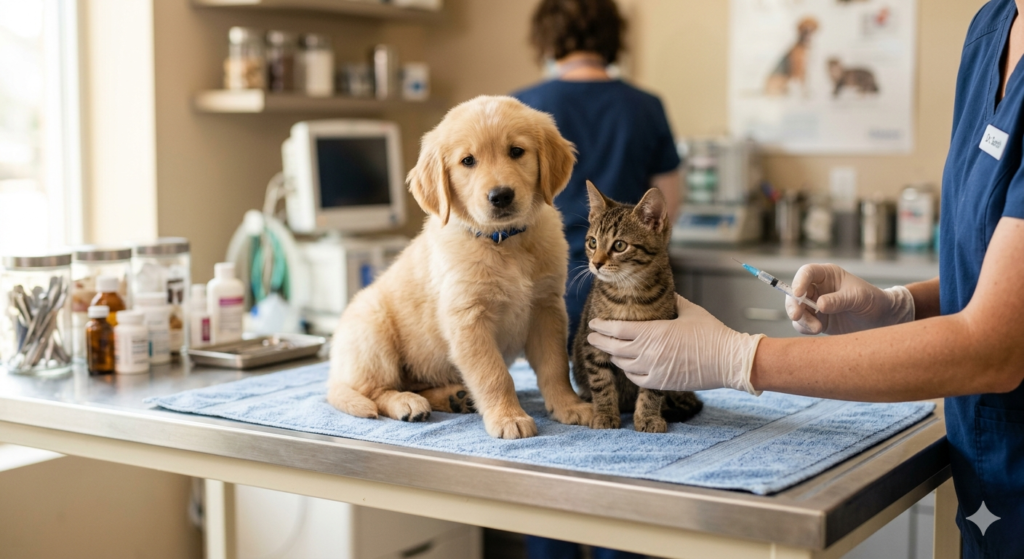
The first twelve months of a puppy’s or kitten’s life set the trajectory for everything that follows. How well they are vaccinated, how often they see a vet, and whether they receive timely preventive care during this window directly shapes their health for years to come. If you are searching for puppy vaccinations near me in Sacramento, you are already asking the right question at the right time. At Del Paso Veterinary Clinic, Dr. Khabra and the team guide new pet owners through every stage of that critical first year, from the first round of shots at eight weeks to the spay or neuter decision, microchipping, parasite prevention, and beyond.
This guide walks you through exactly what your puppy or kitten needs, when they need it, and why Sacramento’s climate and local conditions make some of these steps especially important.
Why the First Year Matters More Than Any Other
Puppies and kittens are born with a temporary immune shield passed from their mother through colostrum in the first hours after birth. That maternal immunity fades between six and sixteen weeks of age, and the rate at which it fades varies from one animal to the next. During that transition window, your young pet is vulnerable. They can encounter parvovirus on a sidewalk, distemper from a neighbor’s unvaccinated dog, or panleukopenia from a contaminated surface at a shelter, and their body may not yet be equipped to fight it off.
This is exactly why puppy vaccinations sacramento schedules call for multiple rounds of the same vaccine, spaced two to four weeks apart. Each booster builds on the last, and the series is not complete until the final dose at or after 16 weeks of age. Skipping a booster or spacing them too far apart can leave dangerous gaps in protection.
The first year is also when your pet’s behavioral patterns, dietary habits, and social skills are forming. Early wellness visits are not just about vaccines. They are about catching congenital problems, monitoring growth, establishing a relationship with a veterinarian who knows your pet’s baseline, and getting guidance on everything from housetraining to nutrition.
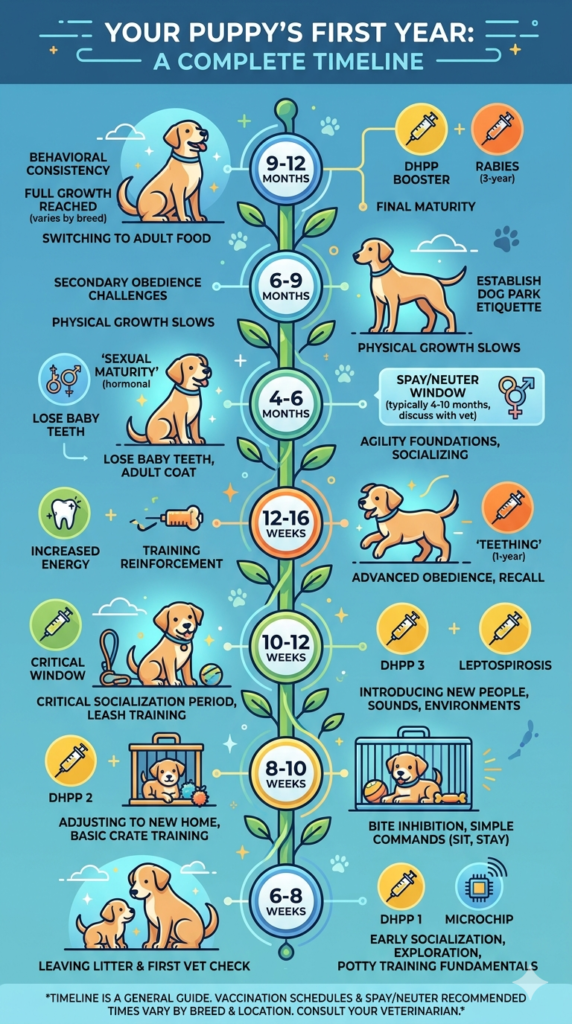
Month-by-Month Puppy Care Timeline: Birth to 12 Months
New puppy owners are often overwhelmed by the number of vet visits, vaccine rounds, and milestones packed into the first year. This timeline lays it out clearly.
| Age | What Happens | Vaccines/Procedures |
|---|---|---|
| 6-8 weeks | First vet visit, physical exam, deworming | DHPP #1 (distemper, hepatitis, parainferon, parvo), fecal test |
| 10-12 weeks | Second wellness visit, weight check, behavioral assessment | DHPP #2, Bordetella (if boarding/daycare planned), start flea/tick/heartworm prevention |
| 14-16 weeks | Third visit, final puppy boosters | DHPP #3, Rabies (required by California law), Leptospirosis #1 if indicated |
| 4-6 months | Growth check, discuss spay/neuter timing | Leptospirosis #2 booster, Canine Influenza if lifestyle warrants, microchip placement |
| 6-9 months | Spay or neuter window for most breeds | Pre-surgical bloodwork, surgery scheduling |
| 12 months | Annual wellness exam, adult vaccine boosters | DHPP annual booster, Rabies (if 1-year was given initially), comprehensive exam |
This schedule is a framework. Dr. Khabra adjusts it based on breed, weight, health status, and individual risk factors. A Labrador puppy who will spend time at dog parks and hiking trails along the American River has different exposure risks than a toy breed who lives indoors in Natomas.
Sacramento pet owners looking for puppy shots near me should also know that Del Paso offers a walk-in vaccine clinic during the week, which makes it easier to stay on schedule without booking weeks in advance.
Core vs. Non-Core Puppy Vaccines in Sacramento
Not every puppy needs every vaccine available. Understanding the distinction between core and non-core vaccines helps you make informed decisions and avoid both over-vaccinating and under-protecting.
Core Vaccines for Dogs
Core vaccines are recommended for every dog regardless of lifestyle, location, or breed. In California, they include:
- DHPP (Distemper, Hepatitis, Parainfluenza, Parvovirus): This combination vaccine protects against four serious and potentially fatal diseases. Parvovirus in particular remains a real threat in Sacramento. The virus is extremely resilient, surviving in soil and on surfaces for months. Puppies who walk where infected dogs have been can contract parvo from the ground itself. The American Animal Hospital Association classifies DHPP as the cornerstone of canine vaccination.
- Rabies: California state law requires rabies vaccination for all dogs. The first rabies vaccine is typically given between 14 and 16 weeks of age. Depending on the product used, a booster is due at one year, and subsequent boosters are given every three years.
Non-Core and Lifestyle Vaccines for Dogs
Non-core vaccines are recommended based on your dog’s specific risk factors:
- Bordetella (Kennel Cough): Recommended for puppies who will attend daycare, boarding, grooming facilities, or dog parks. Sacramento has a high density of dog-social environments, making Bordetella relevant for most active puppies.
- Leptospirosis: Caused by bacteria found in standing water, wildlife urine, and wet soil. Sacramento’s proximity to rivers, creeks, and the Delta makes leptospirosis a genuine local risk. Dr. Khabra recommends this vaccine for dogs with outdoor exposure.
- Canine Influenza (H3N2/H3N8): Increasingly relevant in urban areas with high dog-to-dog contact. Many boarding and daycare facilities in Sacramento now require it.
According to the AVMA’s vaccination guidelines, the decision to administer non-core vaccines should always be based on individual risk assessment rather than a one-size-fits-all approach.
Kitten Vaccination Schedule and First-Year Care
Kittens follow a similar vaccination cadence, though the specific diseases they are protected against are different.
Core Vaccines for Cats
- FVRCP (Feline Viral Rhinotracheitis, Calicivirus, Panleukopenia): This is the feline equivalent of the DHPP. Panleukopenia (feline distemper) is highly contagious and often fatal in kittens. The FVRCP series starts at 6 to 8 weeks and continues every 3 to 4 weeks until 16 weeks of age.
- Rabies: Required by California law for all cats, including indoor-only cats. The first dose is given at 12 to 16 weeks.
Non-Core Vaccines for Cats
- FeLV (Feline Leukemia Virus): Recommended for kittens and cats with outdoor access or exposure to other cats of unknown FeLV status. FeLV testing is recommended before the first vaccine in the series. The American Association of Feline Practitioners recommends FeLV vaccination for all kittens during their primary series, with boosters based on continued risk.
A common mistake among new cat owners is assuming indoor cats do not need vaccines. They do. Cats escape. Cats encounter other animals through screen doors. Rabies-carrying bats can enter homes. And some diseases, like panleukopenia, can be tracked indoors on shoes and clothing.
| Kitten Age | Vaccines/Procedures |
|---|---|
| 6-8 weeks | FVRCP #1, FeLV test, deworming, fecal test |
| 10-12 weeks | FVRCP #2, FeLV #1 (if at risk), start flea prevention |
| 14-16 weeks | FVRCP #3, Rabies, FeLV #2 booster |
| 4-6 months | Spay or neuter, microchip |
| 12 months | Annual exam, FVRCP booster, Rabies booster if 1-year product used |
Sacramento pet owners looking for kitten vaccines near me should pair their kitten’s vaccination visits with a conversation about year-round flea and heartworm prevention. Sacramento’s mild winters mean parasites stay active longer than pet owners from colder climates might expect.
Puppy and Kitten Wellness Checks: More Than Just Shots
Vaccines get all the attention, but the physical exam that happens at each visit is arguably just as valuable. During a puppy wellness check, Dr. Khabra evaluates:
- Heart and lungs for murmurs, arrhythmias, or respiratory abnormalities that could indicate congenital conditions
- Eyes, ears, and teeth for infection, structural problems, or retained baby teeth
- Abdomen for organ size, hernias, or pain on palpation
- Musculoskeletal system for joint laxity, limb alignment, and gait
- Skin and coat for parasites, ringworm, or allergic reactions
- Weight and body condition to ensure growth is on track for breed and age
These exams catch problems early. A heart murmur detected at 10 weeks can be monitored and managed. An umbilical hernia found at eight weeks can be repaired during the spay or neuter surgery. Retained testicles in a male puppy can be identified before they become a surgical complication later.
The first-year wellness visits also give your veterinarian a chance to answer questions about behavior, socialization, crate training, teething, and nutrition. Most behavioral problems that become entrenched in adult dogs started with missed opportunities in the puppy stage.
When to Spay or Neuter Your Puppy or Kitten in Sacramento
Timing matters, and it is not as simple as “six months for everyone.” Current veterinary guidance is more nuanced than it was even ten years ago.
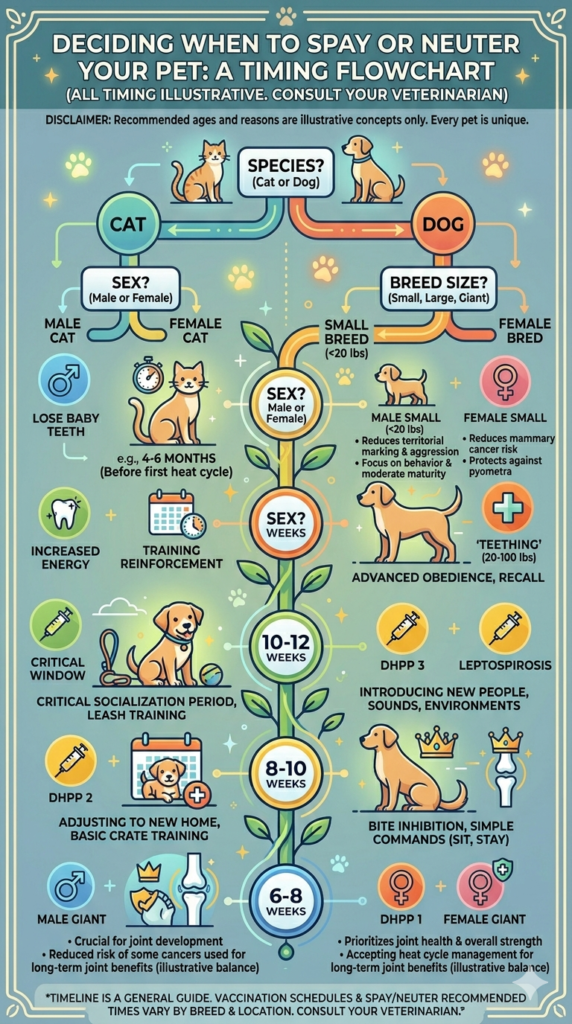
For most cats, spaying or neutering at four to six months of age remains the standard recommendation. Cats can reach sexual maturity as early as five months, and preventing the first heat cycle eliminates both unwanted litters and the associated cancer risks.
For dogs, the ideal timing depends on breed, size, and sex. Small breeds can typically be spayed or neutered at six months. Large and giant breeds may benefit from waiting until 12 to 18 months, as emerging research suggests that early sterilization in large breeds may affect bone growth and increase the risk of certain orthopedic conditions. Dr. Khabra discusses timing individually with each owner based on the specific dog.
Del Paso Veterinary Clinic performs spay and neuter surgery in-house with comprehensive anesthesia monitoring and same-day discharge. Pre-surgical bloodwork is run through the in-house lab the same day. Our detailed spay and neuter guide for Sacramento pet owners covers the full process from preparation through recovery.
Microchipping, Parasite Prevention, and Nutrition in the First Year
Microchipping
A microchip is a permanent form of identification that dramatically increases the chances of reuniting with a lost pet. The chip is about the size of a grain of rice and is injected under the skin between the shoulder blades. It takes seconds, can be done during any visit, and is especially convenient when combined with the spay or neuter surgery while the pet is already under anesthesia.
Sacramento shelters scan every stray animal for a microchip. Without one, your puppy or kitten becomes one of thousands of unidentified animals in the system each year. Microchipping is one of the simplest and most important steps you can take during the first year, and our microchipping guide walks through the full process including registration and how to keep your information current.
Parasite Prevention
Sacramento’s Central Valley climate supports year-round flea activity, with peak pressure from late spring through fall. Ticks are present along the American River Parkway and in foothill areas east of the city. Mosquitoes carrying heartworm larvae are active from March through November.
Puppies and kittens should start parasite prevention as early as their first wellness visit. Products available today cover fleas, ticks, heartworm, and intestinal parasites in a single monthly dose, making compliance easier than ever. The ASPCA recommends year-round prevention for all pets regardless of lifestyle, and that recommendation carries extra weight in a climate like Sacramento’s where freezing temperatures rarely interrupt parasite cycles.
Nutrition
Puppy and kitten food is not just smaller kibble. Growth formulas are specifically balanced for the caloric density, calcium-to-phosphorus ratios, and protein levels that developing bodies need. Feeding an adult formula to a growing puppy can result in nutritional deficiencies. Feeding a large-breed puppy a standard puppy food can lead to growth rates that outpace skeletal development, increasing the risk of orthopedic problems.
Dr. Khabra provides individualized feeding recommendations at each wellness visit, adjusting portions and formulas as your pet grows. Transitioning from puppy or kitten food to adult food typically happens between 10 and 14 months for most breeds, though large and giant breed dogs may stay on growth formulas longer.
Case Study: Luna the Labradoodle and a Complete First-Year Journey
A North Sacramento family adopted Luna, a Labradoodle puppy, from a local rescue at nine weeks old. They brought her to Del Paso Veterinary Clinic for her second round of puppy vaccines and a first wellness exam. Luna was underweight, had a mild ear infection, and had not yet been dewormed.
Dr. Khabra started Luna on a deworming protocol, treated the ear infection, administered her DHPP booster, and placed her on a monthly flea, tick, and heartworm preventive. The family received a printed vaccination schedule and a feeding plan calibrated to Luna’s projected adult weight of 55 pounds.
Over the next four months, Luna came in for her remaining boosters, her rabies vaccine at 16 weeks, and her Leptospirosis series. At her five-month visit, Dr. Khabra discussed spay timing and recommended waiting until six months given Luna’s medium-large frame. The family scheduled the spay and opted to add a microchip during the same anesthetic event.
Luna’s spay surgery went smoothly. Pre-surgical bloodwork was normal. She went home the same afternoon with pain medication and recovery instructions. At her suture removal appointment ten days later, the incision was healing well and Luna was already back to her usual energy level.
At her one-year visit, Luna received her adult DHPP booster, a three-year rabies vaccine, and a full physical exam. She weighed 52 pounds, her coat was thick and healthy, and her blood work came back clean. The family said they felt confident managing her ongoing care because the first year had been so well-structured.
That confidence is the real goal of first-year care. When the foundation is solid, everything that follows is easier.
Common First-Year Mistakes Sacramento Pet Owners Make
Even well-intentioned owners sometimes make choices that put their puppy or kitten at unnecessary risk:
- Taking the puppy to dog parks before the vaccine series is complete. Parvovirus lives in soil. A 10-week-old puppy with only one DHPP dose is not protected, no matter how social they seem. Wait until at least two weeks after the final booster (typically around 18 weeks) before visiting high-traffic dog areas.
- Skipping the last booster because the puppy “already had two shots.” Two doses are not enough. Maternal antibodies may still have been interfering with the earlier doses. The final booster at or after 16 weeks is the one that most reliably produces lasting immunity.
- Assuming indoor kittens do not need vaccines. Panleukopenia virus can be carried on shoes. Rabies-carrying bats enter homes. Indoor cats escape. Core vaccines are non-negotiable regardless of lifestyle.
- Delaying parasite prevention until you “see fleas.” By the time you see adult fleas on your pet, there are already thousands of eggs in your carpet. Prevention works. Treatment after infestation is harder, more expensive, and more uncomfortable for everyone.
- Free-feeding instead of measured meals. Puppies that eat without portion control gain weight too fast, which increases stress on developing joints. Measured meals also help with housetraining, since input on a schedule produces output on a schedule.
- Waiting too long for the first vet visit. If you bring home a puppy or kitten at eight weeks, their first veterinary appointment should happen within the first few days. Waiting a month means missing vaccine windows and losing time for early detection of problems.
Frequently Asked Questions About Puppy and Kitten Vaccinations
-
How many rounds of puppy shots does my dog need in the first year?
Puppies typically need three to four rounds of the DHPP combination vaccine, spaced two to four weeks apart, starting at six to eight weeks of age and finishing at or after 16 weeks. They also receive a rabies vaccine between 14 and 16 weeks, which is required by California law. Depending on lifestyle risk factors, additional vaccines like Bordetella, Leptospirosis, and Canine Influenza may be recommended. Each visit also includes a physical exam, weight check, and parasite screening.
-
Can I bring my puppy to a walk-in vaccine clinic or do I need an appointment?
Del Paso Veterinary Clinic offers a walk-in vaccine clinic during the week for convenient access to puppy vaccinations in Sacramento. No appointment is needed for vaccine-only visits. For your puppy’s first comprehensive wellness exam, an appointment is recommended so Dr. Khabra can spend adequate time on the physical assessment, deworming, behavioral questions, and building a personalized care plan for the full first year.
-
Are puppy vaccines safe? What about side effects?
Vaccines are among the safest and most effective tools in veterinary medicine. The most common side effects are mild and temporary: slight lethargy, reduced appetite, and mild soreness at the injection site for 24 to 48 hours. Serious adverse reactions are rare. The risk of leaving a puppy unvaccinated against diseases like parvovirus and distemper far exceeds the risk of vaccine side effects. If your puppy shows facial swelling, vomiting, or difficulty breathing after vaccination, contact your vet immediately.
-
What vaccines do kittens need in California?
Kittens in California need the FVRCP series (feline viral rhinotracheitis, calicivirus, and panleukopenia) starting at six to eight weeks with boosters every three to four weeks until 16 weeks of age. Rabies vaccination is required by law and is typically given between 12 and 16 weeks. The FeLV (feline leukemia) vaccine is recommended for all kittens during the primary series and for adult cats with outdoor access or multi-cat household exposure. FeLV testing before vaccination is standard practice.
-
When should I schedule my puppy’s first vet visit after bringing them home?
Within the first three to five days. Even if the breeder or rescue provided initial vaccines, your veterinarian needs to verify what was given, confirm timing, and plan the remaining schedule. The first visit establishes a health baseline, screens for congenital conditions, starts deworming if needed, and gives you a chance to discuss feeding, socialization, housetraining, and parasite prevention before habits form.
-
Is it safe to walk my puppy outside before all vaccines are done?
Controlled outdoor exposure is important for socialization, but high-risk environments should be avoided until the vaccine series is complete. Sidewalks in your own neighborhood are generally lower risk than dog parks, pet stores, and areas where unvaccinated dogs congregate. Carry your puppy in high-traffic areas rather than letting them walk on the ground. The UC Davis Koret Shelter Medicine Program emphasizes that socialization during the critical window of 3 to 14 weeks should not be sacrificed entirely for infection risk, but should be managed carefully with smart environmental choices.
Your puppy or kitten’s first year only happens once. Call (916) 925-2107 to schedule their next wellness visit or walk in for vaccines during the week.