
The leptospirosis vaccine for dogs has quietly become one of the most important shots on a Sacramento dog’s vaccination schedule, and most pet owners have never heard of the disease it protects against. Del Paso Veterinary Clinic sees this gap constantly: families who diligently keep up with rabies and distemper boosters but skip lepto because nobody ever explained what it actually does. Given how much standing water, riverbank access, and urban wildlife Sacramento dogs encounter, that gap deserves a closer look.
This guide breaks down what leptospirosis actually is, why Central Valley geography makes it a real local concern, how the vaccine works, what side effects to expect, and how to decide whether your dog needs it.
What Is Leptospirosis?
Leptospirosis is a bacterial infection caused by corkscrew-shaped organisms called Leptospira. These bacteria live in warm, damp soil and water, and they spread through the urine of infected animals. Once a dog is exposed, through a cut, a mucous membrane, or simply drinking contaminated water, the bacteria travel through the bloodstream and settle in the kidneys and liver, where they cause inflammation and, in severe cases, organ failure.
According to the Centers for Disease Control and Prevention, leptospirosis is zoonotic, meaning infected dogs can pass it to the humans who care for them. That single fact is why veterinary organizations have gotten more serious about the vaccine in recent years.
The American Animal Hospital Association notes that leptospirosis affects dogs, cats, livestock, and wildlife, though dogs are far more commonly diagnosed than cats. Wild carriers such as raccoons, skunks, opossums, and rats shed the bacteria in their urine wherever they roam, which in a city like Sacramento is almost everywhere.
Why Leptospirosis Risk Is Rising in Sacramento
For years, leptospirosis was treated as a rural, farmland disease. That assumption no longer holds. The American Veterinary Medical Association now states plainly that all dogs are at risk, regardless of age, breed, or lifestyle, because urban wildlife has adapted so well to city living.
Standing Water and Waterways Around Sacramento
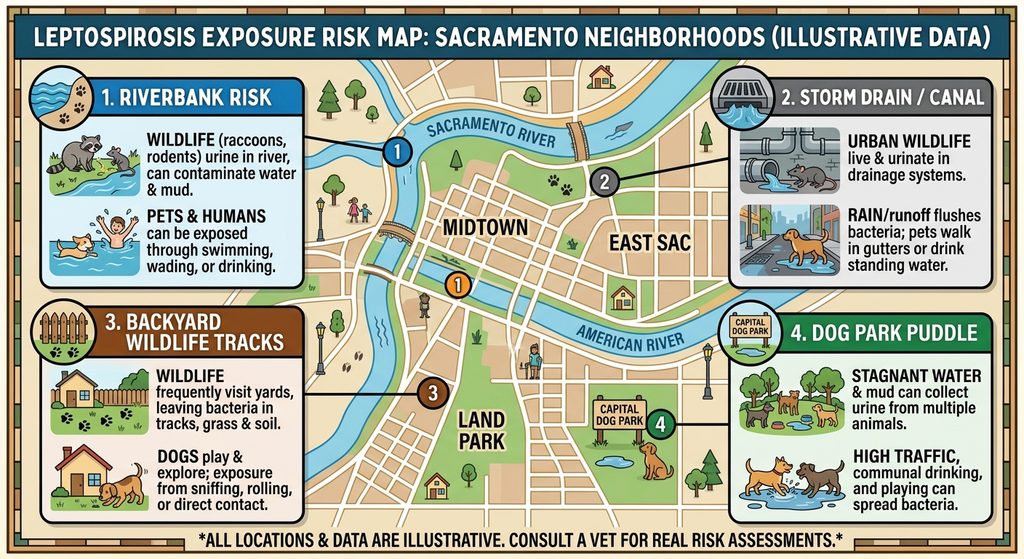
Sacramento sits at the confluence of two major rivers, and the surrounding Central Valley is full of irrigation canals, retention ponds, and seasonal wetlands. Leptospira bacteria can survive for weeks to months in slow-moving or stagnant water. Dogs that swim, wade, or even drink from puddles along the American River Parkway, neighborhood creeks, or park ponds are exposed every time they do it.
Wildlife and Rodent Activity in Del Paso Heights and Natomas
Raccoons, skunks, and rats are common throughout Del Paso Heights, Natomas, and the surrounding Sacramento neighborhoods, especially near greenbelts, alleys, and drainage areas. The Cornell Riney Canine Health Center confirms that the most common way dogs contract leptospirosis is through water contaminated with urine from these exact wildlife species. A backyard bordering a canal, a walk along a greenbelt, or a dog park visit can all be enough exposure.
Signs and Symptoms of Leptospirosis in Dogs
Leptospirosis symptoms are frustratingly nonspecific, which is part of why the disease is easy to miss in its early stages. Watch for:
- Lethargy or sudden loss of energy
- Fever
- Vomiting or loss of appetite
- Increased thirst and urination, or reduced urination in advanced cases
- Muscle pain or reluctance to move
- Yellowing of the gums or eyes (jaundice)
- Diarrhea, sometimes with blood
Any dog showing several of these signs, particularly after time spent near water or wildlife, should be evaluated promptly rather than watched at home. Leptospirosis can progress quickly to kidney or liver damage, and outcomes are significantly better with early treatment.
How the Leptospirosis Vaccine Works
The lepto vaccine introduces inactivated Leptospira bacteria to a dog’s immune system so the body can build defenses before a real exposure occurs. It will not prevent every possible strain, since there are more than 200 known serovars worldwide, but modern vaccines cover the serovars most commonly diagnosed in dogs across the United States.
What the Vaccine Protects Against
Most vaccines used today protect against four of the most clinically significant serovars. Vaccination does two things at once: it reduces the chance the dog becomes seriously ill, and it lowers the amount of bacteria an infected dog would shed in its urine, which matters for the humans and other pets in the household.
Vaccine Schedule and Boosters
Puppies typically receive an initial series of two leptospirosis vaccinations, spaced two to four weeks apart, starting around twelve weeks of age. Adult dogs with no prior vaccination history follow a similar two-dose series. After the initial series, the vaccine is boostered annually. This is different from some other core vaccines that now use a three-year protocol, so it is easy for owners to lose track of the lepto booster specifically.
Side Effects of the Leptospirosis Vaccine in Dogs
Concerns about side effects are the most common reason owners hesitate on this vaccine, so it deserves an honest answer.
Common, Mild Reactions
Most dogs experience nothing beyond mild, short-lived effects, similar to what follows any routine vaccination:
- Soreness at the injection site
- Mild lethargy for a day
- Slight decrease in appetite
- Low-grade, temporary swelling near the injection
These typically resolve within 24 to 48 hours without intervention.
Rare but Serious Reactions
A small percentage of dogs, historically more often small-breed and toy-breed puppies, have experienced acute allergic reactions such as facial swelling, hives, or vomiting shortly after vaccination. Veterinary teams are trained to watch for this and can manage it quickly when it happens in a clinical setting, which is one reason vaccination during a supervised visit is safer than at-home or big-box vaccine events. Older, historical concerns about lepto vaccine safety were based on earlier-generation vaccines; current formulations have a much-improved safety profile, and both AAHA and AVMA now consider the benefit-to-risk ratio favorable for the vast majority of dogs.
Who Needs the Lepto Vaccine (and Who May Not)
Because exposure risk has expanded to nearly every environment, most veterinary organizations, including AAHA, now classify leptospirosis as a core vaccine rather than an optional one. In practical terms, that means it is recommended for the large majority of dogs, not just hunting or farm dogs.
Dogs with meaningfully elevated exposure include those who:
- Visit dog parks, greenbelts, or the American River Parkway regularly
- Live near canals, ponds, or seasonal wetlands
- Have a yard bordering open space or wildlife corridors
- Board, attend daycare, or interact frequently with unfamiliar dogs
- Drink from puddles, ditches, or standing water on walks
A veterinarian may recommend delaying or skipping the vaccine for dogs with a documented prior anaphylactic reaction to it, very young toy-breed puppies pending a risk conversation, or dogs with significant, active illness at the time of a scheduled visit. This is a conversation worth having during a wellness visit rather than deciding alone.
Leptospirosis Vaccine vs Other Core Dog Vaccines
| Vaccine | Protects Against | Core Status | Typical Booster |
|---|---|---|---|
| Leptospirosis | Bacterial Leptospira infection, kidney/liver damage | Core for most dogs | Annual |
| DHPP | Distemper, hepatitis, parainfluenza, parvovirus | Core | Every 1–3 years |
| Rabies | Rabies virus | Core, legally required | 1 or 3 years by law |
| Bordetella | Kennel cough | Non-core, lifestyle-based | Every 6–12 months |
| Canine Influenza | Dog flu (H3N8/H3N2) | Non-core, lifestyle-based | Annual |
Dogs who need a DHPP vaccine for dogs near me are frequently good candidates to add leptospirosis to the same visit, since both are considered core and are often due around the same time.
Case Study: Bear’s Recovery After a River Walk
Bear, a four-year-old Labrador mix from the Del Paso Heights neighborhood, had never missed a rabies or DHPP booster but had gone several years without a lepto vaccine. After a weekend of wading in a slow-moving section of the American River, Bear became lethargic within three days, stopped eating, and started drinking noticeably more water than usual. His owner brought him in when the lethargy did not improve overnight.
Bloodwork showed elevated kidney values consistent with early leptospirosis, and Bear was started on antibiotics and supportive fluid therapy right away. Because his owner acted quickly instead of waiting to see if he would “shake it off,” Bear avoided the more severe kidney damage that delayed cases often show. He recovered fully within two weeks and is now on an annual lepto vaccine schedule. Cases like Bear’s are exactly why early recognition and vaccination matter more in a river city than owners often assume.
Diagnosis, Treatment, and Prevention Beyond Vaccination
Leptospirosis is diagnosed through bloodwork and urine testing, sometimes combined with specific antibody titers when the picture is unclear. Treatment centers on antibiotics, intravenous fluids to support kidney function, and close monitoring, with hospitalization required for more severe cases.
Vaccination is the single most effective prevention tool, but a few additional habits reduce exposure risk:
- Avoid letting dogs drink from puddles, ditches, or slow-moving water
- Keep dogs away from areas with visible rodent activity
- Rinse paws and coat after river or pond access
- Wash hands after handling a dog that has been in natural water sources
- Keep vaccination records current and discuss regional risk at every wellness visit
When to See a Vet in Sacramento
Any dog with fever, lethargy, vomiting, or reduced appetite after exposure to rivers, ponds, or wildlife-heavy areas should be seen promptly rather than monitored at home. Same-day evaluation matters with leptospirosis, since kidney and liver damage can progress quickly. Del Paso Veterinary Clinic’s vet urgent care near me option is available for dogs showing these warning signs.
For dogs who are due for routine protection rather than showing symptoms, a canine influenza vaccine near me visit is a convenient time to also review lepto, DHPP, and Bordetella status in one stop, since many Sacramento dogs need more than one of these updated at once.
Frequently Asked Questions
-
What is the lepto vaccine for dogs and why does it matter?
The lepto vaccine for dogs protects against a bacterial infection that damages the kidneys and liver and can spread from dogs to people. It is now considered a core vaccine for most dogs because exposure risk exists in nearly every environment, from rivers and parks to ordinary backyards near urban wildlife. Sacramento’s waterways and rodent activity make it a particularly relevant vaccine locally.
-
What are the side effects of the leptospirosis vaccine in dogs?
Most dogs only experience mild, short-lived side effects such as soreness at the injection site, slight tiredness, or a temporary dip in appetite. Serious allergic reactions are uncommon but possible, most often in small-breed puppies. Current vaccine formulations have a strong safety record, and a veterinarian can monitor for any reaction during the visit itself.
-
Is the leptospirosis vaccine considered core or optional?
Leptospirosis is now classified as a core vaccine for the majority of dogs by major veterinary organizations, a shift from its former status as an optional, lifestyle-based vaccine. This change reflects rising case numbers and the recognition that urban and suburban dogs face meaningful exposure, not just rural or farm dogs. A veterinarian can confirm whether any individual health factors change that recommendation.
-
How is leptospirosis in dogs transmitted around Sacramento?
Leptospirosis spreads through contact with urine-contaminated water or soil, most often from infected rodents, raccoons, or other wildlife. In Sacramento, common exposure points include river access points, canals, retention ponds, storm drains, and backyards bordering greenbelts. Dogs can be exposed by swimming, wading, drinking standing water, or simply walking through contaminated soil.
-
Can an indoor dog still get leptospirosis?
Yes. Indoor dogs are exposed during walks, yard time, and any contact with contaminated soil or water tracked in on paws or fur. Wildlife such as rats and raccoons frequently pass through yards and greenbelts even in developed neighborhoods. Vaccination remains recommended for indoor dogs who go outside for walks, bathroom breaks, or park visits, which describes nearly all pet dogs.
-
Where can I get a DHPP vaccine for dogs near me along with the lepto vaccine?
Core vaccines including DHPP and leptospirosis can typically be scheduled together in one visit, which is more convenient than separate appointments. A veterinarian reviews your dog’s vaccination history and local exposure risk to confirm which vaccines are due. Combining core vaccines into a single visit is common practice for dogs behind on preventive care.
Leptospirosis is easy to overlook until it isn’t, and in a river city like Sacramento, a little prevention goes a lot further than a lot of regret.