
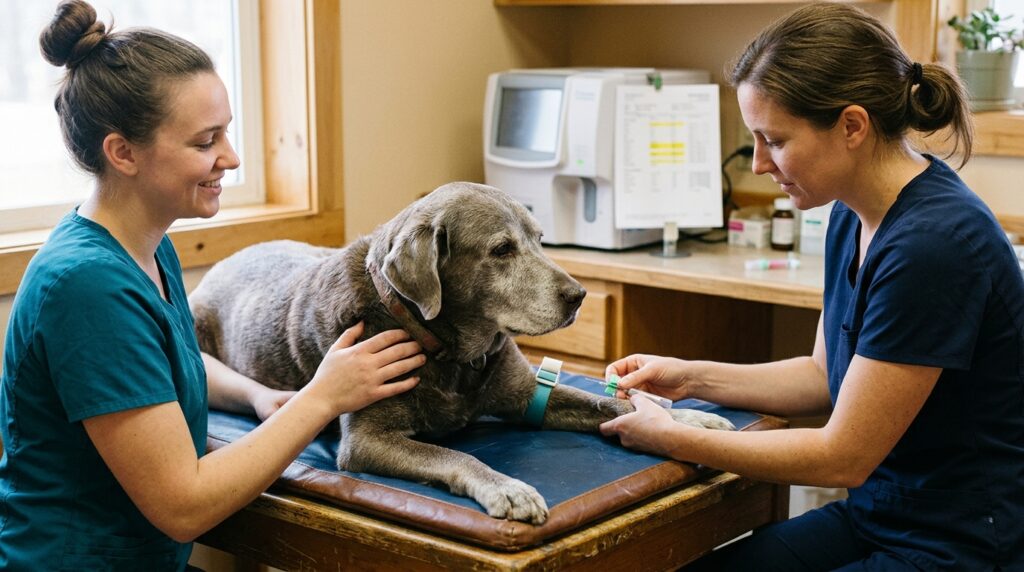
Good veterinary care for senior dogs depends on numbers you cannot see from the outside. A gray-faced dog can look bright and eat well while kidney, liver or thyroid values quietly drift out of range. This guide from Del Paso Veterinary Clinic, the veterinarian near me many North Sacramento families have trusted since 1940, explains what a senior wellness panel measures, what high and low results usually point to, and how often your older dog should be tested.
When Does a Dog Need Senior Bloodwork?
Senior Age Depends on Size
There is no single birthday that makes a dog “senior.” Size matters more than anything:
| Dog Size | Typically Considered Senior | Bloodwork Starting Point |
|---|---|---|
| Small (under 20 lb) | Around 10 years | Baseline panel by age 7 to 9 |
| Medium (20 to 50 lb) | Around 8 to 10 years | Baseline panel by age 7 |
| Large and giant breeds | As early as 7 to 8 years | Baseline panel by age 6 to 7 |
At Del Paso, dogs aged 7 to 9 get an annual exam with baseline bloodwork. From age 10, senior pet wellness exams move to every six months.
Why “Normal” Results Still Matter
The first panel is about the baseline. Every dog has its own normal, and two dogs can sit at opposite ends of the same reference range and both be healthy. What matters later is the trend. A kidney value that climbs a little at each visit, while still technically inside the range, often tells Dr. Khabra more than a single flagged number would. That is why senior bloodwork works best as a series, not a one-off, and it is what separates a quick pet health checkup from real geriatric pet care.
What a Senior Wellness Panel Includes
A standard senior screen has four parts: a complete blood count, a chemistry panel with electrolytes, a thyroid test and a urinalysis. Some dogs also need blood pressure checks, imaging or more specific hormone tests based on what the exam finds.
In-House Lab vs Reference Lab
Del Paso runs part of the panel on site and sends the rest out. Here is how that splits:
| Test | Where It Runs | Typical Turnaround |
|---|---|---|
| Complete blood count (CBC) | In-house | Same day, often within 1 to 2 hours |
| Chemistry panel and electrolytes | In-house | Same day, often within 1 to 2 hours |
| Heartworm test | In-house | Same day |
| Thyroid (T4, free T4, full panel) | Reference lab | 1 to 3 days |
| Urinalysis | Reference lab | 1 to 3 days |
| Advanced hormone tests (such as ACTH stimulation) | Reference lab | 1 to 3 days |
Having pet wellness bloodwork run in-house means the core organ values are often ready before you leave, so treatment for an urgent finding can start the same day. Digital X-ray and ultrasound are also available on site when a result needs a closer look.
Reading the Complete Blood Count (CBC)
The CBC counts the cells in your dog’s blood. The Merck Veterinary Manual has a clear overview of routine veterinary lab tests if you want more background.
| CBC Value | What It Measures | If Low | If High |
|---|---|---|---|
| PCV / Hematocrit, RBC, Hemoglobin | Red blood cells that carry oxygen | Anemia from blood loss, chronic kidney disease, immune disease or cancer | Usually dehydration |
| White blood cells (WBC) | Infection-fighting cells | Bone marrow problems, overwhelming infection | Infection, inflammation, stress, some cancers |
| Neutrophils, lymphocytes | WBC subtypes | Helps narrow the cause | Helps narrow the cause |
| Platelets | Clotting cells | Bleeding risk, tick-borne disease, immune disease | Inflammation, some cancers |
One practical note: platelets can clump in the sample tube and read falsely low. If your dog’s count comes back low with no bruising or bleeding, a recheck or blood smear review is common before anyone worries.
Reading the Chemistry Panel
The chemistry panel is where most early senior problems show up first.
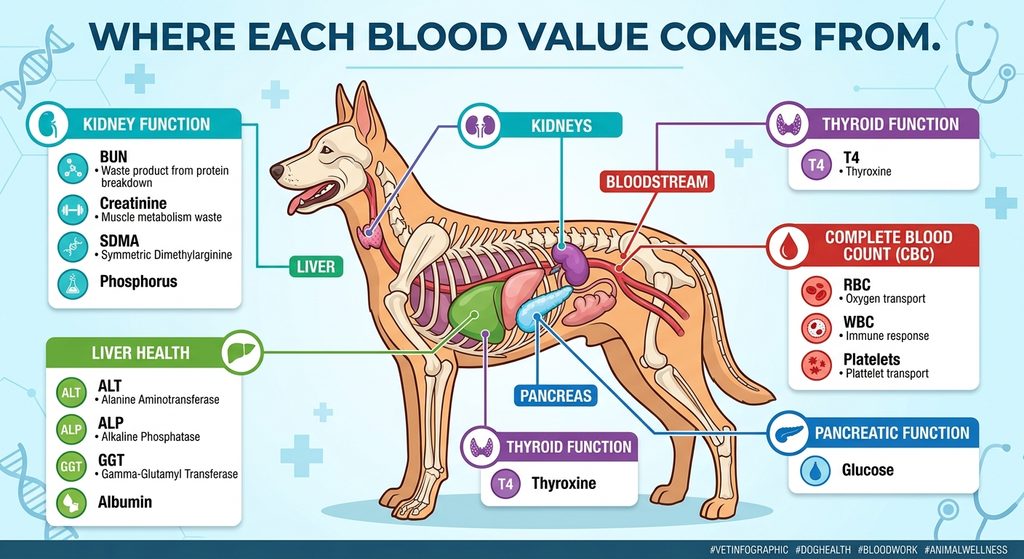
Kidney Values: BUN, Creatinine, SDMA and Phosphorus
- BUN (blood urea nitrogen) rises with kidney disease, dehydration, bleeding in the gut or even a high-protein meal before the test. A low BUN can point to reduced liver function.
- Creatinine is the classic kidney marker, but it comes from muscle. Older dogs often lose muscle mass, which can keep creatinine looking “normal” even as kidney function declines.
- SDMA is a newer kidney marker that is far less affected by muscle loss. The International Renal Interest Society notes that a dog’s SDMA persistently above 14 µg/dL supports a diagnosis of chronic kidney disease. Ask Dr. Khabra whether adding SDMA makes sense for your dog.
- Phosphorus tends to climb in later stages of kidney disease.
Vets use the IRIS staging system to grade kidney disease in both dogs and cats. If you also share your home with an older cat, our guide to iris staging cats explains how the stages apply to felines.
Liver Values: ALT, ALP, GGT, Bilirubin and Albumin
- ALT rises when liver cells are damaged or inflamed.
- ALP is the value most often flagged in older dogs. It can rise with liver or gallbladder disease, but also with steroid medications, Cushing’s disease and benign age-related liver nodules. A mild ALP rise on its own is common; a steady climb deserves a workup.
- GGT and bilirubin help show whether bile flow is affected.
- Albumin is a protein made by the liver. Low albumin can mean the liver is not making enough, or that protein is being lost through the kidneys or gut.
Glucose, Cholesterol, Calcium and Electrolytes
- Glucose that stays high, especially with sugar in the urine, points toward diabetes.
- Cholesterol often runs high with hypothyroidism, Cushing’s disease, diabetes or a meal eaten before the draw.
- Calcium that is high is never ignored in a senior dog. It can be linked to certain cancers, such as lymphoma or anal gland tumors, as well as kidney or parathyroid disease.
- Sodium and potassium imbalances can signal dehydration or hormone conditions such as Addison’s disease.
Thyroid Testing and Urinalysis
Thyroid (T4)
Hypothyroidism is one of the most common hormone conditions in middle-aged and older dogs. Signs include weight gain, low energy, a thinning coat and recurring skin infections. A low T4 is a starting point, not a final answer, because many illnesses and some medications push T4 down in dogs whose thyroid is actually fine. Follow-up tests such as free T4 and TSH confirm the diagnosis before treatment starts.
Urinalysis
The urine test catches problems bloodwork can miss:
- Urine specific gravity shows how well the kidneys concentrate urine. Dilute urine in a dog that is drinking more water is often an early clue to kidney disease, Cushing’s disease or diabetes.
- Protein in the urine can signal kidney damage before blood values change. A urine protein to creatinine ratio (UPC) measures how much.
- Glucose, blood, crystals and bacteria point to diabetes, bladder stones or infection.
How Often Should Senior Dogs Be Tested?
| Age or Health Status | Exam Frequency | Bloodwork Frequency |
|---|---|---|
| Adult, under 7 | Once a year | As needed, or with a pre-anesthetic panel |
| 7 to 9 years | Once a year | Annual baseline panel |
| 10 years and up | Every six months | Every 6 to 12 months |
| Chronic condition (kidney, diabetes, thyroid, heart) | As recommended | Monthly to quarterly during adjustment |
This schedule follows the same thinking as the AAHA senior care guidelines, which emphasize regular screening for older dogs and cats. Regular pet exams start long before the senior years. Younger dogs still benefit from a yearly pet wellness exam, since the adult pet wellness exam is when the first useful baseline usually gets set.
For the full picture of geriatric veterinary care at the clinic, including pain management, mobility checks and nutrition, see our senior pet care service.
Bloodwork Before Anesthesia
Any senior dog going under anesthesia needs a current panel first. The kidneys and liver clear anesthetic drugs, so their values guide drug choices, fluid support and whether a procedure should wait. This matters most for pet dental cleaning, one of the most common procedures older dogs need. Our article on dog dental cleaning safety under anesthesia explains how pre-anesthetic screening keeps senior patients safer.
How to Prepare for Your Dog’s Senior Bloodwork Visit
- Ask about fasting. Many panels are more accurate after an overnight fast, since a recent meal can cloud the sample and raise glucose and cholesterol. Call ahead to confirm instructions for your dog.
- Keep water available unless told otherwise. Dehydration can skew kidney values.
- Bring all medications and supplements, including the bottles. Steroids, seizure drugs and some supplements change lab results.
- Collect a fresh morning urine sample in a clean container if the team asks for one.
- Note changes at home: water intake, urination, appetite, weight, energy, coughing or stiffness.
- Bring past lab reports from any previous clinic so trends can be compared.
Signs That Should Not Wait for the Next Scheduled Test
Call sooner if your older dog shows any of these:
- Drinking or urinating noticeably more
- Weight loss with a normal or increased appetite
- Vomiting, diarrhea or refusing food for more than a day
- Pale gums, weakness or collapse
- New lumps, a swollen belly or panting at rest
- Confusion, night pacing or accidents in the house
Case Study: Duke’s Rising ALP
This example is a composite of typical senior cases at the clinic. Names and identifying details have been changed.
The patient: Duke, a 12-year-old neutered Labrador from Natomas, seen for his routine six-month senior visit.
What the owner noticed: Nothing alarming. Duke seemed “just old.” When asked, his owner mentioned refilling the water bowl more often and that Duke had developed a rounder belly despite eating the same food.
What the numbers showed: The in-house chemistry panel showed ALP well above his value from six months earlier, with cholesterol also elevated. ALT was only mildly raised and kidney values were normal. The urinalysis, returned from the reference lab, showed dilute urine.
The workup: Together, the pattern pointed toward Cushing’s disease. An ACTH stimulation test sent to the reference lab confirmed it, and an ultrasound of the abdomen checked his adrenal glands and liver.
The outcome: Duke started daily medication, with rechecks and bloodwork every few weeks to fine-tune the dose. Within a few months his thirst returned to normal and his coat improved. Without that routine panel, the change would likely have been written off as aging until complications appeared.
When Results Point to Advanced Disease
Sometimes bloodwork shows a condition that can be managed but not cured, such as late-stage kidney disease or cancer. Senior dog care then shifts toward comfort: pain control, appetite support, fluids and regular quality-of-life check-ins. If your dog’s numbers keep declining despite treatment, a senior pet hospice evaluation helps you understand what to expect and plan elderly pet care with clear information rather than guesswork.
Senior Dog Bloodwork at Del Paso Veterinary Clinic
Pet senior care at Del Paso pairs pet wellness testing & exams with a vet who reads each result against your dog’s own history. Dr. D. Khabra brings 18 years of veterinary experience and AVMA membership to every senior visit, and the team speaks English, Spanish, Punjabi and Hindi. For a broader look at how aging affects mobility, cognition and daily routines, read our lifestyle guide to veterinary care for older pets.
If you are looking for senior pet care near me in Del Paso Heights, North Sacramento, Natomas, Robla, Arden-Arcade or West Sacramento, you can request one of our senior pet wellness exams online or call (916) 925-2107. The clinic is at 924 Del Paso Blvd, Sacramento, CA 95815.
Frequently Asked Questions
-
How often should a senior dog have bloodwork?
Most dogs aged 7 to 9 should have a baseline panel once a year. From age 10, bloodwork every 6 to 12 months alongside twice-yearly exams is a sensible schedule for most healthy seniors. Dogs with kidney disease, diabetes, thyroid conditions or long-term medications usually need testing more often, sometimes monthly while a dose is being adjusted. Large and giant breeds age faster, so they often start senior screening a year or two earlier than small dogs.
-
What does a senior wellness panel for dogs test for?
A typical panel combines a complete blood count, a chemistry panel with electrolytes, a thyroid test and a urinalysis. Together they screen for anemia, infection, kidney disease, liver disease, diabetes, thyroid imbalance, hormone disorders such as Cushing’s disease, and some cancers. Your vet may add blood pressure checks, SDMA, a urine protein ratio or imaging depending on age, breed and exam findings. Each part catches problems the others can miss, which is why they work best together.
-
Does my dog need to fast before senior bloodwork?
Often, yes. A recent meal can make the sample cloudy and temporarily raise glucose, cholesterol and some other values, which makes results harder to read. Many clinics ask owners to withhold breakfast on the morning of the visit while still allowing water. Diabetic dogs and those on certain medications may need different instructions, so always call ahead and confirm with the team before changing your dog’s feeding or medication routine.
-
What does high ALP mean in an older dog?
ALP is the liver enzyme most often flagged in senior dogs, and a high result has many possible causes. It can rise with liver or gallbladder disease, Cushing’s disease, steroid medications or harmless age-related liver nodules. A mild, stable elevation in an otherwise healthy dog may only need monitoring. A value that climbs at each visit, or appears with increased thirst or a pot-bellied look, usually calls for further testing such as an ultrasound or hormone panel.
-
How long do senior dog blood test results take?
At Del Paso, the complete blood count and chemistry panel run in the in-house lab, so results are usually ready the same day, often within one to two hours. Thyroid tests, urinalysis and advanced hormone tests go to an outside reference laboratory and typically return within one to three days. Same-day core results mean urgent findings, such as severe anemia or kidney changes, can be treated without waiting for a second appointment.
-
Is a senior pet vet visit different from a regular wellness exam?
Yes. A senior pet wellness visit covers everything in a standard checkup, plus closer attention to joint pain, weight and muscle loss, cognitive changes, dental disease and organ function. Bloodwork becomes a routine part of the visit rather than an occasional extra, and results are compared against earlier panels to spot trends. Visits also become more frequent, usually every six months, because dogs age faster than people and problems can develop quickly.
Your senior dog cannot tell you when a kidney value starts to drift. A regular panel can.