Senior Pet Wellness in Sacramento: A Care Guide for Aging Dogs and Cats
There’s a moment most pet owners remember clearly — the first time you notice your dog taking the stairs more slowly, or your cat sleeping in a new, sunlit corner instead of chasing her favorite toy. It’s not dramatic. It’s just different. And if you’re reading this, you’re probably somewhere in that transition, wondering what’s normal, what’s not, and what you should be doing differently now that your pet is getting older.
At Del Paso Vet Clinic, we see hundreds of senior dogs and cats every year, and what most owners don’t realize is how much good, proactive care can add to a pet’s later years — both in length and in quality. Senior pet wellness in Sacramento has changed enormously in the last decade. The tools we have for early detection, pain management, and chronic disease care are better than they’ve ever been, and most of what makes the difference comes down to consistent checkups, good observation at home, and catching problems early.
This guide walks through when your pet officially becomes a “senior,” how their needs shift, the age-related conditions most commonly seen in Sacramento pets, and what a modern geriatric care plan actually looks like.
The honest answer is that it depends on species, breed, and size. The rough guide most veterinarians use looks like this:
Cats: senior at around 10 years, geriatric at 15
Small-breed dogs (under 20 lbs): senior around 10
Medium-breed dogs (20–50 lbs): senior around 8 to 9
Large-breed dogs (50–90 lbs): senior around 7
Giant breeds (90+ lbs — Great Danes, Mastiffs): senior as early as 5 to 6
Larger dogs age faster. A seven-year-old Great Dane is in roughly the same life stage as an eleven-year-old Terrier. This matters because it shapes when routine senior screening should begin. The American Animal Hospital Association’s life-stage guidelines for dogs and the feline life-stage guidelines are what most of us reference in practice.
Your pet doesn’t suddenly “become old” on a specific birthday. The shift is gradual and physiological — changes in metabolism, joint function, organ performance, and cognition that begin quietly and build over years.
How Aging Changes Your Dog or Cat’s Body
Some changes are visible. Others aren’t. Understanding the full picture helps you know what to watch for at home.
Mobility and Joint Health
Arthritis is the most common age-related condition in dogs and cats, and it’s also the most underdiagnosed in cats. Cats hide pain exceptionally well — they don’t limp, they just stop jumping onto the counter. By the time an owner notices, joint disease is often well established.
Signs to watch for: reluctance to jump or climb stairs, stiffness after rest, difficulty getting up, slower walks, grumpiness when touched near the hips or back.
Organ Function
Kidneys, liver, thyroid, heart — all of these slow down with age. Cats are particularly prone to chronic kidney disease, with studies suggesting more than 30% of cats over 10 have some degree of it. Dogs commonly develop heart murmurs, liver enzyme elevations, and thyroid changes. Most of these conditions are manageable when caught early, which is why routine senior bloodwork matters.
Cognitive Changes
Canine and feline cognitive dysfunction — the pet equivalent of dementia — is more common than many owners realize. Signs include disorientation in familiar spaces, disrupted sleep, changes in social interaction, housetraining lapses, and increased vocalization. The American Veterinary Medical Association’s senior pet care resource has good plain-language information for owners noticing these shifts.
Dental and Oral Health
Dental disease accelerates in older pets. By age seven, most dogs and cats have some form of periodontal disease. Left untreated, it’s painful, affects eating, and can impact kidney and heart health because bacteria from the mouth enter the bloodstream. Our pet dentistry services address this with cleanings, X-rays, and extractions when needed.
Weight and Body Composition
Aging pets often lose muscle and gain fat, even when their weight looks stable on the scale. This shift — called sarcopenia — affects mobility, immune function, and overall health. Diet and exercise plans usually need adjustment.
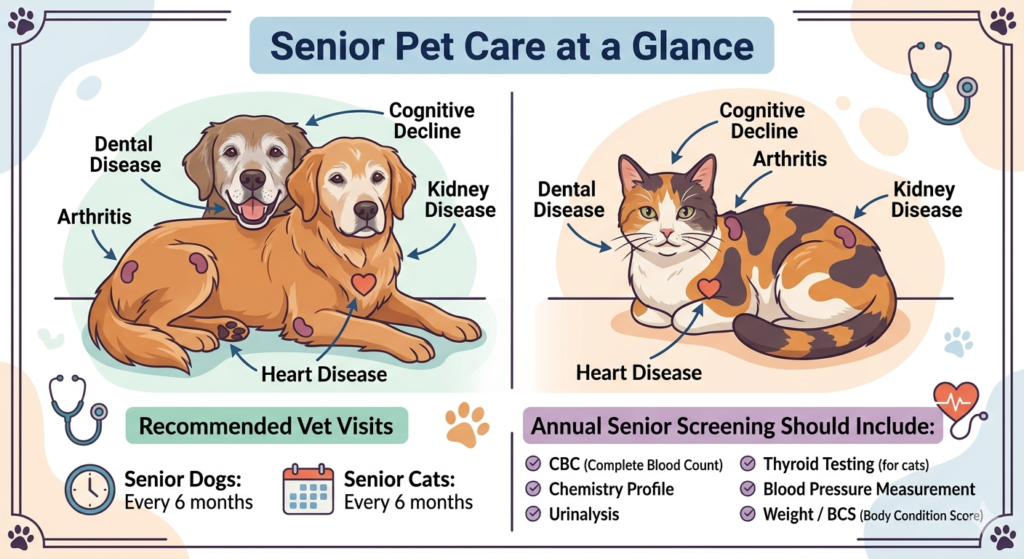
Senior Pet Care at a Glance
Recommended vet visits (senior dogs): every 6 months
Recommended vet visits (senior cats): every 6 months
Most common age-related conditions: arthritis, kidney disease, dental disease, cognitive decline, heart disease
What Geriatric Veterinary Care Actually Looks Like
Good senior pet care is not just more frequent exams — it’s a different kind of exam. Here’s what a thorough senior visit typically includes.
Twice-Yearly Physical Exams
Because pets age faster than people, six months is roughly equivalent to two to three human years. A lot can change in that window. Our senior pet care services are structured around this schedule for a reason.
Baseline and Trending Bloodwork
Senior bloodwork isn’t just about catching disease — it’s about establishing what’s normal for your pet so abnormalities stand out later. A CBC, chemistry panel, thyroid screen (especially for cats), and urinalysis form the backbone. Running these at our in-house lab means results come back during the visit, not three days later.
Blood Pressure Measurement
Hypertension is common in older pets, particularly cats with kidney or thyroid disease, and it often goes undetected. A simple cuff measurement takes a minute and can catch a problem that damages eyes, kidneys, and the brain if ignored.
Pain and Mobility Assessment
We ask about jumping, stairs, walks, grooming, litter box use, and how long your pet holds positions. Subtle changes often point to arthritis, disc disease, or systemic illness. Mobility scoring has become a standard part of geriatric veterinary clinic workups.
Weight and Body Condition Scoring
We weigh your pet and assign a body condition score from 1 to 9. Trending this over visits shows whether weight loss is hidden beneath a heavy coat or whether gradual gain is creeping in.
Cognitive and Behavior Check
We ask about sleep patterns, vocalizations, interaction, confusion, and housetraining. Cognitive dysfunction has real treatments — dietary, environmental, and pharmaceutical — when identified early.
The Most Common Age-Related Pet Health Issues We See in Sacramento
Our patient records tell a pretty consistent story about what ages pets in our region. Here are the conditions that come up most often:
Osteoarthritis and chronic pain — By far the most common issue. Treatable with weight management, joint supplements, pain medications, laser therapy, and activity modification.
Chronic kidney disease (cats) — Early detection through bloodwork and urine testing allows dietary management that can extend quality life by years.
Dental disease — Near-universal in pets over seven. Comprehensive cleanings, extractions when necessary, and home care slow progression dramatically.
Heart disease — Murmurs and arrhythmias in aging dogs, hypertrophic cardiomyopathy in older cats. Early diagnosis through exam, X-ray, and sometimes echocardiogram changes outcomes significantly.
Endocrine disease — Hyperthyroidism in older cats, hypothyroidism and Cushing’s disease in older dogs, diabetes in both species.
Cognitive dysfunction — Often under-recognized. Owners sometimes attribute changes to “just old age” when effective interventions exist.
Cancer — Rates rise with age. Early detection via routine exams and bloodwork dramatically affects treatment options.
Buddy’s Story — What Good Senior Care Actually Does
Buddy, a twelve-year-old Golden Retriever, came in last year for his semi-annual senior wellness visit. His owner mentioned he’d been “a little slower on his walks” but attributed it to age. Physical exam showed mild weight loss, slight dehydration, and reduced range of motion in both hips. Bloodwork flagged elevated kidney values — not yet in a crisis range, but enough to matter.
We started Buddy on a kidney-supportive diet, added a joint supplement and appropriate pain management for his hips, and set a recheck for three months out. At his recheck, his kidney values had stabilized, he’d regained some lost weight, and his owner said he was back to greeting her at the door instead of waiting on his bed.
None of this was dramatic intervention. It was a thorough exam, good bloodwork, and a treatment plan tailored to a senior patient. That combination — early detection, consistent monitoring, targeted care — is what extends both the length and the quality of a senior pet’s years.
Annual Senior Visit vs. Semi-Annual Senior Visit — A Practical Comparison
Many owners ask whether twice-yearly visits are really necessary. Here’s how the two schedules compare for a typical senior dog or cat:
Aspect
Annual Senior Visit
Semi-Annual Senior Visit
Exam frequency in pet-years
~5–7 pet years between visits
~2.5–3.5 pet years between visits
Early detection window
Missed windows for emerging issues
Issues flagged sooner, treatment started earlier
Bloodwork trending
Once-yearly snapshots
Meaningful trend data between visits
Dental progression check
Yearly only
Biannual checks catch rapid changes
Pain and mobility tracking
Limited to once per year
Subtle changes caught earlier
Weight/BCS changes
Larger swings possible before detection
Gradual shifts caught sooner
Best fit for
Healthy younger seniors with no known issues
All seniors, especially those 10+ or with existing conditions
Twice yearly is what we recommend for nearly every senior patient — not because problems are guaranteed, but because the window for effective intervention is so much narrower in older pets.
Home Care Tips for Aging Dogs and Cats
Clinic visits are one piece. Day-to-day life at home is the other.
Make the environment friendlier. Soft bedding, ramps for furniture or cars, rugs over slippery floors, extra litter boxes with lower sides for arthritic cats. Small changes make a large difference.
Feed appropriately for age and condition. Senior diets aren’t a marketing gimmick — they’re formulated with adjusted protein, phosphorus, and calorie levels. If your pet has a diagnosed condition, a prescription diet is often part of the plan.
Keep them moving — but appropriately. Gentle, regular walks preserve muscle and joint function. What dogs shouldn’t do is spend five days on the couch and then hike six miles on Saturday. Consistency beats intensity.
Track water intake, appetite, urination, and stool. Changes in any of these are often the first sign of trouble. A simple note on your phone is enough.
Don’t ignore bad breath. Halitosis in a senior pet is almost never “just age.” It’s almost always dental disease, sometimes severe.
Know when to call. Sudden appetite loss, labored breathing, collapse, seizures, or significant behavior change warrants a call to a veterinarian the same day — and if we can’t get you in, our urgent same-day care handles senior pet issues routinely.
When to Consider End-of-Life Conversations
No one wants this conversation, and no pet owner should have to navigate it alone. Quality-of-life assessments — honest, non-judgmental evaluations of how your pet is actually doing day to day — are part of compassionate senior care.
Signs that warrant a quality-of-life discussion include uncontrolled pain, significant weight loss, loss of interest in food or favorite activities, inability to stand or walk, loss of housetraining, and persistent distress. Our end-of-life care team supports families through these decisions with honesty and respect, helping you weigh options and preserve dignity for your companion.
Frequently Asked Questions
How often should my senior pet visit the vet?
For most senior dogs and cats, twice-yearly wellness exams are the standard recommendation. Pets age roughly five to seven years for every human year, so six months between visits is enough time for significant changes. Visits should include a full physical exam, weight and body condition check, bloodwork when appropriate, blood pressure measurement, and a conversation about mobility, behavior, and appetite. Pets with known conditions may need more frequent monitoring, which your veterinarian will tailor to your pet’s specific situation.
What tests are typically included in a senior wellness exam?
A comprehensive senior wellness workup usually includes a thorough physical exam, complete blood count, chemistry panel, urinalysis, thyroid screening (especially important for cats), and blood pressure measurement. Depending on your pet’s history and exam findings, the veterinarian may also recommend fecal testing, imaging, or additional targeted bloodwork. These tests establish your pet’s individual baseline and catch subtle changes that signal early disease — often before your pet shows any visible symptoms.
Is arthritis in older pets treatable?
Yes, and it’s one of the most rewarding conditions to manage. Treatment typically combines weight management, joint supplements, appropriate pain medications, and home modifications like ramps and soft bedding. More advanced options include laser therapy, physical rehabilitation, and newer monoclonal antibody injections now available for both dogs and cats. Most pets see meaningful improvement in mobility and comfort within a few weeks of starting a tailored plan. The sooner arthritis is diagnosed, the more options are on the table.
How do I know if my older cat is in pain?
Cats mask pain instinctively, which makes it one of the hardest things for owners to catch. Watch for subtle changes: reduced jumping, sleeping in new places (often lower or more sheltered), reluctance to be touched, decreased grooming leading to a scruffy coat, changes in litter box habits, or increased irritability. Weight loss and withdrawal are also common. If you notice any combination of these, a veterinary exam is warranted — mobility and pain assessment is a routine part of geriatric pet care and usually reveals treatable issues.
Can older pets still undergo anesthesia and surgery safely?
Yes, with proper screening. Age alone is not a contraindication for anesthesia. Pre-anesthetic bloodwork, an ECG when indicated, adjusted anesthetic protocols, and continuous monitoring during the procedure make senior surgeries routinely safe. Our team handles dental cleanings, mass removals, and other procedures on senior patients regularly. The decision is always made case by case, weighing the risks of the procedure against the risks of leaving the condition untreated. A thorough pre-op workup answers most of the safety questions up front.
What’s the difference between senior and geriatric pet care?
“Senior” generally refers to the second half of a pet’s typical life expectancy — usually starting around age seven to ten depending on breed and size. “Geriatric” refers to the oldest stage, typically the final 10 to 20% of expected lifespan. A senior pet is healthy but transitioning; a geriatric pet is advanced in age and often managing one or more chronic conditions. Both deserve tailored care, but geriatric pets need more frequent monitoring, more careful medication management, and closer attention to comfort and quality of life.
The best senior pet care is quiet, consistent, and proactive — the kind you don’t notice until you realize your dog or cat has added years of good living to their story.