
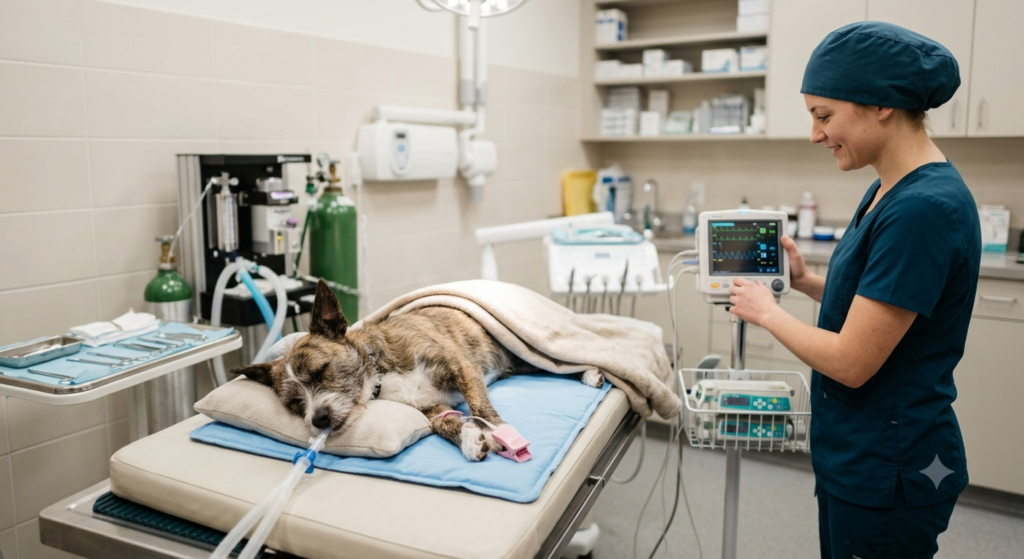
Anesthesia is, by a wide margin, the number one worry pet owners bring up before scheduling a dog dental cleaning. It usually isn’t the cleaning itself that gives people pause, it’s the idea of their pet being put under. That hesitation is understandable, and it deserves a real answer rather than a quick reassurance. At Del Paso Veterinary Clinic, this question comes up almost daily, and the honest response involves both the genuine risks and the substantial safeguards built into modern veterinary anesthesia. This guide breaks down what actually happens during anesthesia for dog and cat dental procedures, what the real numbers say about safety, and why “anesthesia-free” alternatives aren’t the safer shortcut they appear to be.
Why This Question Comes Up So Often
Fear of anesthesia is consistently cited as the leading reason pet owners delay or skip dental procedures altogether, according to veterinary anesthesia researchers who study client decision-making. That hesitation is worth taking seriously rather than brushing aside, because it usually comes from a reasonable place: nobody wants to hand their pet over for a procedure they don’t fully understand. The goal here isn’t to dismiss that concern, it’s to walk through exactly what modern veterinary anesthesia protocols involve so the decision can be made with complete information rather than fear alone.
What Actually Happens Before and During the Procedure
A dog or cat dental cleaning under anesthesia is not a single event, it’s a sequence of safety checks layered on top of each other.
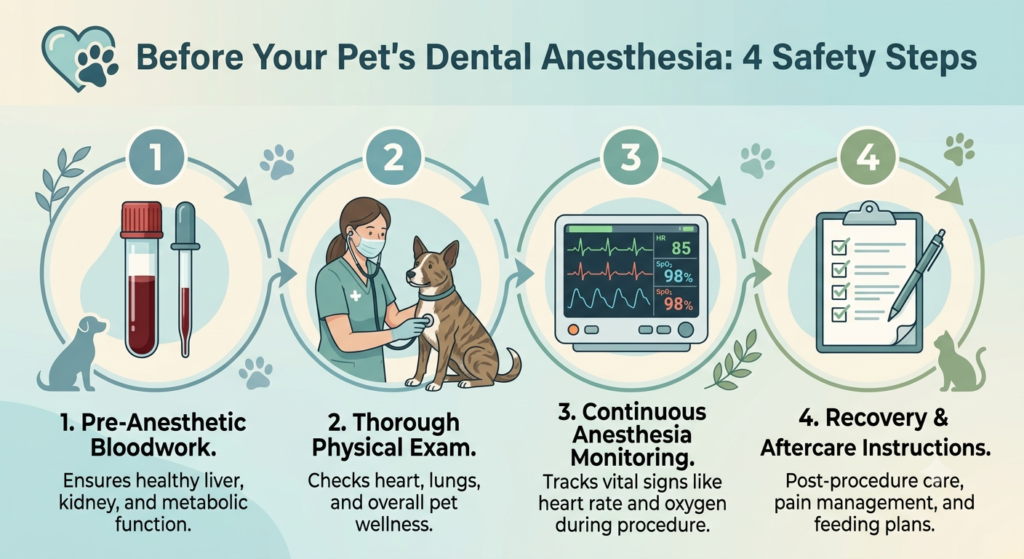
Pre-Anesthetic Bloodwork: The First Safety Check
Before any sedative is administered, bloodwork evaluates organ function, particularly kidney and liver values, along with a complete blood count to rule out anemia or infection. This step exists specifically to catch health issues that wouldn’t be obvious from a physical exam alone. Our in-house diagnostic laboratory provides same-day results, which means anesthesia decisions are based on same-day data rather than results from days earlier that may no longer reflect the pet’s current health.
Monitoring During the Procedure
Once a pet is anesthetized, continuous monitoring tracks vital signs throughout the entire procedure. That typically includes pulse oximetry to measure blood oxygen levels, an ECG to monitor heart rhythm, blood pressure readings, temperature tracking, and capnography to measure exhaled carbon dioxide, all overseen by a dedicated technician whose only job during the procedure is watching those numbers. Our dentistry services page walks through this monitoring setup in more detail, including how it applies specifically to dental cleanings and extractions.
How Safe Is Anesthesia, Really? The Numbers
This is where most of the anxiety can actually be addressed with data rather than reassurance alone. Large-scale studies tracking anesthetic outcomes across tens of thousands of veterinary patients have found that the mortality risk for healthy dogs undergoing anesthesia is approximately 0.05 percent, and for healthy cats it’s approximately 0.11 percent. Put another way, that means well over 99.9 percent of healthy dogs and roughly 99.9 percent of healthy cats come through anesthesia without a fatal complication. Those figures come from research compiled through the ASPCA’s professional resources on small animal anesthesia risk, drawing on studies that followed nearly 100,000 dogs and close to 80,000 cats.
The risk does rise for pets with underlying illness, which is exactly why pre-anesthetic bloodwork and a physical exam happen before every procedure. A healthy young dog going in for a routine cleaning carries a very different risk profile than an older dog with heart disease, and a responsible anesthesia protocol treats those two patients differently rather than applying a one-size-fits-all approach.
Why “Anesthesia-Free” Dental Cleaning Isn’t a Safer Shortcut
It’s a common assumption that skipping anesthesia removes risk entirely. In practice, it removes the ability to actually treat the disease while introducing a different set of problems. The American Animal Hospital Association’s dental care guidelines describe anesthesia-free dental cleaning as inappropriate, citing patient stress, the risk of aspiration, and the simple fact that a conscious, restrained pet cannot have the area below the gum line properly cleaned or examined. That subgingival space, below the gum line, is exactly where periodontal disease actually develops and progresses. Removing visible tartar from the crown of the tooth on an awake pet is a cosmetic improvement, not a treatment.
There’s also a welfare consideration that doesn’t get discussed enough: a pet doesn’t understand why it’s being physically restrained while sharp instruments work around its mouth. The AVMA has documented ongoing debate in the veterinary field over anesthesia-free dentistry precisely because the practice has been marketed as a gentler alternative when the restraint involved is often more stressful for the pet than a properly monitored anesthetic procedure, which the animal doesn’t experience consciously at all.
Senior Pets and Pets With Health Conditions
Age alone is not a reason to avoid anesthesia, and this is one of the more persistent myths worth correcting directly. Veterinary anesthesiologists use a health classification system, similar to what’s used in human medicine, to categorize a patient’s overall risk before any procedure. A healthy senior dog can fall into the same low-risk category as a healthy young dog. What actually changes the risk equation is underlying disease, not the number on a birthday cake.
For pets with heart conditions, kidney disease, or other chronic issues, the anesthesia protocol itself gets adjusted, different drug choices, closer monitoring, and sometimes a staged approach rather than a single long procedure. This is a conversation to have directly with your veterinarian rather than a reason to avoid dental care altogether, since untreated dental disease in older pets carries its own serious risks, including bacteria entering the bloodstream and affecting the heart and kidneys over time.
Anesthesia-Free vs. Anesthetized: A Direct Comparison
| Factor | Anesthesia-Free Cleaning | Anesthetized Dental Cleaning |
|---|---|---|
| Below-the-gum-line cleaning | Not possible | Full access to treat active disease |
| Pet experience | Conscious restraint, potential stress | No awareness during the procedure |
| Diagnostic ability | Visual only, no probing | Full oral exam, probing, and assessment |
| Extractions if needed | Cannot be performed | Performed the same visit if necessary |
| Airway protection | None | Endotracheal tube protects against aspiration |
| Recognized standard of care | Not endorsed by AAHA or AVDC | Endorsed as the standard of care |
A Sacramento Case Study: Dental Care for a Senior Dog With a Heart Murmur
A twelve-year-old dachshund named Otto came in for a wellness exam with significant tartar buildup and gum inflammation his owner had been putting off addressing, largely out of fear that his age and a previously diagnosed heart murmur made anesthesia too risky. Rather than ruling anesthesia out entirely, the pre-anesthetic workup included bloodwork and a careful cardiac assessment to understand exactly how significant the murmur was.
Based on those results, Otto’s anesthesia protocol was adjusted specifically for his cardiac status, with continuous monitoring throughout the procedure and a plan tailored to his individual risk profile rather than a generic approach. The cleaning revealed two teeth with advanced periodontal disease that needed extraction, both addressed during the same visit. Otto recovered without complications and went home the same day. His owner’s biggest fear, that his heart condition made any anesthesia off the table, turned out to be the reason for a customized plan rather than a reason to avoid treatment entirely.
Questions Worth Asking Before Any Dental Procedure
A good conversation with your veterinarian before a dental cleaning should cover more than just scheduling. Consider asking:
- What does the pre-anesthetic bloodwork check for, and what would change the plan?
- What kind of monitoring will be used throughout the procedure?
- How is the anesthesia protocol adjusted for my pet’s age or health history?
- What happens if extractions are needed, will that happen the same visit?
- What does recovery and aftercare look like once we’re home?
A veterinarian who answers these clearly and specifically, rather than with a generic reassurance, is giving you the information needed to make a genuinely informed decision.
Frequently Asked Questions
-
Is anesthesia really necessary for cat teeth cleaning, or just dogs?
Yes, for both species. Cats will not tolerate instruments working below the gum line while conscious, and that subgingival area is exactly where feline dental disease, including painful conditions like tooth resorption, actually develops. Anesthesia allows a full oral exam, thorough cleaning above and below the gum line, and extractions in the same visit if needed. Skipping anesthesia for a cat means the underlying disease goes untreated even if the visible tartar looks improved.
-
How do I know if my dog is healthy enough for dental anesthesia?
Pre-anesthetic bloodwork and a physical exam are the standard way to answer this question, rather than relying on age or general appearance alone. Bloodwork checks kidney and liver function along with a complete blood count, giving your veterinarian same-day information about whether anesthesia can proceed as planned or whether adjustments are needed. This is done before every dental procedure, not just for pets who seem obviously at risk.
-
My dog is a senior. Does that automatically mean higher anesthesia risk?
Not automatically. Age itself is not the primary risk factor, underlying health conditions are. A healthy senior dog with normal bloodwork can fall into the same low-risk category as a healthy younger dog. What matters is an individualized evaluation before the procedure, which is exactly why pre-anesthetic testing exists rather than applying a blanket age cutoff.
-
What is anesthesia-free dental cleaning, and is it a safer option?
Anesthesia-free cleaning removes visible tartar from the tooth surface while the pet is awake and physically restrained. It cannot address the area below the gum line, where periodontal disease actually progresses, and it does not allow a real diagnostic exam. Major veterinary organizations, including AAHA and the American Veterinary Dental College, do not recognize it as an acceptable standard of care, since it treats appearance rather than disease.
-
What monitoring equipment is used during my pet’s dental procedure?
Continuous monitoring typically includes pulse oximetry for blood oxygen levels, an ECG for heart rhythm, blood pressure tracking, temperature monitoring, and capnography to measure exhaled carbon dioxide. A dedicated technician watches these readings throughout the entire procedure, which allows immediate response if any value shifts outside a normal range, well before it becomes a serious problem.
-
What happens if my pet needs a tooth extraction during the dental cleaning?
If an exam under anesthesia reveals a tooth that’s too diseased or damaged to save, extraction is typically performed during the same visit rather than requiring your pet to undergo a second anesthesia event later. This is one of the practical advantages of a thorough anesthetized exam: problems are found and addressed in one procedure instead of being discovered later and requiring a repeat visit.
Understanding what happens during dog dental cleaning anesthesia turns a vague fear into an informed decision, and that’s usually all it takes to stop putting off care your pet actually needs. If you have questions specific to your pet’s health history, Del Paso Veterinary Clinic’s dentistry services team can walk through them directly, and our surgical services page covers what to expect if extractions or oral surgery become part of the plan. For a broader look at recognizing dental disease before it reaches this point, see our guide on signs of pet dental disease in Sacramento.