
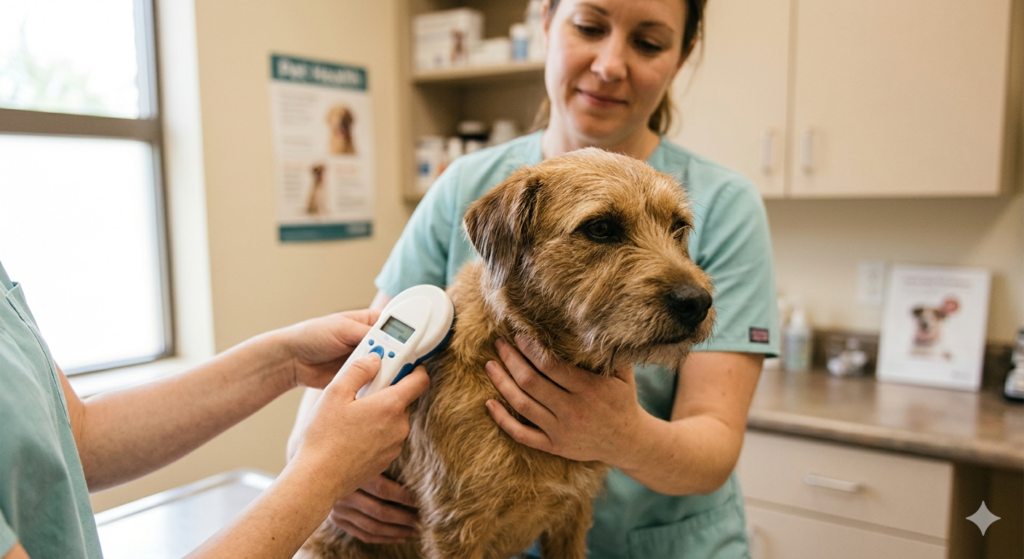
If you have ever come home to an empty yard and a gate that should have been latched, you already know the feeling that drives most Sacramento pet owners to finally book a dog microchipping appointment. It is not paranoia — it is the very ordinary realization that collars slip off, tags wear down, and the open door only has to happen once. At Del Paso Veterinary Clinic, we have spent over eight decades helping local families turn that worry into something practical: a permanent, lifelong piece of identification roughly the size of a grain of rice.
This guide walks through exactly what microchipping is, how the procedure feels for your pet, where the chip is placed and why, what the registration process involves (this is the part most owners get wrong), and what really happens if your dog goes missing in the Sacramento area. We have included a real reunion case study from our practice, a side-by-side comparison of identification options, and answers to the questions Sacramento pet owners ask us most often.
Sacramento data point: According to the American Humane Association’s long-running pet recovery research, only about 22% of lost dogs ever make it back to their owners — but that number jumps to roughly 52% when the dog is microchipped. For cats, the difference is even more dramatic: a 20x improvement in return-to-owner rates with a registered chip.
Why Dog Microchipping Matters More Than Ever in Sacramento
Sacramento County animal services receives thousands of stray intakes every year. A meaningful portion of those animals are clearly someone’s beloved pet — well-fed, well-groomed, friendly with people — and yet they sit in shelter kennels because no one can identify them. A collar with a paper tag has a useful life of maybe a year before the ink wears off. A nylon collar gets caught on a fence post and snaps. Cats slip out of breakaway collars by design. None of these are theoretical scenarios. They happen to careful owners every single week in our service area.
A microchip is the only form of pet identification that cannot be removed by accident, weather, or struggle. It does not need to be replaced, recharged, or reattached. Once it is under your dog’s skin and properly registered, it is doing its job whether your pet has been gone for an hour or seven years. There are documented cases of dogs being reunited with families a decade after going missing, simply because the chip was scanned at a shelter halfway across the country.
How a Pet Microchip Actually Works
A lot of misinformation floats around about microchips — most of it involving GPS, batteries, or surveillance. None of that is real. Here is the actual technology, in plain English.
What Is Inside the Chip
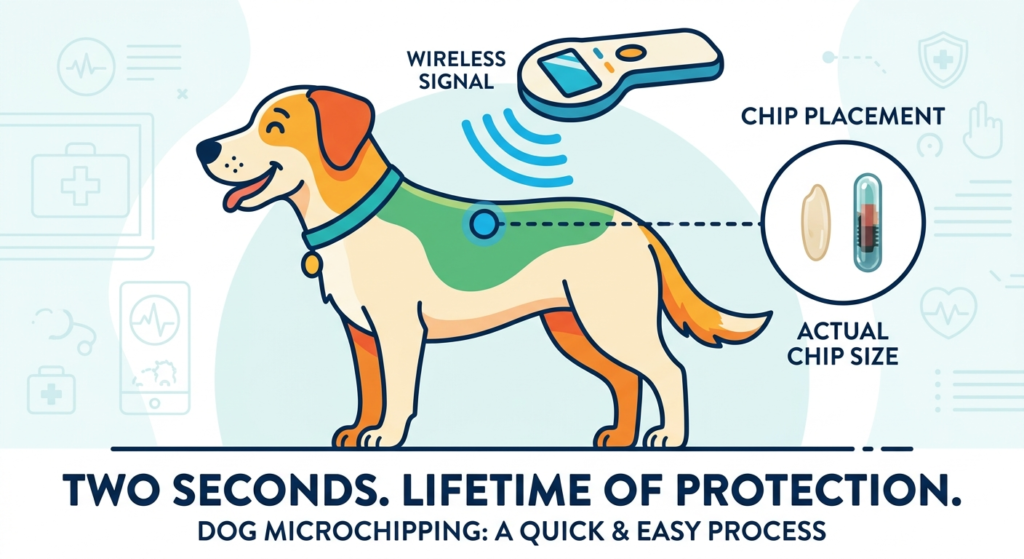
The microchip is a passive RFID (radio-frequency identification) device. It contains no battery, no transmitter, and no GPS receiver. It cannot track your dog’s location, broadcast a signal, or do anything at all on its own. It only activates when a compatible scanner is held within a few inches of it. The scanner emits a low-power radio field that briefly powers the chip, which then transmits a unique 15-digit ID number back to the scanner. That number is the chip’s only output. Everything else — your name, phone number, address — lives in a separate online registry database, not on the chip itself.
ISO 11784 and 11785 Standards Explained
The international standard you want is ISO 11784/11785. Chips built to this standard transmit at 134.2 kHz and use a 15-digit ID format that any modern universal scanner can read. Older chips operating at 125 kHz still exist in some pets, which is why reputable shelters and vet clinics use universal scanners that read all three common frequencies. When we implant a chip at our clinic, we use ISO-compliant chips so your pet’s identification works at virtually every shelter and veterinary practice in North America, and at most international destinations as well.
How Long Does It Take to Microchip a Dog
The injection itself takes about three to five seconds. The full appointment, including a quick scanner check to confirm the chip is reading correctly, usually wraps up in under ten minutes. There is no anesthesia, no sutures, no recovery time, and no follow-up visit needed. Most dogs react about the same way they do to a routine vaccination — a brief flinch, then they go back to sniffing the exam table for treats.
Our complete clinical service details for microchipping and pet identification cover everything from chip selection to the registration support our team provides on the day of the appointment.
Where Do They Microchip Dogs and What Does It Feel Like
The chip is implanted just under the loose skin between your dog’s shoulder blades, in the same general area where most subcutaneous injections are given. The needle is slightly larger than a vaccine needle because the chip itself is rice-sized, but the procedure feels comparable to your dog. There are no nerves of significance in that area, which is part of why it is the chosen site — minimal sensation, easy access, and a stable anatomical location where the chip will stay put for life.
Within a few days, the body’s natural connective tissue forms a thin capsule around the chip, anchoring it in place. This is why microchips do not migrate around the body the way internet myths sometimes claim. Migration of more than a centimeter or two is genuinely rare and harmless when it does occur, since shelters scan the entire neck, shoulder, and back area as standard practice.
A Real Sacramento Reunion: The Story of Cooper
Cooper is a four-year-old shepherd mix who was adopted from a local rescue in 2022 and microchipped before he ever went home. His owner, a retired teacher in North Sacramento, did the registration the same evening — name, two phone numbers, email, and her daughter’s information as a backup contact. She updated the address eighteen months later when she moved to Natomas. None of this took more than fifteen minutes total over the years.
In late 2024, Cooper bolted through a side gate that a contractor had left open. He was missing for nineteen days. He was eventually picked up by a Good Samaritan in West Sacramento, more than ten miles from home, and brought to a shelter. The shelter scanned him within two minutes of intake. The microchip registry pulled up his owner’s current phone number on the first try. She had Cooper home that same afternoon.
The takeaway from Cooper’s story is not the chip. It is the registration. If she had skipped that fifteen-minute step, or never updated the address after moving, the scan would have produced a number that traced back to nothing — which happens far more often than most owners realize.
The Pet Registration Microchip Process Step by Step
Here is the part of the process where most owners drop the ball, and where we spend a lot of appointment time coaching families.
- Receive your chip ID number at the appointment. We hand you a paper card and email a digital copy. Keep both.
- Identify the registry. Each chip manufacturer has a default registry (HomeAgain, AKC Reunite, 24PetWatch, AAHA Universal Lookup, etc.). The registration paperwork tells you which one applies to your chip.
- Create your account online the same day. Do not wait. Most owners who delay registration never come back to it.
- Enter accurate contact information. Primary phone, secondary phone, email, current address, and at least one emergency contact who is not in your household.
- Update the registry whenever life changes. Moves, new phone numbers, change of ownership, even a new email address — all of it needs to flow into the registry promptly.
Why Registration Is the Most Overlooked Step
A chip without registration is a number that points to nothing. According to studies cited by the American Veterinary Medical Association on microchip recovery rates, a significant percentage of microchipped pets brought into shelters cannot be reunited with their owners because the registration is incomplete, outdated, or never completed at all. The chip did its job. The paperwork was the failure point.
You can verify your registration status anytime using the AAHA Universal Pet Microchip Lookup tool, which checks across all major US registries at once. If the lookup returns a registry but no contact information is on file, that is your signal to log in and complete the record.
Microchipping During Spay or Neuter — A Smart Combination
One of the questions we hear most often from Sacramento clients is whether their dog needs a separate appointment for chipping. The answer is almost always no. If your puppy is already scheduled for spay or neuter surgery, the microchip can be placed while your pet is already under sedation, which means they feel nothing at all and you save an entire appointment.
This is also a sensible time to handle it logistically. Spay and neuter surgeries are typically done between four and six months of age, which is right around the time your dog becomes physically capable of escaping a yard, jumping a fence, or pulling out of a leash. Bundling the chip into that appointment closes a real window of risk before it ever opens. The same goes for vaccine appointments — our walk-in vaccine clinic regularly handles microchip placement during the same visit when families request it.
Comparison: Microchip vs GPS Collar vs ID Tag
| Feature | Microchip | GPS Collar | ID Tag |
|---|---|---|---|
| Permanence | Lifetime | Until battery dies or collar is lost | Until tag falls off or fades |
| Requires power | No | Yes (battery/charging) | No |
| Tracks location | No | Yes | No |
| Identifies owner if scanned | Yes | Sometimes | Yes (if readable) |
| Removable by mistake | No | Yes | Yes |
| Works at shelters nationwide | Yes (ISO standard) | No | Only if visible |
| Subscription required | No | Usually yes | No |
| Useful when collar is gone | Yes | No | No |
| Recommended approach | Primary backup | Secondary tool | Daily visible ID |
The honest reality is that all three serve different purposes, and the strongest protection comes from using them together: a microchip as the permanent backup, an ID tag for instant visible identification, and optionally a GPS collar for active tracking if your dog is a known escape artist.
Where to Get a Dog Chipped in Sacramento
Microchipping is offered through several types of providers in the Sacramento area, and the right choice depends on your situation.
- Full-service veterinary clinics — Best when you want the chip placed by a licensed vet who can also confirm general health, scan for any preexisting chip, and help with registration support on the spot.
- Low-cost vaccine and chip clinics — Often run by nonprofits or shelters; affordable but may have less individual time for registration help.
- Animal shelters at adoption — Most adopted pets in California come pre-chipped, but the chip is often registered to the shelter and must be transferred to your name.
- Mobile clinics and pop-up events — Useful for owners who cannot easily get to a clinic; quality varies, so verify the chip is ISO-compliant before agreeing.
For Sacramento owners searching specifically for “pet microchipping near me” or a “pet microchip clinic,” the most important factors are ISO-standard chips, on-site scanner verification before you leave, and clear written registration instructions you can act on the same day.
What to Do If Your Pet Goes Missing
Speed matters. The first 24 hours are when your dog is most likely to be found nearby and most likely to come when called. Here is the practical sequence:
- Search a one-mile radius first — most dogs are found close to home within the first day.
- Call Sacramento County Animal Care Services and surrounding shelters. Provide your microchip number every time.
- File a lost pet report with your microchip registry. Most major registries trigger an alert system that notifies nearby vets, shelters, and registered users.
- Post on Nextdoor, neighborhood Facebook groups, and Pawboost. Include a current photo and the chip number’s first few digits as proof of ownership.
- Visit shelters in person every two to three days. Staff intake hundreds of animals; in-person checks catch what staff descriptions sometimes miss.
- Notify nearby veterinary clinics. Good Samaritans frequently bring strays to the closest vet rather than the shelter.
The Humane Society of the United States lost pet guide provides additional step-by-step guidance and a checklist you can print out the same day.
When to Schedule Your Pet’s Microchip Appointment
The honest answer is yesterday, but the practical answer is whenever you next have your dog in for any kind of veterinary visit. Microchipping does not require its own dedicated appointment — it pairs naturally with routine wellness exams, vaccine boosters, dental cleanings, or surgical procedures. Owners who want to handle it as a standalone visit can absolutely do so; the appointment is short and easily scheduled.
For Sacramento families with newly adopted pets, the strongest recommendation we can give is this: confirm whether your pet already has a chip, find out which registry it is in, and transfer the registration to your name before the first month of ownership ends. That single step quietly protects your pet for the rest of their life.
To schedule, you can reach our team at (916) 925-2107 or visit us at 924 Del Paso Blvd, Sacramento, CA 95815.
Frequently Asked Questions About Dog Microchipping
-
How long does it take to microchip a dog?
The injection itself takes about three to five seconds, and the complete appointment usually finishes in under ten minutes. There is no anesthesia required, no sutures, and no recovery time. Most dogs react about the same way they would to a routine vaccination — a brief flinch followed by complete normal behavior. You can take your pet home immediately and resume regular activity, including walks, play, and meals, with no restrictions.
-
Where do they microchip dogs?
The microchip is implanted just under the skin between your dog’s shoulder blades, in the loose tissue along the upper back. This location is chosen because there are minimal nerve endings in the area, the skin is easy to access without restraint, and the chip stays anchored once tissue forms around it. Shelter staff and veterinarians know to scan this area first, but universal scanners cover the entire neck and shoulder region as standard procedure.
-
Where to get a dog chipped in Sacramento?
Sacramento offers several options including full-service veterinary clinics, low-cost shelter-run clinics, mobile vaccination events, and adoption-bundled chipping at rescues. The right choice depends on your priorities. A licensed veterinary clinic gives you on-the-spot registration help, scanner verification before you leave, and the ability to bundle the chip with other care. Low-cost clinics work well for owners on tight budgets but may offer less individual time.
-
What is pet registration microchip and why does it matter?
Pet registration microchip refers to entering your contact information into the online database tied to your chip’s unique ID number. Without registration, the chip just produces a number that traces back to no one. The chip itself does not store your name or address — that information lives in the registry. Registering the chip the same day it is placed, and updating it after moves or phone changes, is the single most important step.
-
Is urgent pet microchip registration possible if my dog just got chipped?
Yes. You can register the chip online within minutes of leaving the appointment, and most major registries activate the record immediately. If your pet is already missing and was previously chipped without completed registration, contact the chip manufacturer’s emergency line — most have lost-pet hotlines that can fast-track contact updates. You can also use the AAHA Universal Pet Microchip Lookup to identify the registry and update records.
-
Can I microchip my dog during another appointment?
Absolutely. Microchipping pairs naturally with wellness exams, vaccine appointments, dental cleanings, and especially spay or neuter surgery. Bundling the chip into an existing appointment saves you a separate trip and, in the case of surgery, means your dog is sedated and feels nothing at all. Most veterinary clinics, including ours, will add the chip to any scheduled visit when you request it ahead of time or during check-in.
-
What is vet microchipping and how is it different from shelter chipping?
Vet microchipping is the same procedure performed in a clinical setting by licensed veterinary staff, with the added benefit of a full health check, immediate scanner verification, and personalized registration support. Shelter chipping is functionally identical but often happens in higher-volume settings with less individual time. Both produce the same lifelong identification result. Choose based on which environment fits your dog’s temperament and your need for guidance.
-
How do I find a reliable pet microchip clinic near me?
Look for three things: ISO-standard chips (look for “ISO 11784/11785” in the materials), on-site scanner verification before you leave the appointment, and clear written registration instructions you can act on the same day. A reputable provider will also offer to scan your existing pet for any preexisting chip before placing a new one, which prevents duplicate chips. Reviews mentioning successful reunions are a strong positive signal.
A microchip is a fifteen-second procedure that buys your dog a lifetime of finding their way back to you — and that is a trade worth making before you ever need it.