
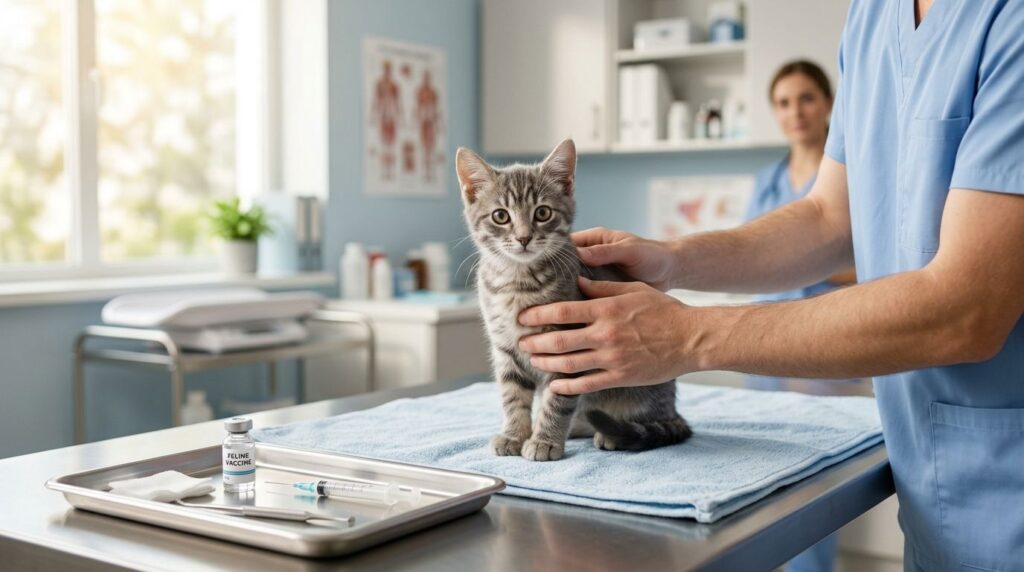
If you have been searching for cat vaccinations near me in the Sacramento area, you are likely trying to answer two questions at once: which shots does my cat actually need, and where can I get them without the runaround. Del Paso Veterinary Clinic has been vaccinating cats and kittens in the Del Paso Heights and North Sacramento community for years, and this guide walks through exactly what core and non-core feline vaccines cover, how the kitten series works, and what to expect at every stage of your cat’s life.
Cat vaccines near me searches spike every spring, usually right after kitten season starts and outdoor cats begin roaming again after a quiet winter. Understanding the schedule ahead of time means fewer surprises and fewer missed boosters.
Why Cat Vaccinations Matter More Than Most Owners Realize
Indoor cats are often assumed to be low risk, but panleukopenia and calicivirus particles can travel on shoes, clothing, and other pets, and both diseases survive on hard surfaces for extended periods. A cat that never leaves the house can still be exposed through an open door, a new foster kitten, or a trip to the groomer. That is one reason feline core vaccines are recommended for every cat regardless of lifestyle.
Vaccination also protects the wider community. Rabies is a fatal, reportable disease in California, and a documented rabies vaccine is often required for licensing, boarding, and even some rental housing agreements. Staying current is not just a health decision, it is a practical one.
Core Feline Vaccines: FVRCP and Rabies
FVRCP: The Combination Shot Every Cat Needs
FVRCP is a single vaccine that protects against three separate viruses: feline viral rhinotracheitis, calicivirus, and panleukopenia. Owners searching for an fvrcp vaccine near me are usually looking for this exact combination shot, since it is considered a core vaccine by veterinary organizations nationwide.
- Rhinotracheitis (feline herpesvirus): causes sneezing, nasal discharge, and eye inflammation, and can flare up repeatedly throughout a cat’s life once contracted.
- Calicivirus: another leading cause of upper respiratory disease, sometimes accompanied by painful mouth ulcers.
- Panleukopenia: often called feline distemper, this is the most dangerous of the three, attacking the immune system and gastrointestinal tract, and it is frequently fatal in unvaccinated kittens.
Rabies Vaccine for Cats
A rabies vaccine for cats is legally required in most California jurisdictions and is one of the most searched terms among Sacramento cat owners, alongside cat rabies vaccine near me and rabies vaccine for cats near me. Rabies is transmitted through bites from infected wildlife, including bats and skunks, both of which are present in the greater Sacramento area. The CDC notes that once clinical signs appear, rabies is nearly always fatal, which is why prevention through vaccination remains the only reliable protection for cats and the people who handle them.
Non-Core Vaccines: FeLV and Lifestyle-Based Decisions
Feline leukemia virus, or FeLV, is generally recommended for kittens under one year of age and for adult cats with outdoor access or exposure to other cats whose vaccine history is unknown. The Cornell Feline Health Center notes that FeLV spreads through close contact such as mutual grooming, shared food bowls, and bite wounds, so households with multiple cats or cats that roam should discuss FeLV testing and vaccination during a wellness visit.
Bordetella and chlamydophila vaccines exist as well, but they are reserved for specific situations like multi-cat households, catteries, or boarding environments where those particular pathogens are documented risks. Your veterinarian can help determine whether your cat’s lifestyle calls for anything beyond the core protocol.
Kitten Vaccine Schedule: What to Expect in the First Year
Kittens are born with temporary protection from their mother’s colostrum, but that protection fades gradually over the first several weeks of life, which is why the kitten series uses multiple doses rather than a single shot. Owners searching for kitten vaccines near me or kitten shots near me are usually trying to time this series correctly.
A typical kitten schedule looks like this:
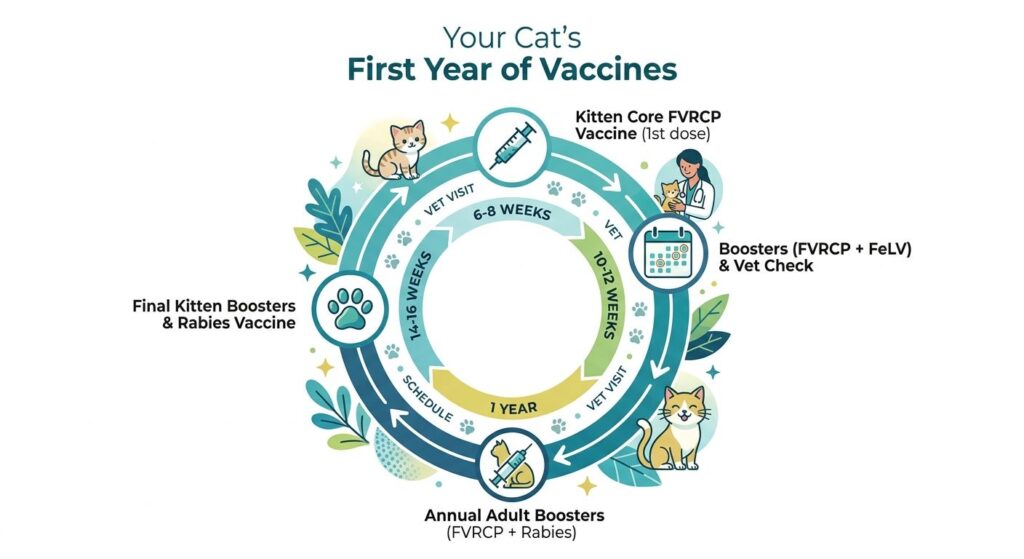
- 6 to 8 weeks: First FVRCP dose, and a physical exam to check for parasites and general health.
- 10 to 12 weeks: Second FVRCP booster, plus a discussion of FeLV vaccination if the kitten will have outdoor access or lives with cats of unknown status.
- 14 to 16 weeks: Third FVRCP dose and the rabies vaccine, once the kitten is old enough to receive it.
- 1 year: A full booster series to lock in long-term immunity before shifting to a less frequent adult schedule.
Spacing the doses three to four weeks apart allows the immune system to respond as maternal antibodies decline, rather than being blocked by them. Skipping doses or stretching the interval too far can leave gaps in protection right when a kitten is most vulnerable.
Adult and Senior Cat Booster Schedule
Once the kitten series and one-year booster are complete, most adult cats move to triennial FVRCP and rabies boosters, meaning roughly every three years rather than annually, a schedule reflected in the 2020 AAHA/AAFP Feline Vaccination Guidelines, unless your veterinarian recommends otherwise based on your cat’s health or local requirements. FeLV boosters, when indicated, are typically given annually for cats with ongoing outdoor exposure.
Senior cats still benefit from staying current on core vaccines, but a wellness exam becomes just as important as the vaccine itself at this stage, since age-related conditions can affect how a cat responds to any medical intervention.
Core vs. Non-Core Feline Vaccines: Quick Comparison
| Vaccine | Type | Who Needs It | Frequency |
|---|---|---|---|
| FVRCP | Core | Every cat, indoor or outdoor | Kitten series, then every 3 years |
| Rabies | Core | Every cat (often legally required) | Initial dose, then per veterinary schedule |
| FeLV | Non-core | Kittens under 1 year; outdoor or multi-cat households | Annual if ongoing exposure risk |
| Bordetella | Non-core | Multi-cat, boarding, or cattery environments | As recommended by lifestyle risk |
| Chlamydophila | Non-core | High-risk multi-cat households with documented exposure | As recommended by lifestyle risk |
Finding a Cat Vaccine Clinic Near Me in Sacramento
Sacramento pet owners searching for a cat vaccine clinic near me, a shot clinic for cats near me, or a feline vaccine clinic often want the same thing: a straightforward visit without weeks of waiting for an appointment. Del Paso Veterinary Clinic’s walk-in vaccine clinic is designed for exactly this, offering FVRCP, rabies, and FeLV vaccines for cats and kittens during the week without requiring you to book ahead.
For owners comparing options after searching cat vaccinations near me or vaccine clinic for cats near me, a walk-in format tends to work best for routine boosters, while a scheduled wellness exam is a better fit for a first visit, a health concern, or an older cat who needs a fuller checkup alongside the shot. Our team can help you decide which route makes more sense for your situation when you call ahead.
If your household has both cats and dogs, our walk-in vaccine clinic guide covers scheduling for both species in the same visit, and our puppy vaccinations guide breaks down the canine side of the first-year schedule in more detail.
Accessible Vaccine Options for Every Household
Owners searching low cost cat vaccinations near me, low cost vaccines for cats, or cheap cat vaccines near me are usually budgeting carefully, and that is completely reasonable. Rather than skipping vaccines altogether, ask about payment options at your visit. Del Paso Veterinary Clinic accepts CareCredit and ScratchPay, and provides documentation for pet insurance reimbursement, which can make staying current on core vaccines more manageable without delaying protection your cat actually needs.
Delaying vaccines to save money often costs more later, since treating a preventable disease like panleukopenia is far more involved, and far harder on your cat, than the original prevention would have been.
What Happens During a Cat Vaccine Visit
A typical visit starts with a brief health check, including weight, temperature, and a look at your cat’s overall condition, since a sick or feverish cat generally should not be vaccinated until they recover. The vaccine itself takes only a moment. Mild, short-lived side effects are common and expected, including brief tenderness at the injection site, mild lethargy, or a slightly reduced appetite for a day. According to the American Association of Feline Practitioners, serious reactions are uncommon, but owners should contact their veterinarian if they notice facial swelling, repeated vomiting, or difficulty breathing shortly after a vaccine.
For cats who are anxious at the vet, our team can offer handling tips and low-stress techniques to make future visits easier, since a stressful first experience often makes every visit after it harder.
Patient Story: Milo’s First-Year Series
Milo, a gray tabby kitten, came to Del Paso Veterinary Clinic at eight weeks old after being found in a backyard in North Sacramento. He had no vaccine history and mild nasal discharge on his first exam, a common sign of early rhinotracheitis exposure in kittens without maternal protection. Dr. Khabra started Milo on the standard FVRCP series that same visit, treated the mild respiratory symptoms supportively, and scheduled the second dose three weeks later.
Because Milo’s finder planned to let him explore a secured backyard as an adult, the team also discussed FeLV vaccination during the second visit and tested him beforehand, following standard practice of testing before vaccinating for FeLV. By sixteen weeks, Milo had completed his FVRCP series, received his rabies vaccine, and tested negative for FeLV, clearing him for the non-core vaccine as an added layer of protection. He is now on the standard adult booster schedule and returns for wellness exams between vaccine visits.
Indoor vs. Outdoor Cats: Does Lifestyle Change the Vaccine Plan
Every cat benefits from FVRCP and rabies regardless of lifestyle, since both diseases can reach even strictly indoor cats through household exposure. Outdoor access, exposure to unknown cats, or a multi-cat household with unclear vaccine histories are the main factors that push FeLV, and occasionally bordetella, from optional to recommended. If your cat’s lifestyle changes, such as moving to a home with outdoor access or bringing home a second cat, it is worth revisiting the vaccine plan at your next visit rather than assuming the original schedule still fits.
Related Preventive Care Worth Scheduling Alongside Vaccines
Vaccines protect against specific viral diseases, but they are only one part of a complete preventive care plan. Sacramento’s Central Valley climate supports fleas and other parasites for most of the year, so pairing your cat’s vaccine visit with a conversation about parasite prevention is worth the extra few minutes. For cats due for FeLV or general bloodwork, our in-house diagnostic lab allows same-visit testing in many cases, so you are not waiting days for results before moving forward with vaccination.
A vaccinated cat is a protected cat, and a protected cat is one less worry in a busy household.
Frequently Asked Questions
-
Where can I get my cat’s shots near me in Sacramento?
Del Paso Veterinary Clinic offers a walk-in vaccine clinic during the week for cats and kittens, covering FVRCP, rabies, and FeLV without requiring an appointment. For a first visit, a health concern, or an older cat, we recommend calling ahead so we can pair the vaccine with a fuller wellness check if needed. Bring any prior vaccine records if your cat has been seen elsewhere before.
-
What vaccines does my kitten need in the first year?
Kittens typically need three FVRCP doses spaced three to four weeks apart, starting around six to eight weeks of age, followed by a rabies vaccine once they reach the appropriate age. FeLV vaccination is often recommended for kittens as well, particularly if they will have outdoor access or live with cats of unknown vaccine status. A one-year booster completes the initial series.
-
Does my indoor-only cat still need vaccines?
Yes. Panleukopenia and calicivirus can be carried indoors on shoes, clothing, or other pets, and both are considered core vaccines for every cat regardless of lifestyle. Rabies is also typically required by local regulation even for cats that never go outside, since exposure risk, while lower, is not zero and the disease is fatal once symptoms appear.
-
How often does my adult cat need booster shots?
Most adult cats move to a three-year schedule for FVRCP and rabies after completing the kitten series and one-year booster, though your veterinarian may adjust this based on health status or local requirements. FeLV boosters, if your cat’s lifestyle warrants them, are usually given annually. Your cat’s records will show exactly when the next booster is due.
-
Are there low cost cat vaccination options in Sacramento?
Del Paso Veterinary Clinic accepts CareCredit and ScratchPay to help spread out the cost of care, and we provide documentation for pet insurance reimbursement. We recommend calling ahead to discuss current options for your cat’s specific vaccine needs, since the right combination depends on age, health history, and lifestyle rather than a single fixed plan.
-
Can I bring my cat in the same day for vaccinations?
Our walk-in vaccine clinic is available during the week without an appointment, which covers most routine cat and kitten vaccine visits. If your cat needs a fuller wellness exam alongside the vaccine, or has a health concern that needs attention first, calling ahead helps us make sure you are seen by the right team member with enough time set aside.