
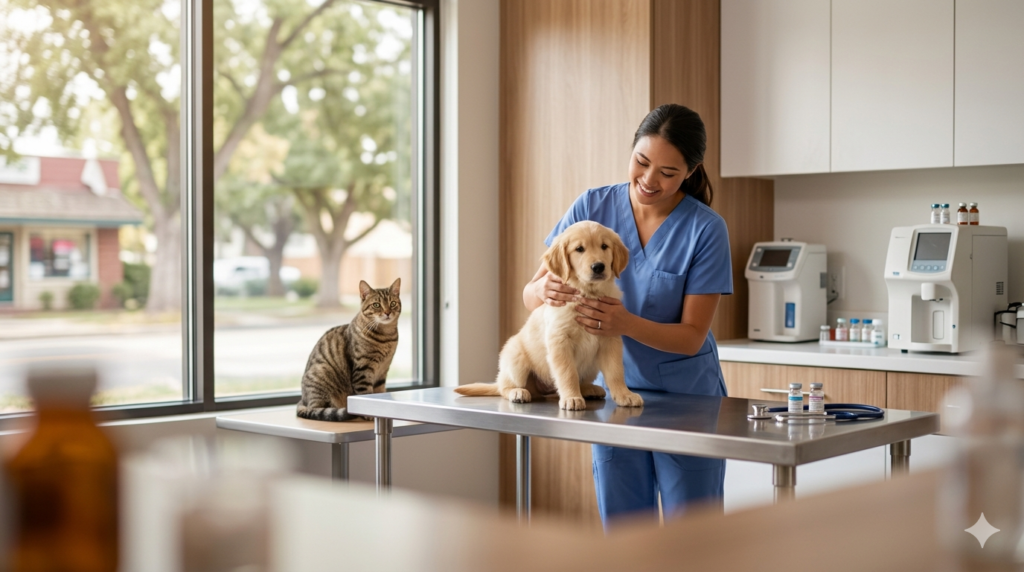
At Del Paso Veterinary Clinic, we hear this question almost every week from Sacramento pet owners: “Does my dog really need all those shots?” The short answer is yes. The longer answer involves understanding how vaccines actually protect your pet, which ones are legally required in California, and why skipping even one booster can leave your four-legged family member vulnerable to life-threatening diseases.
Pet vaccinations in Sacramento are more than a checkbox on your to-do list. They are the single most effective tool veterinarians have to prevent deadly infections like rabies, parvovirus, and feline distemper. And for dog and cat owners in the Sacramento Valley, where warm temperatures and urban wildlife create year-round exposure risks, staying current on vaccines is especially important.
This guide breaks down everything you need to know — from core and lifestyle vaccines to puppy and kitten schedules, adult boosters, and how our walk-in vaccine clinic makes the entire process easier for busy pet parents.
How Vaccines Protect Dogs and Cats
Vaccines work by introducing a small, modified form of a virus or bacteria into your pet’s body. This triggers the immune system to build antibodies without causing the actual disease. If your pet is later exposed to the real pathogen, their immune system already recognizes it and responds quickly — either preventing infection entirely or significantly reducing its severity.
This concept applies identically to both dogs and cats, though the specific diseases each species faces are quite different. That distinction matters when building out a proper vaccination schedule, and it is one of the reasons a wellness exam should always accompany any vaccine appointment. A veterinarian evaluates your pet’s overall health before administering vaccines, since a compromised immune system may not respond to a vaccine as intended.
For Sacramento pet owners, this is particularly relevant. The region’s warm climate means parasites and infectious agents remain active for longer stretches of the year compared to colder climates. Dogs that visit parks along the American River or spend time in boarding facilities face higher exposure to kennel cough and canine influenza. Outdoor cats encounter feral populations that carry feline leukemia and upper respiratory viruses. Vaccines account for these real-world risks.
Core Vaccines Every Dog in Sacramento Needs
Core vaccines are those recommended for every dog regardless of lifestyle, age, or breed. The American Animal Hospital Association classifies the following as core for canines:
DHPP (Distemper, Hepatitis, Parainfluenza, Parvovirus) — This combination vaccine protects against four serious diseases in a single injection. Distemper attacks the respiratory and nervous systems. Parvovirus, often called parvo, is highly contagious and has a high mortality rate in unvaccinated puppies. Sacramento veterinary clinics still see parvo cases every year, particularly in under-vaccinated neighborhoods. If you have been searching for a parvo shot for dogs near me, this is the vaccine you need.
Rabies — California state law requires all dogs to receive a rabies vaccination. Rabies is fatal once symptoms appear, and it is transmissible to humans. The first rabies vaccine is typically a one-year shot, followed by a three-year booster in subsequent visits. A rabies shot for dogs near me is one of the most common searches we see from Sacramento pet owners, and it is available through our walk-in vaccine clinic without an appointment.
Lifestyle Vaccines for Dogs
Beyond core vaccines, your veterinarian may recommend additional protection based on your dog’s daily routine and environment:
Bordetella (Kennel Cough) — Strongly recommended for dogs that visit groomers, dog parks, daycare facilities, or boarding kennels. Bordetella spreads through airborne droplets in enclosed spaces and causes a persistent, honking cough.
Leptospirosis — This bacterial infection spreads through contaminated water and soil. Dogs that hike, swim in rivers, or spend time in areas frequented by wildlife — all common activities in the Sacramento region — face elevated risk. Leptospirosis is also zoonotic, meaning it can pass from animals to humans.
Canine Influenza (H3N2/H3N8) — Dog flu spreads rapidly in social settings. Outbreaks have been documented across California, and many boarding facilities now require this vaccine before accepting dogs.
Core Vaccines Every Cat in Sacramento Needs
Cat vaccines in Sacramento follow a similar core and lifestyle structure, though feline diseases are quite different from canine ones.
FVRCP (Feline Viral Rhinotracheitis, Calicivirus, Panleukopenia) — This combination vaccine covers the three most dangerous feline diseases. Panleukopenia, sometimes called feline distemper, behaves similarly to parvovirus in dogs and is almost always fatal in unvaccinated kittens. Rhinotracheitis and calicivirus cause severe upper respiratory infections that can become chronic.
Rabies — Just like dogs, cats in California must be vaccinated against rabies. Even indoor cats can be exposed if a bat enters the home or if the cat escapes outdoors unexpectedly.
Lifestyle Vaccines for Cats
Feline Leukemia Virus (FeLV) — Recommended for all kittens during their first year and for any adult cat that goes outdoors or lives with other cats that go outdoors. FeLV is spread through close social contact — shared food bowls, mutual grooming, and bite wounds. There is no cure once a cat is infected, making vaccination the only reliable protection.
Indoor-only cats with no exposure to other cats may not need the FeLV booster beyond their first year, but this should be a conversation between you and your veterinarian based on your household’s specific circumstances.
Vaccination Schedules — Puppies, Kittens, and Adults
Timing matters with vaccines. Puppies and kittens receive maternal antibodies through their mother’s milk during the first weeks of life. Those antibodies gradually fade, creating a window of vulnerability. This is why young animals need a series of vaccinations rather than a single shot.
Puppy Vaccination Timeline
Puppies should begin their vaccine series between six and eight weeks of age. The DHPP vaccine is administered every three to four weeks until the puppy reaches sixteen weeks old. The typical schedule looks like this — a first dose around eight weeks, a second around twelve weeks, and a third around sixteen weeks. Rabies is given at approximately sixteen weeks, depending on local regulations. Bordetella and other lifestyle vaccines can start as early as eight weeks for puppies that will be in social settings.
Kitten Vaccination Timeline
Kittens follow a similar pattern. The FVRCP series starts at six to eight weeks and continues every three to four weeks until sixteen weeks of age. FeLV vaccination begins around eight weeks with a booster three to four weeks later. Rabies is administered around twelve to sixteen weeks.
Adult Booster Schedule
After completing the initial series, adult dogs and cats transition to a booster schedule. DHPP and FVRCP are typically boosted one year after the last puppy or kitten dose, then every three years going forward. Rabies boosters follow a one-year-then-three-year pattern. Bordetella, leptospirosis, canine influenza, and FeLV require annual boosters to maintain protection.
If you have adopted an adult pet with an unknown vaccine history, your veterinarian will likely recommend restarting the core series to ensure full protection. Our team can review your pet’s records during a new patient visit and build a personalized catch-up schedule.
Why a Walk-In Vaccine Clinic Makes a Difference
One of the biggest barriers to keeping pets vaccinated on schedule is simple logistics. Between work, family, and everything else on your plate, booking and keeping a veterinary appointment can feel like one more task that keeps getting pushed to next week.
That is exactly why we offer a walk-in vaccine clinic at Del Paso Veterinary Clinic. No appointment is necessary. You bring your dog or cat in during walk-in hours, our team administers the needed vaccines, and you are on your way. It is designed to remove the friction that causes pet owners to fall behind on their animal’s vaccination schedule.
Walk-in availability is especially valuable for multi-pet households. If you have two dogs and a cat that all need boosters, coordinating three separate appointments is a headache. Walking in on a day that works for you simplifies the process considerably.
Sacramento pet owners searching for a walk-in vet near me or an animal vaccination clinic that fits their schedule will find that our clinic is built around accessibility and convenience.
Sacramento-Specific Risks That Make Vaccines Essential
Living in the Sacramento Valley introduces some region-specific factors that make vaccination even more important for your pets.
Summer heat and standing water — Sacramento’s hot summers create standing water in irrigation ditches, puddles, and low-lying areas. These are prime breeding grounds for the bacteria that causes leptospirosis. Dogs that drink from puddles or streams during walks and hikes are at risk.
Urban wildlife contact — Raccoons, skunks, bats, and feral cats are common throughout Sacramento County. These animals are primary carriers of rabies and distemper. Even leashed dogs on a neighborhood walk can encounter wildlife, and indoor cats may be exposed if a bat gets inside.
High population density in dog-friendly spaces — Sacramento has an active dog park culture. Facilities like Tanzanite Park, Partner Park, and Bannon Creek attract dozens of dogs daily. High-traffic areas increase the spread of kennel cough, canine influenza, and intestinal parasites. Keeping your dog’s vaccines current before visiting these spaces protects both your pet and every other dog at the park.
Pairing vaccinations with a parasite prevention plan creates a more complete shield against the threats Sacramento pets face throughout the year.
Vaccines and Your Pet’s Bigger Health Picture
Vaccinations do not exist in isolation. They are one piece of a broader preventive care strategy that includes annual wellness exams, dental health, spay and neuter procedures, parasite control, and nutrition guidance.
For example, a puppy visiting for their first round of vaccines is also the right time to discuss spay or neuter surgery timing and to schedule a microchip implant so your pet can be identified if they ever get lost. For senior dogs and cats, vaccine appointments double as opportunities to run bloodwork, check organ function, and catch age-related conditions early.
Dr. Khabra and the team at Del Paso Veterinary Clinic take a whole-patient approach. Every vaccine visit includes a brief physical assessment, because catching a heart murmur or an abnormal lump during a routine vaccine appointment can change outcomes dramatically.
What to Expect After Your Pet Gets Vaccinated
Most dogs and cats tolerate vaccines extremely well. Mild side effects can include slight lethargy for a day or two, minor soreness at the injection site, or a temporary decrease in appetite. These responses are normal and typically resolve within twenty-four to forty-eight hours.
Serious allergic reactions are rare but possible. Signs to watch for include facial swelling, persistent vomiting, difficulty breathing, or collapse. If you observe any of these after a vaccine, contact a veterinarian immediately.
Your veterinarian may also recommend spacing out certain vaccines — particularly for smaller dogs or pets with a history of reactions. Splitting a vaccine visit across two appointments a couple of weeks apart reduces the number of antigens the immune system processes at once.
Frequently Asked Questions About Pet Vaccinations in Sacramento
-
Are pet vaccinations required by law in California?
California law mandates rabies vaccination for all dogs. While cats are not currently required by state law to receive rabies vaccines, many local jurisdictions in Sacramento County do require it. Beyond legal requirements, core vaccines like DHPP for dogs and FVRCP for cats are considered medically essential by the American Veterinary Medical Association and are strongly recommended by every veterinarian near me you will consult in the Sacramento area.
-
What vaccines does the walk-in vaccine clinic at Del Paso Veterinary Clinic offer?
Our walk-in vaccine clinic provides all core and lifestyle vaccines for both dogs and cats. For dogs, that includes DHPP, rabies, bordetella, leptospirosis, and canine influenza. For cats, we offer FVRCP, rabies, and feline leukemia. Our veterinary team evaluates each pet before administering vaccines to confirm they are healthy enough to receive them. No appointment is needed for walk-in vaccine visits at our Sacramento location on Del Paso Boulevard.
-
How often do dogs and cats need vaccine boosters?
Puppies and kittens need a series of vaccines every three to four weeks starting around six to eight weeks of age until they reach sixteen weeks. After the initial series, core vaccines like DHPP and FVRCP are boosted at one year, then every three years. Rabies follows a similar pattern. Lifestyle vaccines including bordetella, leptospirosis, and feline leukemia require annual boosters to maintain protective immunity levels throughout your pet’s life.
-
Can I vaccinate my dog or cat at home instead of going to a vet hospital near me?
Administering vaccines at home is technically possible for some non-rabies vaccines, but veterinary professionals strongly advise against it. Improper storage, incorrect dosage, and wrong injection technique can render a vaccine ineffective or cause adverse reactions. Rabies vaccines must legally be administered by a licensed veterinarian. A vet hospital near me ensures proper handling, accurate records, and immediate medical response if your pet has a reaction during or after the injection.
-
What is the difference between core and lifestyle vaccines for pets?
Core vaccines protect against diseases that are widespread, highly contagious, or pose public health risks — rabies, distemper, parvovirus, and feline panleukopenia fall into this category. Lifestyle vaccines target diseases your pet may encounter based on their specific environment and habits. A dog that frequents Sacramento dog parks may need bordetella and canine influenza vaccines, while an indoor-only cat may not need a feline leukemia booster after their first year. Your veterinarian tailors recommendations to your pet’s actual risk profile.
-
My adult rescue pet has no vaccine records. What should I do?
Bring your pet to an animal vaccination clinic for a full evaluation. When vaccine history is unknown, veterinarians typically recommend restarting the core vaccine series to ensure complete protection. This means your pet will receive the initial doses followed by boosters on the standard schedule. Blood titer testing is also an option in some cases — this measures existing antibody levels and can help determine which vaccines your pet may already have adequate immunity against.
Del Paso Veterinary Clinic is located at 924 Del Paso Blvd, Sacramento, CA 95815. To schedule a wellness exam or ask questions about your pet’s vaccination needs, call (916) 925-2107 or book an appointment online.