
Finding the right veterinarian for aggressive dogs usually happens at a hard moment. Maybe there was a bite, a close call with a child or another dog, or a growing sense that things are no longer safe at home. Del Paso Veterinary Clinic wants owners in that position to know something important upfront: aggression is a medical and behavioral condition, not a character flaw in you or your dog, and there are real treatment paths before more difficult conversations ever need to happen.
This guide walks through why dogs become aggressive, what treatment actually involves, where medication fits in, how devocalization and debarking relate to this conversation, and how to think about behavioral euthanasia if it ever becomes relevant. This last topic is handled directly and without judgment, because owners searching for this information deserve honesty, not avoidance.
Understanding Why Dogs Become Aggressive
Aggression is not a single behavior with one cause. It is a broad category that includes growling, snapping, lunging, and biting, and it can stem from very different underlying drivers.
Fear-Based vs Territorial vs Redirected Aggression
According to the ASPCA, common triggers include fear, resource guarding, territorial defense, and redirected aggression, where a dog that is worked up over one thing lashes out at whoever happens to be nearby. Fear-based aggression is especially common and is often misread as a dog simply being “mean,” when the underlying state is closer to panic.
Understanding which category a dog’s aggression falls into matters enormously for treatment. A fearful dog and a resource-guarding dog need different management approaches, and getting this wrong can make the behavior worse rather than better.
When to See a Veterinarian for Aggressive Dogs
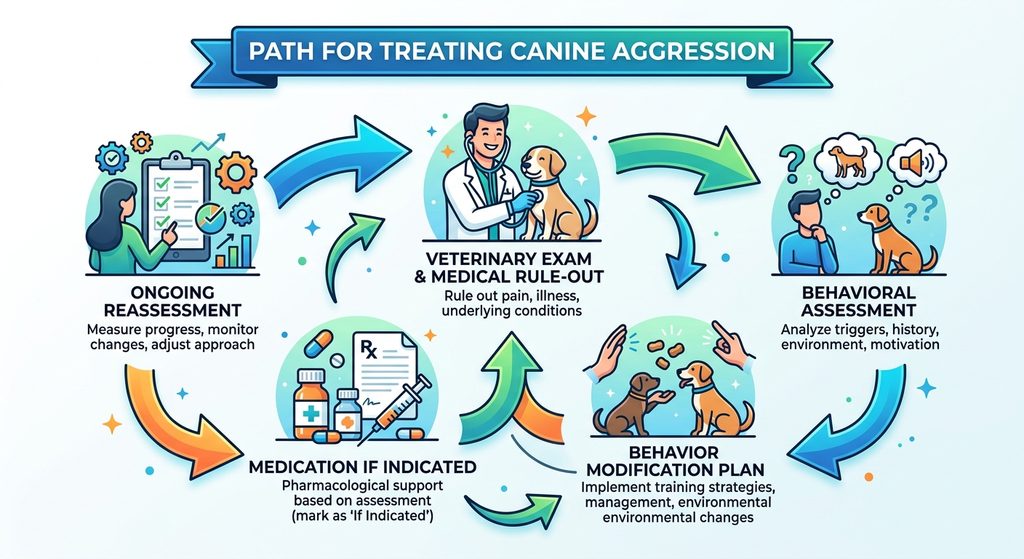
Any dog showing new or escalating aggression deserves a veterinary visit before anything else. Aggression can be a symptom of an underlying medical problem, including pain, thyroid dysfunction, or neurological issues, so ruling out physical causes always comes first. Once medical causes are addressed or excluded, the conversation shifts to behavioral treatment.
Signs that warrant a prompt visit include:
- A bite that broke skin, even once
- Repeated growling or snapping at family members
- Aggression that is increasing in frequency or intensity
- Aggression toward children or other household pets
- A dog who has started guarding food, spaces, or people intensely
Waiting rarely helps. Aggressive behavior tends to escalate without intervention, not resolve on its own.
What Treatment for Aggressive Dogs Looks Like
Treatment is almost always a combination of behavior modification and, when appropriate, medication, rather than either approach alone.
Behavior Modification and Training
Behavior modification focuses on changing how a dog perceives and responds to triggers, using structured desensitization and counterconditioning rather than punishment. The AAHA Canine Life Stage Guidelines note that behavioral conditions are progressive, meaning early intervention gives the best chance of a good outcome, and that treatment should combine behavior modification with medication when appropriate rather than treating them as separate paths. A qualified trainer or veterinary behaviorist typically works alongside the primary veterinarian on this piece.
Medication for Canine Aggression
Medication does not sedate a dog into compliance. Instead, appropriately prescribed medication reduces the underlying anxiety or reactivity that fuels aggressive responses, making a dog more receptive to behavior modification work that would otherwise be much harder to accomplish. This is a veterinary medical decision requiring an exam, history, and often bloodwork before starting, and it is reassessed over time rather than treated as a permanent fix.
What About “Psychologist” or Behaviorist Care?
Owners sometimes search for something like a psychologist for their dog, which usually points to the same need: a professional trained specifically in animal behavior rather than general veterinary medicine alone. In practice, this role is filled by veterinary behaviorists or certified applied animal behaviorists, who work alongside your primary veterinarian rather than replacing that relationship. For dogs with significant behavioral needs, this combined approach, general veterinary care plus behavior-specific expertise, tends to produce the most reliable results.
Debarking: Is It a Solution for Reactive or Aggressive Dogs?
Owners researching aggression sometimes come across debarking, also called devocalization, and wonder whether it applies here. It’s worth addressing directly, since the keyword shows up alongside aggression searches even though the two issues are different.
Debarking involves surgically altering a dog’s vocal cords to reduce the volume of barking. It does not treat aggression, fear, or reactivity, since it only changes how loud a dog sounds, not the underlying emotional state driving the behavior. Devocalization is legal in California, but current veterinary guidance discourages it strongly. In 2023, the American Veterinary Medical Association updated its policy to state that the organization now strongly discourages canine devocalization, shifting emphasis away from treating it as an acceptable last resort and toward addressing the underlying behavior instead. Del Paso Veterinary Clinic does not perform this procedure and instead focuses on identifying and treating the cause of excessive vocalization or reactivity through behavior modification and, when appropriate, medication.
The Behavioral Euthanasia Conversation
This is the hardest part of this guide to write, and often the hardest search that brings someone here. If you are considering behavioral euthanasia, please know this conversation comes from a place of care, not judgment.
When This Conversation Comes Up
Behavioral euthanasia is considered in a small number of cases where a dog’s aggression poses a genuine, unmanageable safety risk to people or other animals, despite appropriate veterinary and behavioral treatment. It is not a response to normal training challenges, occasional growling, or a dog who simply needs more structure. It is reserved for situations where quality of life, for the dog, the family, and anyone the dog comes into contact with, has become severely and durably compromised.
What to Consider With Your Veterinary Team
The AVMA’s guidelines on humane endings emphasize that end-of-life decisions should prioritize an animal’s welfare and be made thoughtfully, with veterinary guidance supporting the owner through the process. In behavioral cases specifically, this typically means working through:
- Whether medical causes have been fully ruled out or treated
- Whether behavior modification and medication have had a genuine, sustained trial
- The severity and predictability of the aggression, and the realistic ability to manage risk
- The dog’s overall quality of life under the management required to keep everyone safe
- Whether responsible rehoming is a realistic, safe option, which is not always the case with dangerous aggression
No owner should have to make this decision alone. A veterinarian, and ideally a veterinary behaviorist, should be part of this conversation, and there is no shame in reaching the point where this becomes the responsible choice for a dog who cannot otherwise live safely.
Comparison: Paths Forward for an Aggressive Dog
| Path | Best Fit For | What It Involves |
|---|---|---|
| Behavior modification alone | Mild to moderate aggression, motivated owner, manageable triggers | Desensitization, counterconditioning, trainer support |
| Behavior modification plus medication | Moderate to severe anxiety-driven aggression | Veterinary exam, medication trial, ongoing behavioral work |
| Management and lifestyle changes | Cases where triggers can be reliably controlled | Muzzle training, environmental control, restricted exposure |
| Responsible rehoming | Dogs whose aggression is context-specific and disclosed honestly | Careful placement with full history shared |
| Behavioral euthanasia | Severe, unmanageable risk despite appropriate treatment | Veterinary-guided, compassionate decision-making |
Case Study: Duke’s Path Through Treatment
Duke, a three-year-old shepherd mix from the Del Paso Heights area, was brought in after biting a visitor to the home. His owner was devastated and assumed the worst. A full exam ruled out any medical cause, and a behavioral history revealed a clear pattern: Duke’s aggression was almost entirely fear-based and triggered by unfamiliar men entering the house quickly or reaching toward him.
Working with the veterinary team, Duke started an anti-anxiety medication alongside a structured desensitization plan focused specifically on greeting new people. Over several months, his reactivity dropped significantly, and his owner learned to recognize his early warning signals long before they escalated. Duke still wears a muzzle during unfamiliar introductions as a safety precaution, but the aggressive incidents themselves have not recurred. His case is a reminder that a bite does not automatically mean a dog cannot improve, and that structured treatment often changes the outcome entirely.
Where to Start in Sacramento
If your dog is showing aggression, the first step is a full veterinary exam to rule out medical causes, followed by a behavioral assessment to build an appropriate treatment plan. Del Paso Veterinary Clinic’s veterinarian for aggressive dogs service covers this full process, from initial workup through medication management when it’s part of the plan.
For a broader look at behavior support beyond aggression specifically, our behavioral veterinarian guide covers anxiety, noise phobia, and other common concerns in more depth.
Frequently Asked Questions
-
What services do you offer for dogs with anxiety or behavioral problems?
Del Paso Veterinary Clinic offers behavioral assessments, medical rule-outs for underlying causes, and medication management when appropriate, working alongside behavior modification plans. This covers anxiety, fear-based reactivity, and aggression, not just one specific diagnosis. The goal is always to identify the root cause rather than only managing the visible symptoms.
-
Can you debark a dog in California?
Devocalization is legal in California, but it is not a treatment for aggression or anxiety, since it only reduces bark volume rather than addressing the underlying behavior. Current veterinary guidance strongly discourages the procedure in favor of behavior modification and medical management. Del Paso Veterinary Clinic does not perform debarking and instead focuses on treating the cause of the vocalization or reactivity.
-
Is my dog’s aggression something a “psychologist animal hospital” would treat?
This role is generally filled by veterinary behaviorists or certified applied animal behaviorists rather than a psychologist in the human sense. These specialists work alongside your primary veterinarian to build a combined medical and behavioral treatment plan. Starting with a veterinary exam is still the right first step, since medical causes need to be ruled out before behavioral treatment begins.
-
What does behavioral euthanasia actually mean?
Behavioral euthanasia refers to a decision to humanely end a dog’s life because of severe, unmanageable aggression that poses a genuine safety risk despite appropriate treatment. It is not used for normal training challenges or occasional reactivity. This decision is made collaboratively with a veterinary team after medical causes are addressed and behavioral treatment has had a fair, sustained trial.
-
Can medication alone fix aggressive behavior in dogs?
Medication is rarely a standalone fix. It works best alongside structured behavior modification, since it reduces the underlying anxiety that fuels aggressive responses and makes a dog more receptive to training. A veterinarian typically starts with an exam and history before recommending medication, then reassesses the plan over time as the dog progresses.
-
How urgent is it to see a veterinarian for aggressive dogs after a bite?
A bite that breaks skin, or aggression that is increasing in frequency, warrants a prompt veterinary visit rather than a wait-and-see approach. Aggression can be a symptom of an underlying medical issue, and behavioral causes tend to escalate without early intervention. Getting an accurate assessment quickly gives the best chance of a manageable, treatable outcome.
Aggression is frightening to live with, but it is rarely the end of the story, and no owner should have to sort through it alone.