
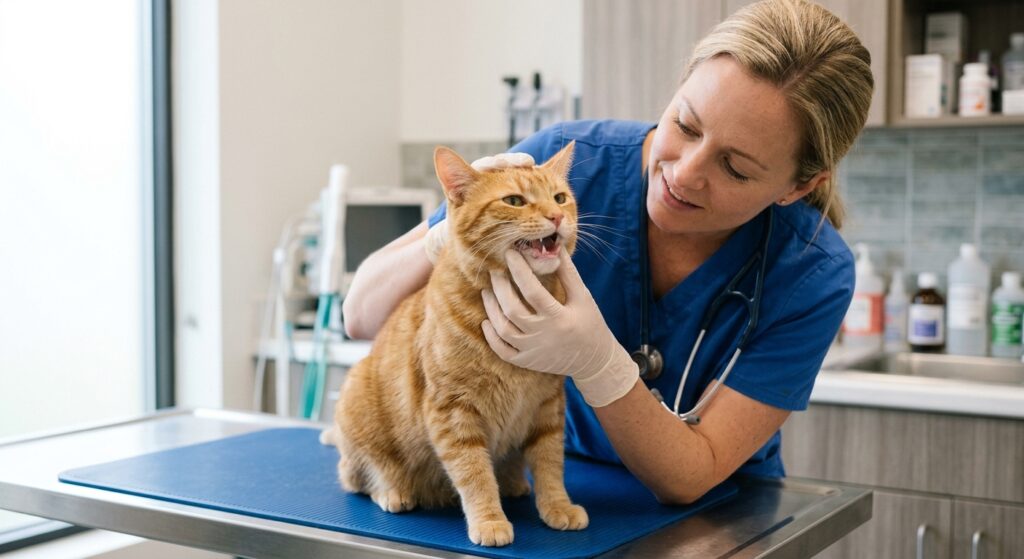
Cat dental care is one of the most overlooked parts of feline wellness, and the reason isn’t that owners don’t care. It’s that cats are exceptionally good at hiding oral pain until a problem is already advanced. Del Paso Veterinary Clinic sees this pattern often: a cat eating normally, purring, acting like herself, while X-rays reveal a tooth quietly dissolving from the inside out. That condition, called tooth resorption, affects a striking number of cats and rarely announces itself the way a limp or a cough would.
This guide covers what tooth resorption and gingivitis actually are, why cats mask dental pain so effectively, what a professional cat dental cleaning involves, and how feline dental care differs from what most owners expect based on dog care.
Why Cat Dental Care Gets Overlooked
Dogs tend to show dental pain in obvious ways: pawing at the mouth, dropping food, avoiding hard chews. Cats rarely do any of this, even with significant disease present. Because of that gap, many owners searching for a cat dentist or dentistry don’t start looking until a cat has already stopped eating or has visible swelling. Regular oral exams catch problems long before they reach that point, which is exactly why annual wellness visits should always include a dental assessment, not just a glance at the teeth.
What Is Tooth Resorption in Cats?
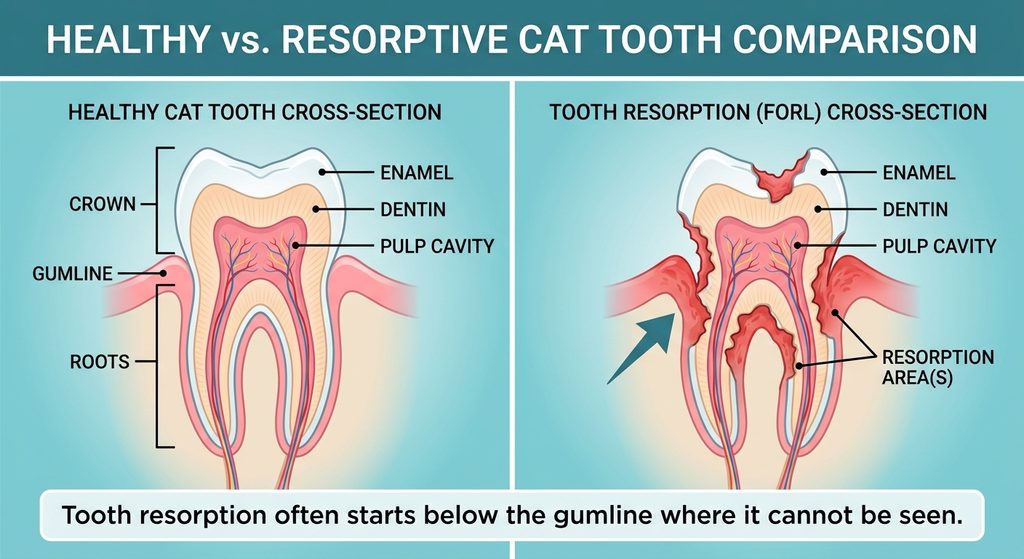
Tooth resorption is a condition in which a cat’s own body begins breaking down the structure of a tooth from the inside, starting at the dentin beneath the enamel. Once the process begins, it does not reverse on its own, and the affected tooth eventually needs to be extracted.
How Common Is It
According to the Cornell Feline Health Center, tooth resorption affects an estimated 20 to 60 percent of all cats, and close to three-quarters of cats five years of age and older. Despite how common it is, most owners have never heard the term until their own cat is diagnosed, which is part of why this remains such an underdiscussed area of feline health.
Why the Cause Is Still a Mystery
Veterinary dentists have proposed several theories, including diet-related factors, chronic inflammation, and mineral imbalances, but no single confirmed cause has emerged. What is well established is that early detection through dental X-rays, taken while a cat is under anesthesia for a cleaning, catches resorption long before it would be visible to the naked eye or cause a cat to stop eating.
Gingivitis and Stomatitis: The Other Major Feline Dental Diseases
Tooth resorption is not the only condition affecting feline mouths. Gingivitis and stomatitis are two more diagnoses that show up regularly in cats and behave very differently from one another.
Gingivitis
Gingivitis is inflammation of the gum tissue directly around the teeth. It is caused by plaque buildup and is the earliest, and only reversible, stage of periodontal disease. Left untreated, it can progress into deeper structures and eventually contribute to tooth loss.
Stomatitis
Stomatitis is a more severe, generalized inflammation that can spread across the gums, tongue, and the inside of the cheeks and throat. It is often intensely painful and may be linked to an overactive immune response to plaque bacteria, sometimes alongside viral infections. Cats with stomatitis frequently need broader treatment, including extraction of the teeth in affected areas, rather than a routine cleaning alone.
Why Cats Hide Dental Pain So Well
Cats are descended from solitary hunters, and in the wild, showing pain or weakness makes an animal a target. That instinct hasn’t disappeared just because a cat now lives on a couch. A cat with a fractured tooth, an abscess, or advanced resorption will often keep eating, grooming, and behaving mostly normally, sometimes shifting to chewing on one side of the mouth or favoring softer food without an owner noticing the change. This is the core reason routine oral exams matter so much for cats specifically: waiting for obvious symptoms usually means waiting until the disease is already significant.
Signs Your Cat May Have Dental Disease
While cats mask pain well, a few signs are worth watching for:
- Bad breath that is noticeably worse than usual
- Drooling, or blood-tinged saliva
- Pawing at the face or mouth
- Reluctance to eat hard food, or a shift to only soft food
- Visible redness, swelling, or bleeding along the gumline
- Reduced grooming, leading to a scruffy or matted coat
- Weight loss over time
Any single sign is worth a veterinary exam. Several together warrant prompt attention rather than a wait-and-see approach.
What Happens During a Professional Cat Dental Cleaning
A proper feline dental cleaning is a more thorough process than a quick scrape of visible tartar, and it explains why anesthesia is standard practice rather than an upsell.
Exam and Dental X-Rays
Every cat teeth cleaning begins with a full oral exam and dental X-rays taken under anesthesia. Because tooth resorption frequently starts below the gumline, X-rays are the only reliable way to catch it before a tooth fractures or a cat stops eating. The joint AAHA-AVMA feline preventive healthcare guidelines recommend dental assessment as a standard part of every cat’s health evaluation, with dental radiography included based on individual risk.
Cleaning, Scaling and Extractions
Once the exam and imaging are complete, the veterinary team removes plaque and tartar above and below the gumline, polishes the teeth, and extracts any teeth affected by resorption, advanced periodontal disease, or fracture. The AAHA Dental Care Guidelines for Dogs and Cats support general anesthesia for these procedures, since it allows accurate diagnosis and treatment without the stress or injury risk of trying to work in a conscious cat’s mouth. Cats recover quickly from extractions since the underlying disease was usually the source of pain, not the tooth’s presence.
Cat Dental Care vs Dog Dental Care: Key Differences
Owners searching for a canine dentist near me are often surprised that feline dental care follows a different pattern than what their dog experiences.
| Factor | Cats | Dogs |
|---|---|---|
| Most common condition | Tooth resorption, gingivitis, stomatitis | Periodontal disease, tartar buildup |
| Pain signs | Rarely obvious; cats mask pain well | More visible; pawing, dropping food |
| X-rays needed | Essential, since resorption starts below the gumline | Important, but visible tartar is often the bigger concern |
| Typical outcome | Extractions common due to resorption | Cleanings often prevent extraction if caught early |
| Home care tolerance | Often lower; brushing can be difficult | Generally more receptive to brushing and chews |
Case Study: Milo’s Hidden Tooth Resorption
Milo, a six-year-old domestic shorthair from the Natomas area, came in for a routine annual wellness exam with no complaints from his owner. He was eating normally, grooming himself, and showed no outward signs of discomfort. During the oral exam, the veterinary team noticed subtle redness at the gumline of one lower premolar. Dental X-rays taken during a subsequent cleaning confirmed tooth resorption on that tooth, along with an early lesion beginning on a neighboring tooth that wasn’t yet visible without imaging.
The affected tooth was extracted, and Milo was eating again within a day, noticeably more active according to his owner in the weeks that followed. Because tooth resorption was caught through a routine exam rather than a crisis visit, Milo avoided the more painful, prolonged course the disease often takes when it goes undetected for years.
At-Home Cat Dental Care Between Visits
Professional cleanings do the heavy lifting, but a few habits support oral health between appointments:
- Brush a cat’s teeth a few times a week using a pet-safe toothpaste, never human toothpaste, introducing the routine gradually the way the ASPCA recommends for cats unused to handling
- Offer dental-specific treats or diets formulated to reduce plaque, if your cat tolerates them
- Watch for changes in eating habits or breath and mention them at the next visit
- Keep annual wellness exams on schedule so dental assessment happens even when nothing looks obviously wrong
Not every cat will tolerate brushing, and that’s fine. Consistent professional exams matter far more than a perfect home routine.
When to Schedule a Cat Dental Exam in Sacramento
Because feline dental disease often develops silently, the best approach is a routine annual exam rather than waiting for a visible problem. If your cat is already showing signs like drooling, bad breath, or reluctance to eat, that warrants a sooner visit rather than watching and waiting. Del Paso Veterinary Clinic’s cat teeth cleaning near me service covers the full exam, X-ray, and cleaning process described above.
For a broader look at dental care across both dogs and cats, including prevention and treatment timelines, our veterinary dental care guide covers additional ground beyond the feline-specific conditions detailed here.
Frequently Asked Questions
-
What is tooth resorption and why is it called “cats reabsorb teeth”?
Tooth resorption happens when a cat’s body breaks down its own tooth structure, starting with the dentin beneath the enamel, often below the gumline where it cannot be seen. Owners sometimes describe this as cats reabsorb teeth, since the tooth structure is gradually destroyed and absorbed rather than decaying from external causes. It is one of the most common feline dental conditions and typically requires extraction once diagnosed.
-
How is cat dentistry different from a routine teeth cleaning?
Cat dentistry involves a full oral exam, dental X-rays taken under anesthesia, and treatment of any disease found, not just a surface cleaning. Because conditions like tooth resorption start below the gumline, imaging is essential to catch problems before a cat shows outward pain. A standard cleaning without X-rays can miss disease that is already present.
-
What are the signs of gingivitis in cats?
Gingivitis appears as redness and swelling along the gumline where it meets the teeth, often paired with noticeably bad breath. Gums may bleed slightly during brushing or eating once inflammation is present. It is the earliest and only reversible stage of periodontal disease, which is why catching it early through routine exams matters.
-
Does Del Paso offer low cost pet dental cleaning near me options?
Every dental case is different depending on what the exam and X-rays reveal, so our team reviews each cat individually and walks owners through the recommended plan during the visit. The best next step is scheduling an exam so we can assess your cat’s specific needs and outline the appropriate options together. Details on cost and scheduling are handled directly with our care team.
-
Can indoor-only cats still develop dental disease?
Yes. Dental disease, including tooth resorption and gingivitis, develops from plaque buildup, genetics, and internal factors rather than outdoor exposure or environment. Indoor cats are just as likely to need dental care as cats that spend time outside, since neither lifestyle protects against these conditions. Annual oral exams remain important regardless of whether a cat ever leaves the house, because the underlying causes are unrelated to outdoor risk.
-
How often should a cat have a professional dental exam?
Most veterinary guidelines recommend at least one full oral exam every year as part of a routine wellness visit, with closer monitoring for cats showing risk factors or prior dental disease. Because cats hide pain so effectively, waiting for visible symptoms often means the disease has already progressed. A personalized schedule based on your cat’s history works best.
Cats will rarely tell you something hurts, which is exactly why a routine look inside the mouth catches what a quiet, well-behaved cat never will.