
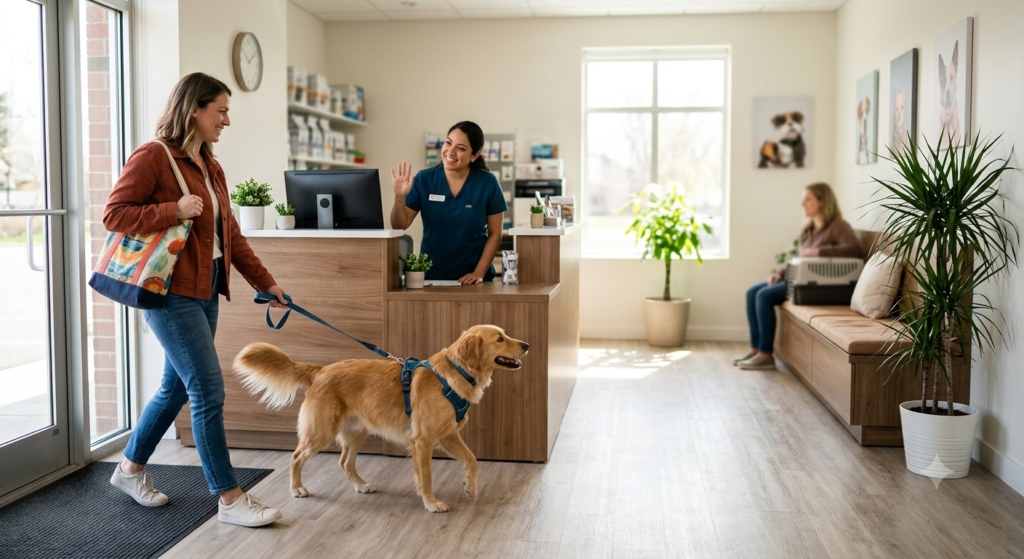
Typing “walk in vet clinic near me” into a search bar usually means one thing: something came up, and waiting a week for a scheduled appointment isn’t going to work. Maybe it’s a puppy overdue for shots, a cat with a scratch that looks worse than expected, or simply not having the flexibility to book two weeks out. At Del Paso Veterinary Clinic, walk-in access is built into how the practice operates, but “walk-in” doesn’t mean the same thing for every situation. This guide walks through what walk-in care actually covers, when it’s the right option versus when you need something more urgent, and what to expect the moment you arrive without an appointment.
What “Walk-In” Actually Means at a Veterinary Clinic
The phrase gets used loosely, and that causes real confusion. A walk-in vaccine clinic and walk-in care for an active illness or injury are not the same service, even though both fall under the general idea of “no appointment needed.”
Walk-In Vaccine Clinic vs. Walk-In for Illness or Injury
A walk-in vaccine clinic is built around routine, predictable visits: rabies boosters, core shots, lifestyle vaccines for dogs and cats. These are quick, low-complexity visits that don’t require an in-depth diagnostic workup, which is exactly why they lend themselves to a walk-in model. Walking in because your pet is limping, vomiting, or acting unusually lethargic is a different scenario entirely. It still may not require a full emergency room, but it typically involves an exam, possibly diagnostics, and a veterinarian’s judgment call on next steps, not just a quick injection. Both fall under “walk-in” in casual conversation, but they move through the clinic very differently.
When a Walk-In Visit Makes Sense (and When It Doesn’t)
This is the part that actually matters most for pet safety. Some symptoms genuinely cannot wait for any kind of walk-in triage and need immediate emergency attention instead. The AVMA lists severe bleeding that won’t stop within five minutes, difficulty breathing, seizures, and suspected poisoning among the situations requiring immediate veterinary consultation, and AAHA’s guidance adds sudden behavior changes, abdominal swelling, and abnormal gum color to that same urgent list. If your pet is showing any of those signs, a walk-in visit during business hours is the right call, but a true emergency room takes priority over waiting in a general walk-in queue. Our urgent care guide covers that decision in much more depth, including what qualifies as a same-day emergency versus something that can wait for a scheduled visit.
Walk-in access is genuinely well suited to situations that are inconvenient rather than dangerous: a vaccine that’s overdue, a minor skin irritation you’d like looked at soon, or a new symptom you’re not sure warrants an emergency trip but don’t want to sit on for a week either.
Why Walk-In Options Matter More Than They Used To
Pet owners aren’t imagining that scheduling has gotten tighter industry-wide. A recent AVMA survey found that 76 percent of pet owners waited less than a week to see a veterinarian for routine care, and 78 percent were seen within a couple of hours for emergency needs, which sounds reasonable until you’re the pet owner needing care today rather than next Tuesday. Practices that build in walk-in capacity give pet owners a predictable option outside the standard appointment book, which matters most for exactly the situations where flexibility counts: a pet that suddenly needs a vaccine before boarding, a new symptom that popped up overnight, or a schedule that simply doesn’t allow booking two weeks in advance.
What to Expect During a Walk-In Visit
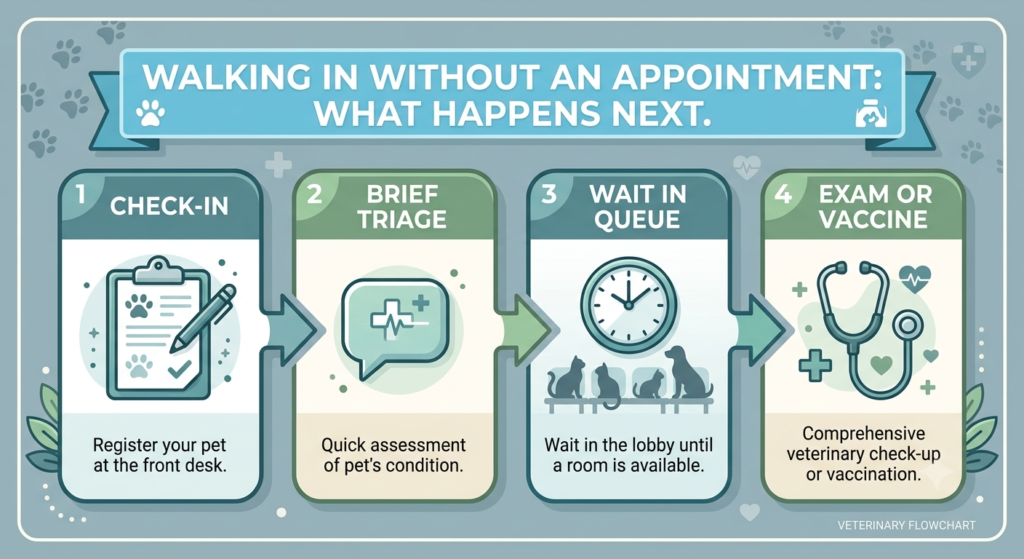
Walking in without an appointment doesn’t mean walking straight into an exam room. Here’s the general flow:
- Check-in at the front desk. Bring any prior medical records if you have them, especially if this is your pet’s first visit.
- Brief triage. Staff will ask what’s going on to determine whether this is a quick vaccine-only visit, a general concern that needs an exam, or something urgent enough to be seen ahead of the queue.
- Wait time varies. Walk-in visits are seen in the order they arrive, factoring in urgency, so a straightforward vaccine visit may move faster than a visit requiring a full exam.
- The visit itself. Depending on what’s needed, this could be a five-minute vaccine administration or a more thorough exam with possible same-day diagnostics.
Setting expectations here matters: walk-in access means you don’t need to schedule ahead, not that you’ll never wait at all. Arriving earlier in the day when possible generally means a shorter wait.
Walk-In Vaccine Clinic vs. Scheduled Wellness Exam vs. Same-Day Urgent Care
| Service | Appointment Needed? | Typical Visit Length | Best For |
|---|---|---|---|
| Walk-in vaccine clinic | No | Short, minutes to a brief wait | Routine and lifestyle vaccines, booster updates |
| Scheduled wellness exam | Yes, recommended | 20 to 30 minutes | Annual checkups, new patient visits, senior pet monitoring |
| Same-day urgent care | Often no, call ahead if possible | Variable, depends on findings | New symptoms, minor injuries, concerns that can’t wait a week |
A Sacramento Case Study: A Walk-In Visit That Started Small
A Natomas family walked in one afternoon because their dog, Biscuit, had started favoring one back leg after a walk near the American River. They weren’t sure if it was serious enough for an emergency visit, but they also didn’t want to wait days for a scheduled appointment.
At check-in, staff asked a few quick questions: how long the limping had been going on, whether Biscuit was bearing any weight at all, and whether there was any swelling. Based on those answers, Biscuit was worked into the walk-in queue ahead of some routine vaccine visits, since a new lameness with visible discomfort warranted a sooner look than a scheduled booster. The exam revealed a mild soft tissue strain rather than anything requiring imaging or surgery, and Biscuit went home with rest instructions and a short course of pain management. The family didn’t need to have known in advance whether this was “walk-in level” or “urgent care level,” that judgment call happened naturally as part of the check-in process.
How to Make Your Walk-In Visit Go Smoothly
A few small things make a real difference in how quickly and effectively a walk-in visit goes:
- Bring any prior vaccine records or medical history, especially for a new patient.
- Note when symptoms started and any changes you’ve noticed, even a rough timeline helps.
- Arrive earlier in the day if your schedule allows, since walk-in volume tends to build later on.
- Be ready to briefly describe what’s going on at check-in, this is what determines how quickly your pet is seen relative to others waiting.
- If you’re unsure whether something is urgent, call ahead and describe the symptoms before driving over.
Frequently Asked Questions
-
Do I need to call before walking in, or can I just show up?
You can simply show up for walk-in vaccine visits or general walk-in concerns. That said, calling ahead is genuinely useful if you’re unsure whether your pet’s symptoms need urgent attention, since staff can give you guidance over the phone about whether to come in immediately or whether a walk-in visit later that day is appropriate.
-
What’s the difference between a walk-in visit and same-day urgent care?
Walk-in visits generally cover routine needs like vaccines and general concerns that don’t require immediate attention, seen in the order pets arrive. Same-day urgent care is prioritized for new or worsening symptoms that shouldn’t wait, such as vomiting, limping, or sudden behavior changes. Both can happen without a scheduled appointment, but urgent cases are triaged ahead of routine walk-ins.
-
Is there a guarantee I’ll be seen quickly if I walk in?
No, and it’s worth being upfront about that. Walk-in visits are handled in the order pets arrive, factored against urgency, which means wait times vary depending on how busy the clinic is at that moment. Vaccine-only visits tend to move quickly, while visits requiring a full exam take longer. Arriving earlier in the day generally means a shorter wait.
-
Can I walk in for my puppy or kitten’s first vaccines?
Yes, walk-in visits work well for routine puppy and kitten vaccine series, since these are quick, predictable visits. That said, a comprehensive first wellness exam, covering a full physical assessment, deworming, and a personalized care plan, is better scheduled in advance so your veterinarian has adequate time to go through everything without the pace of a walk-in queue.
-
What should I bring with me for a walk-in visit?
Bring any previous medical or vaccine records if you have them, particularly if you’re new to the clinic. If your pet is showing symptoms, having a rough timeline of when they started and any changes you’ve noticed helps the veterinary team make faster, better-informed decisions during triage.
-
My pet’s symptoms don’t seem like an emergency, but I’m not totally sure. What should I do?
When in doubt, call ahead and describe what you’re seeing before deciding whether to drive over. Staff can help you determine whether this is a straightforward walk-in situation, something that warrants same-day urgent care, or a true emergency that needs immediate attention rather than waiting in a walk-in queue at all.
Walk-in access exists so a pet’s care doesn’t have to wait on a calendar, but knowing which kind of walk-in visit fits your situation makes the whole process faster for everyone. For a deeper look at Sacramento’s full range of veterinary options, visit our services overview, or reach out through our contact page if you have questions before coming in. If your pet is due for a full checkup rather than a quick walk-in visit, our pet wellness exam guide covers what to expect from a scheduled appointment.