
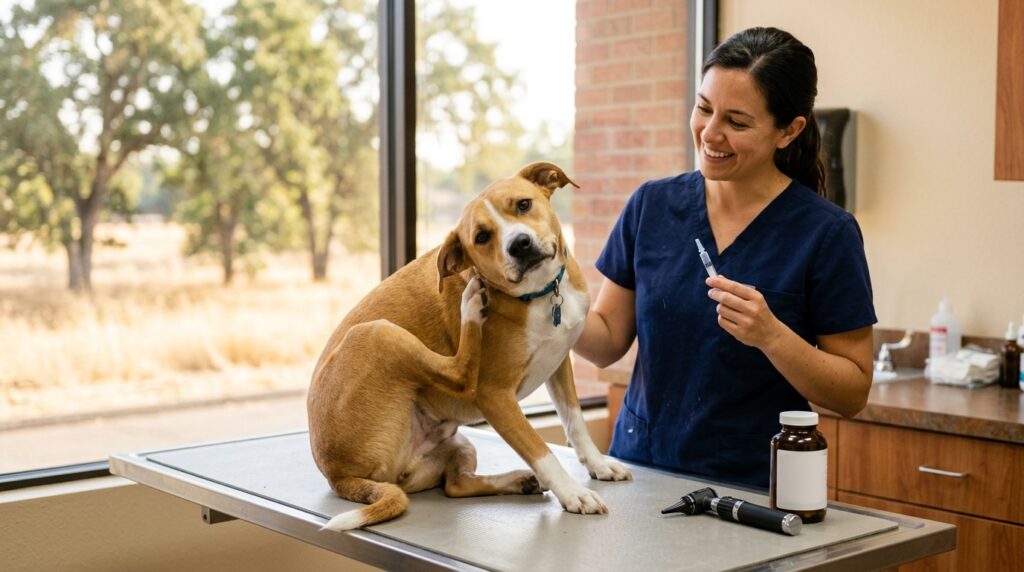
If you are typing “Cytopoint shot near me” at midnight while your dog chews its paws raw, you probably already know allergies are the problem. The harder question is which treatment fits your dog, and whether a shot alone is enough. Del Paso Veterinary Clinic, a dog vet near me choice for North Sacramento families since 1940, sees itchy dogs every week of the year. This guide compares Cytopoint, Apoquel and the other options, explains when allergy testing helps, and lays out a plan that works in Sacramento’s long allergy season.
Why Sacramento Dogs Itch Almost All Year
Sacramento has one of the longest allergy seasons in California, and the allergens arrive in waves:
- Oak pollen drifts across the valley from late winter into spring. Paw licking and belly redness often flare in March and April.
- Grasses and weeds take over from late spring through fall, and pollen collects in your dog’s coat on every walk.
- Foxtails dry out and scatter barbed seeds from roughly May to October. They are not an allergy, but they cause skin wounds that look a lot like one. Our guide to foxtail season shows where they hide.
- Fleas rarely die off in the mild winters, so flea allergy can strike in any month.
- Dust mites and molds keep indoor allergies going year-round.
That overlap is why many pet allergies Sacramento CA owners deal with never fully settle down. A dog may react to oak in spring, grass in summer and dust mites all winter.
First, Find Out What Kind of Allergy It Is
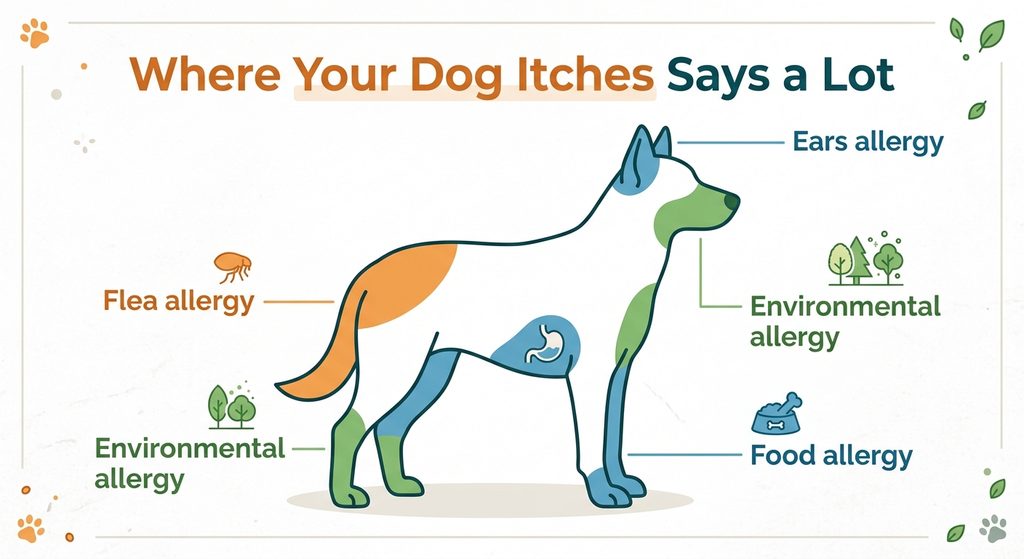
There are three main types of skin allergy in dogs. Treatment works best once you know which one you are dealing with, and many dogs have more than one.
Flea Allergy Dermatitis
A single flea bite can trigger days of itching in a sensitive dog. The classic sign is scratching and hair loss over the lower back and the base of the tail. No allergy medication will keep up if fleas are still biting, so year-round prevention comes first. If you have been looking for cheap flea control in sacramento, keep in mind that missed doses tend to cost more in the long run than consistent prevention, once you add up the vet visits for the itching.
Environmental Allergies (Atopic Dermatitis)
This is the most common reason dogs need Cytopoint or Apoquel. Dogs inherit a tendency to react to pollen, mites and molds, usually starting between one and three years old. Typical signs include licking the paws, rubbing the face, red armpits and belly, and ear infections that keep coming back.
Food Allergies
Food allergy is less common than most owners assume, but it is the one type that can be fully controlled by diet. Signs overlap with environmental allergies, though year-round itch and stomach upset are clues. The only reliable test is a strict elimination diet trial lasting 8 to 12 weeks, using a prescription hydrolyzed or novel-protein food with no treats, chews or table scraps.
Cytopoint vs Apoquel and Other Allergy Treatments
Del Paso’s animal dermatology sacramento service offers Cytopoint, Apoquel and steroids for itch control, along with in-house skin and ear cytology and skin scrapings to find infections and mites. Here is how the main options compare:
| Treatment | Form | How Fast It Works | How Long It Lasts | Best For | Watch-Outs |
|---|---|---|---|---|---|
| Cytopoint | Injection | Within about a day | 4 to 8 weeks per shot | Dogs of any age, seniors with kidney or liver issues, dogs that won’t take pills | Targets itch only, so infections still need separate treatment |
| Apoquel | Tablet | Within hours | Daily dosing | Fast relief, flexible day-to-day control | Dogs 12 months and older only; not for dogs with serious infections or cancer |
| Steroids | Tablet or injection | Within hours | Short courses | Severe flares, short-term rescue | Thirst, urination, hunger; risky long term |
| Cyclosporine | Capsule or liquid | 4 to 6 weeks | Daily, then tapered | Long-term control when others fall short | Slow start; stomach upset early on |
| Allergen immunotherapy | Injections or oral drops | 3 to 12 months | Ongoing, often years | Treating the cause rather than the itch | Slow, needs testing first, not every dog responds |
Cytopoint: The Allergy Shot for Dogs
Cytopoint (lokivetmab) is a lab-made antibody that blocks IL-31, a key signal that tells your dog’s brain to itch. It is given as a small injection under the skin, and one shot typically controls itch for four to eight weeks. Because it is broken down like a natural protein rather than processed by the liver or kidneys, it is often a good choice for older dogs and dogs taking several other medications. The Merck Veterinary Manual notes it has no reported drug interactions and no lower age limit. Its main limit is focus: it calms the itch, but it does not treat yeast or bacterial infections or the inflammation they cause.
Apoquel: Fast, Flexible Itch Control
Apoquel (oclacitinib) is a tablet that blocks several itch and inflammation signals at once. It usually brings relief within hours, starting with twice-daily dosing for up to two weeks and then dropping to once a day. It is approved only for dogs at least 12 months old, and because it affects parts of the immune system, it is not a good fit for dogs with serious infections or a history of cancer. Many owners like being able to adjust the dose during a bad pollen week.
Steroids and Cyclosporine
Steroids such as prednisone work quickly and remain useful for severe flares. Long-term daily use, though, brings side effects such as excess thirst, weight gain and a higher risk of diabetes and infection. Cyclosporine is a slower, steadier option for long-term control once faster medications have done their job.
What “Actually Works” Usually Means
Most allergic dogs do best on a combined plan, not a single product: year-round flea prevention, treating any skin or ear infection, a fast itch reliever for flares, and regular baths with a medicated shampoo to rinse pollen off the coat. Owners who only chase the itch often find the shot “stops working,” when the real problem is an untreated yeast infection underneath.
Allergy Testing: When It Helps and When It Doesn’t
Allergy testing confuses a lot of owners, so it helps to be clear about what it can and cannot do.
- It does not diagnose allergies. Environmental allergy is diagnosed by ruling out fleas, mites, infections and food allergy, then matching the pattern of signs. A healthy dog can test positive to pollens it never reacts to.
- It is used to build immunotherapy. Blood (serum) or intradermal skin testing identifies which pollens, mites and molds to include in a custom allergy vaccine.
- It works best after the basics. Testing makes the most sense once flea allergy and food allergy have been ruled out and you are considering immunotherapy.
At Del Paso, allergy testing samples are sent to an outside reference laboratory.
Allergen Immunotherapy
Immunotherapy, sometimes called allergy shots or allergy drops, slowly retrains the immune system to tolerate specific allergens. According to the Merck Veterinary Manual on atopic dermatitis in dogs, about 60 to 70% of dogs improve, though results take 3 to 12 months and many dogs still need some medication. For a young dog facing a lifetime of Sacramento pollen seasons, it is the only option that targets the cause rather than the symptoms.
Do You Need a Board-Certified Dermatologist?
Most allergic dogs are managed well by their regular veterinarian. A board-certified veterinary dermatologist, recognized through the American College of Veterinary Dermatology, becomes useful when a dog is not improving despite a solid plan, needs intradermal testing, or has an unusual skin disease such as an autoimmune condition. If that point comes, Del Paso coordinates the referral for you. For a broader look at itchy skin problems and when they need specialist care, see our guide on finding a dog dermatologist near me in Sacramento.
Signs Your Dog Needs to Be Seen Now
Most allergy flares can wait for a regular appointment, but some signs should not:
- Facial swelling, hives or swelling around the eyes, often after a sting or new food
- A hot spot that grows quickly or smells bad
- A painful, swollen ear or head tilting
- Open sores, pus or skin that feels hot
- A dog that is lethargic or refusing food along with skin problems
For any of these, call ahead for an urgent vet near me visit so the team can fit your dog in the same day.
Case Study: Lola’s Spring Flares
This example is a composite of typical allergy cases at the clinic. Names and identifying details have been changed.
The patient: Lola, a four-year-old spayed pit bull mix from North Sacramento.
The problem: Every March, Lola started licking her front paws and scratching her ears. By summer she had red armpits and a sour smell from both ears. Her owner had tried a different shampoo each year with little change.
The workup: Lola was already on flea prevention, so flea allergy was unlikely. Ear and skin cytology in the in-house lab showed a yeast overgrowth in both ears and on her paws. Ear medication and a medicated shampoo cleared the infection over three weeks.
The plan: Lola received a Cytopoint injection for the itch and started twice-weekly baths during pollen season. Because her itching eased in winter, a food trial was not needed. Her owner now schedules Cytopoint injections through spring and summer and is weighing allergy testing for immunotherapy.
The result: A full season with no ear infections and far less paw licking. More importantly, her owner learned to treat the first sign of a flare before infection set in.
Allergies in Cats
Cats get allergies too, but they show them differently: overgrooming, bald patches on the belly, small crusty bumps along the back, or raised lesions on the lips and legs. Cytopoint and Apoquel are approved for dogs, not cats, so feline allergy care relies on flea control, diet trials and other medications. The Cornell Feline Health Center has a helpful overview of feline skin diseases. Before searching for a cat dermatologist, start with a skin exam at your regular clinic.
Dermatology Pet Care at Del Paso Veterinary Clinic
Dermatology pet care Sacramento families rely on at Del Paso starts with a detailed history and a full skin and ear exam, followed by in-house cytology and scrapings to find infections and mites before choosing an itch medication. Dr. D. Khabra brings 18 years of veterinary experience and AVMA membership, and the team speaks English, Spanish, Punjabi and Hindi.
When you are ready to stop the scratching, you can request an allergy shot for dogs near me appointment online or call (916) 925-2107. The clinic is at 924 Del Paso Blvd, Sacramento, CA 95815, serving Del Paso Heights, North Sacramento, Natomas, Robla, Arden-Arcade and West Sacramento.
Frequently Asked Questions
-
Where can I get a Cytopoint shot near me in Sacramento?
Del Paso Veterinary Clinic at 924 Del Paso Blvd offers Cytopoint injections for dogs with allergic itch. Cytopoint is a prescription product, so your dog needs a veterinary exam before the first injection. That visit also checks for fleas, mites and skin or ear infections, which need their own treatment. Once your dog is an established patient on Cytopoint, follow-up injections are usually quick visits. Call (916) 925-2107 or request a time online.
-
Is Cytopoint or Apoquel better for my dog?
Neither is better for every dog. Cytopoint is a single injection that lasts four to eight weeks, works for dogs of any age and suits seniors or dogs on several medications. Apoquel is a daily tablet that works within hours and lets you adjust the dose during flares, but it is only for dogs 12 months and older and is not ideal for dogs with serious infections. Some dogs respond better to one than the other.
-
How long does a Cytopoint shot last?
One Cytopoint injection typically controls itching for four to eight weeks. The exact length varies from dog to dog and often shortens during peak pollen months in Sacramento, when allergen exposure is highest. Most owners learn their dog’s pattern within a few injections and schedule the next one before the itch returns. If a shot seems to wear off within days, an untreated skin or ear infection is a common reason and should be checked.
-
Do I need a dog dermatologist for allergies?
Usually not at first. Most dogs with allergies improve under their regular veterinarian with flea control, infection treatment, an itch medication and medicated baths. A board-certified veterinary dermatologist is worth seeing if your dog is not improving after a few months, needs intradermal allergy testing, or has an unusual skin condition such as an autoimmune disease. Del Paso coordinates specialist referrals when a case needs that level of care.
-
Is allergy testing worth it for dogs?
Allergy testing is worth it when you plan to start immunotherapy, because the results determine which allergens go into your dog’s custom treatment. It is not a way to diagnose allergies on its own, since healthy dogs can test positive to things they never react to. Testing makes the most sense after fleas, infections and food allergy have been ruled out and your dog’s environmental allergies are clearly affecting their comfort for much of the year.
-
Can cats get Cytopoint or Apoquel?
Cytopoint and Apoquel are approved for dogs, not cats. Allergic cats are treated with a different approach: strict flea control, a prescription diet trial when food allergy is suspected, and other anti-itch or anti-inflammatory medications chosen for feline safety. Cats often show allergies as overgrooming, bald patches or scabby bumps rather than scratching. If your cat has skin problems, a full exam and skin cytology are the right first steps before any medication.
Itchy dogs are not just uncomfortable dogs. With the right plan, most of them get their comfortable summers back.