
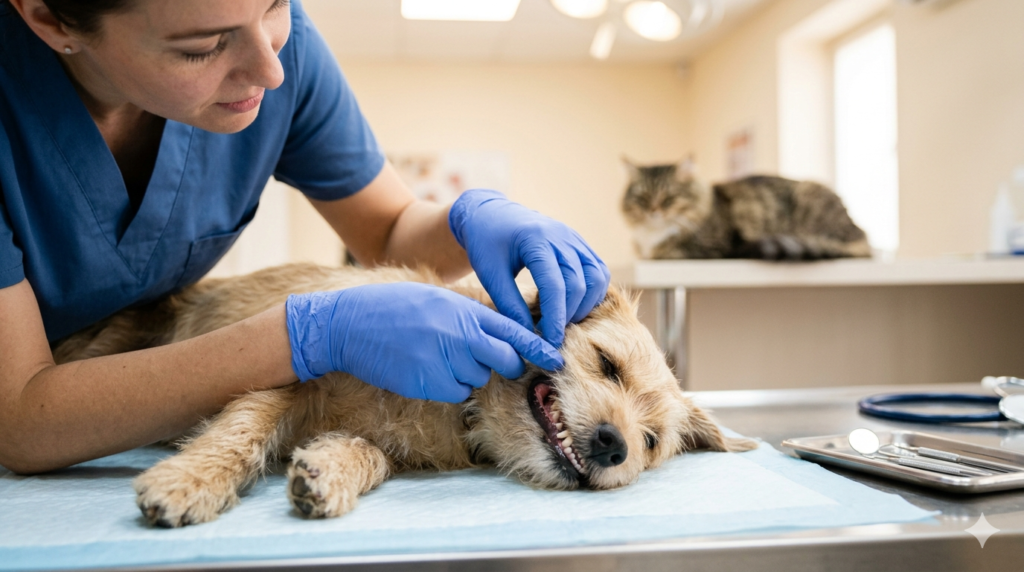
Most pet owners in Sacramento are diligent about vaccinations, flea prevention, and annual checkups. But there is one area of pet health that consistently gets overlooked until it becomes a crisis: dental care. At Del Paso Veterinary Clinic, Dr. Khabra sees the consequences of that blind spot almost daily — dogs with fractured teeth they have been chewing on for months, cats with inflamed gums that make every meal painful, and owners who had no idea anything was wrong because their pet never complained.
That is the tricky part about pet dental disease. Dogs and cats are hardwired to hide pain. By the time you notice something obvious — a refusal to eat, drooling, a foul smell when they yawn — the problem has usually been progressing for weeks or months beneath the surface. The American Veterinary Medical Association estimates that over 80 percent of dogs and 70 percent of cats show signs of dental disease by age three. That is not a fringe statistic. That is the majority of household pets walking around with some degree of oral pain that their owners cannot see.
This guide covers the warning signs you should actually look for, what professional pet dental care in Sacramento involves from start to finish, how dogs and cats differ when it comes to oral health, and what you can do at home between veterinary visits to keep your pet’s mouth in decent shape.
The Warning Signs Most Owners Miss
The obvious signs — loose teeth, visible bleeding, a pet that stops eating entirely — are late-stage indicators. By the time those symptoms appear, the disease has usually advanced well beyond the gum line. The earlier signs are subtler, and catching them can save your pet from significant pain and your wallet from more complex procedures down the road.
Bad breath that persists. A slight odor after your dog eats something questionable is normal. A consistently sour or rotten smell coming from your pet’s mouth is not. Persistent bad breath is one of the earliest and most reliable indicators of bacterial buildup, plaque accumulation, or an active infection beneath the gum line. If you find yourself pulling away when your dog breathes on you or your cat yawns near your face, that smell is telling you something specific.
Changes in eating behavior. Watch how your pet eats, not just whether they eat. A dog that suddenly prefers soft food over kibble, or a cat that tilts their head to one side while chewing, is likely compensating for mouth pain. Some pets will approach their food bowl eagerly — they are hungry — but walk away after a few bites because chewing hurts. Others start dropping food mid-chew. These behavioral shifts happen gradually, which is why they are easy to normalize as “getting older” when the real cause is dental.
Pawing at the face or mouth. If your pet repeatedly rubs their face against furniture, paws at their mouth, or flinches when you touch the area around their jaw, pain is the most likely explanation. This sign is especially common in cats with a condition called tooth resorption, where the tooth structure breaks down below the gum line.
Visible tartar and inflamed gums. Lift your pet’s lip and look at their teeth. Healthy gums are pink. If you see red, swollen tissue — particularly along the gum line where it meets the tooth — that is gingivitis. Yellowish-brown deposits on the tooth surface are tartar, which is mineralized plaque that can no longer be removed by brushing alone. A veterinary dental cleaning is the only way to address tartar buildup below and above the gum line effectively.
Drooling more than usual. Some breeds drool naturally, so you need to know your pet’s baseline. An increase in drooling — especially if the saliva is thick, discolored, or tinged with blood — points toward oral irritation or infection.
How Dog Dental Disease Differs from Cat Dental Disease
Dogs and cats both suffer from periodontal disease, but the specifics of how dental problems develop and present are different enough that they deserve separate consideration.
Dogs are more prone to fractured teeth. They chew on hard objects — bones, antlers, rocks, sticks — and the force can crack molars or canines. A fractured tooth exposes the pulp cavity, which contains nerves and blood vessels, creating an entry point for bacteria and a source of significant pain. Dogs also develop periodontal disease following a predictable progression: plaque forms, mineralizes into tartar, pushes beneath the gum line, and eventually erodes the bone supporting the tooth. Dog dental cleaning addresses this progression directly through ultrasonic scaling and subgingival cleaning.
Cats face a unique threat that dogs rarely encounter: feline tooth resorption. This condition affects an estimated 30 to 70 percent of cats at some point in their lives. The tooth’s own cells begin to break down enamel and dentin from the inside, creating painful lesions that are often invisible to the naked eye until the tooth is severely compromised. Cat teeth cleaning is complicated by this condition because the affected teeth frequently require extraction rather than just cleaning.
Cats are also notorious for hiding oral pain more effectively than dogs. A cat with advanced dental disease may show almost no outward signs other than subtle weight loss or a slight change in grooming habits. This makes regular wellness exams with an oral inspection even more critical for feline patients.
What Happens During a Professional Dental Cleaning
If you have searched for dental cleaning near me or dog teeth cleaning near me, you have probably seen a range of options from anesthesia-free cosmetic cleanings at pet stores to full veterinary dental procedures. The difference between these is significant, and understanding that difference matters.
A professional dental cleaning deep enough to actually treat and prevent disease requires general anesthesia. There is no shortcut around this. An awake animal will not hold still while instruments clean beneath the gum line — and that subgingival area is exactly where periodontal disease does its damage. Cosmetic cleanings that scrape visible tartar off the crown may make teeth look whiter, but they leave the disease-causing bacteria below the gums completely untouched.
At Del Paso Veterinary Clinic, a dental procedure follows a structured process. It begins with pre-anesthetic bloodwork run through our in-house lab to confirm your pet’s liver and kidneys can process anesthesia safely. Once your pet is under anesthesia with full monitoring — pulse oximetry, ECG, blood pressure, temperature, and capnography — Dr. Khabra performs a thorough oral examination, checking every tooth, the gum tissue, and the structures beneath the visible surface.
Ultrasonic scaling removes tartar deposits above and below the gum line. Hand instruments address areas that need more precision. Each tooth is then polished to create a smooth surface that resists future plaque adhesion. If Dr. Khabra identifies teeth that are fractured, severely diseased, or causing active pain, he discusses extraction options with you — drawing on 18 years of surgical experience to handle everything from simple removals to complex extractions on-site.
Most pets go home the same day with pain medication and clear aftercare instructions. The recovery period is surprisingly fast. Many owners report that their pet seems more energetic and willing to eat within a day or two — a sign that low-grade dental pain had been suppressing their quality of life long before anyone noticed.
Home Care Between Professional Cleanings
Professional dental cleanings address existing disease. Home care prevents new disease from gaining a foothold between those visits. The two are not interchangeable — they work together.
Brushing your pet’s teeth is the single most effective thing you can do at home. Use a pet-specific toothpaste (human toothpaste contains ingredients that are toxic to dogs and cats) and a soft-bristled brush or finger brush. Daily brushing is ideal. If your pet resists, three to four times per week still makes a measurable difference. Start slowly, reward generously, and keep sessions short. Most pets adapt within a couple of weeks if you are consistent.
Dental chews and treats approved by the Veterinary Oral Health Council (VOHC) can help reduce plaque between brushings. They are not a replacement for brushing or professional cleanings, but they add another layer of mechanical disruption to plaque formation. Choose products appropriate for your pet’s size to avoid choking risks.
Water additives designed for pet oral health can reduce bacterial load in the mouth. Ask your veterinarian which products they recommend, since effectiveness varies widely across brands.
When Dental Problems Need Immediate Attention
Some dental situations should not wait for a scheduled cleaning appointment. If your pet suddenly stops eating, has visible swelling around the jaw or under the eye, or you notice a broken tooth with exposed pulp, contact a veterinarian for urgent same-day care. A tooth root abscess can spread infection rapidly, and the swelling and pain escalate quickly.
Similarly, if your senior dog or cat has not had a dental evaluation in over a year, scheduling one sooner rather than later is a good idea. Older pets accumulate dental disease faster and tolerate the resulting pain less effectively. Dr. Khabra tailors anesthesia protocols specifically for senior patients to minimize risk while still providing thorough care.
Pet Dental Care and Overall Health — The Connection Most Owners Underestimate
Dental disease is not contained in the mouth. Bacteria from infected gums enter the bloodstream every time your pet chews, and those bacteria can settle in the heart, liver, and kidneys. Chronic periodontal disease has been linked to heart valve damage, kidney inflammation, and liver complications in both dogs and cats. This systemic connection is why veterinarians treat dental care as a core component of preventive health — not a cosmetic add-on.
A pet that receives regular dental care alongside routine wellness exams, vaccinations, and parasite prevention has a meaningfully better chance at a longer, more comfortable life. These are not isolated services. They form an integrated approach to keeping your pet healthy from every angle.
Frequently Asked Questions About Pet Dental Care in Sacramento
-
How do I know if my dog needs a dental cleaning?
Persistent bad breath, visible tartar buildup on the teeth, red or swollen gums, reluctance to chew hard food, and drooling more than usual are the most common indicators. However, many dogs show no obvious symptoms even with significant dental disease beneath the gum line. A veterinary oral exam is the most reliable way to assess whether your dog needs professional dental cleaning. Dr. Khabra checks dental health during every wellness visit at our Sacramento clinic.
-
Is anesthesia really necessary for cat teeth cleaning?
Yes. Cats will not tolerate instruments cleaning beneath the gum line while awake, and subgingival cleaning is where the actual disease treatment happens. Cosmetic scraping of visible tartar without anesthesia leaves disease-causing bacteria untouched below the gums. Modern veterinary anesthesia protocols with comprehensive monitoring make the procedure safe for most cats. Pre-anesthetic bloodwork helps identify any underlying conditions that might affect how your cat processes anesthesia.
-
At what age should I start dental care for my puppy or kitten?
Veterinarians recommend introducing tooth brushing at home as early as eight to twelve weeks of age, even before permanent teeth come in. The goal at that stage is building comfort with having their mouth handled. Professional dental evaluations should begin during your pet’s first wellness exam and continue annually. Most dogs and cats benefit from their first professional dental cleaning between one and three years of age, depending on breed and individual dental health.
-
How often do pets need professional dental cleanings?
Most dogs and cats need a professional dental cleaning every one to two years. Small breed dogs — chihuahuas, Yorkshire terriers, dachshunds — often require more frequent cleanings because their crowded teeth trap plaque and tartar more readily. Cats prone to tooth resorption may also need annual dental attention. Dr. Khabra creates a customized schedule based on your pet’s breed, age, oral health status, and how consistently you maintain home care between professional visits.
-
What is the difference between anesthesia-free dental cleaning and a full veterinary dental procedure?
Anesthesia-free cleanings remove visible tartar from tooth surfaces using hand tools while the pet is awake. They improve cosmetic appearance but cannot access the subgingival space where periodontal disease develops. A full veterinary dental procedure under anesthesia includes ultrasonic scaling above and below the gum line, hand scaling of difficult areas, polishing, thorough oral examination, and extractions if needed. Only the veterinary procedure treats and prevents actual dental disease progression.
-
Can dental disease in pets affect their overall health?
Absolutely. Bacteria from infected gums enter the bloodstream and can damage the heart valves, kidneys, and liver over time. Studies have consistently shown a connection between chronic periodontal disease and organ damage in both dogs and cats. This is why Sacramento veterinary dental services treat oral health as a medical necessity rather than cosmetic care. Keeping your pet’s mouth healthy protects their entire body from the systemic effects of ongoing bacterial infection.
Del Paso Veterinary Clinic is located at 924 Del Paso Blvd, Sacramento, CA 95815. To schedule a dental exam or discuss your pet’s oral health, call (916) 925-2107 or book an appointment online.