In-House Pet Diagnostics in Sacramento: How Modern Vet Labs Improve Pet Health
You drop your dog off Tuesday morning because she’s been throwing up for two days. She’s lethargic, off her food, and you’re worried it could be something serious. The veterinarian examines her, draws blood, and tells you the results will be back by lunchtime — not in three days.
That kind of turnaround used to be unusual. Today, in-house pet diagnostics in Sacramento are reshaping how quickly veterinarians can identify problems and start treatment. At Del Paso Veterinary Clinic, we run a fully equipped diagnostic lab on-site, which means the same blood panels, X-rays, and screening tests that used to take a day or longer to come back from an outside reference lab are usually ready before you finish your lunch break.
This guide covers what “in-house diagnostics” actually means inside a working veterinary practice, the tools that live in a modern lab, the conditions caught earlier because of them, and why test speed genuinely changes outcomes for dogs and cats.
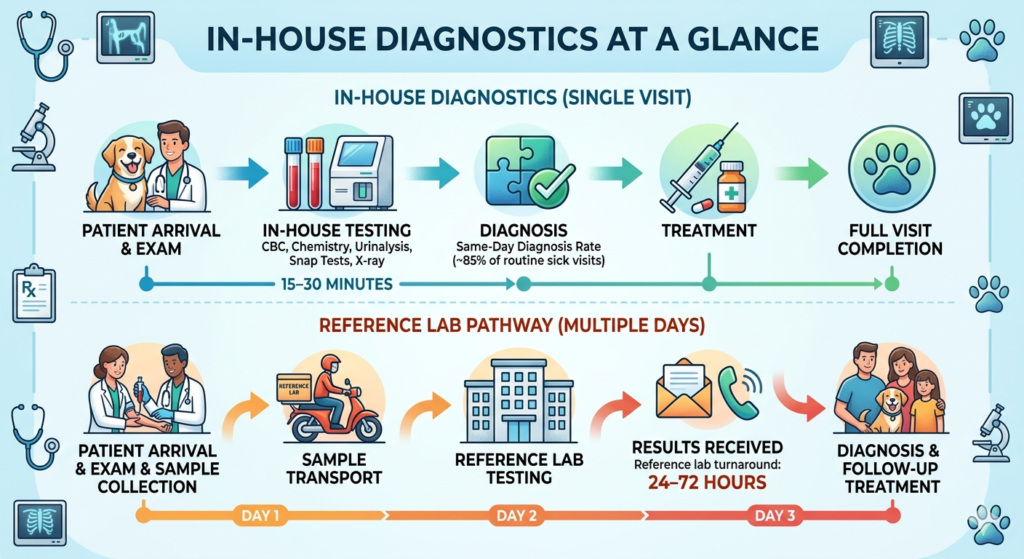
In veterinary medicine, “in-house” means the testing happens inside the clinic itself — on the same equipment, by the same team, in the same building where your pet is being examined. The opposite is a “reference lab,” where samples are shipped to a regional facility, processed, and reported back over the next 24 to 72 hours.
Both have a place. Reference labs offer specialty panels and rare assays no individual clinic can justify owning. But for the bulk of everyday work — bloodwork, urinalysis, imaging, cytology — in-house testing is faster, gives the veterinarian a real-time picture, and almost always changes how the visit ends. Our diagnostic laboratory services cover the most common testing needs under one roof.
When a dog comes in vomiting and you don’t yet know whether it’s a simple GI bug or pancreatitis, a 20-minute in-house chemistry panel decides whether your pet goes home with anti-nausea medication or stays for IV fluids. That’s not a small distinction.
The Core Tools Inside a Modern Veterinary Diagnostic Lab
A well-equipped in-house lab usually runs five or six categories of testing. Here’s what each does and why it matters.
Digital X-Ray (Radiography)
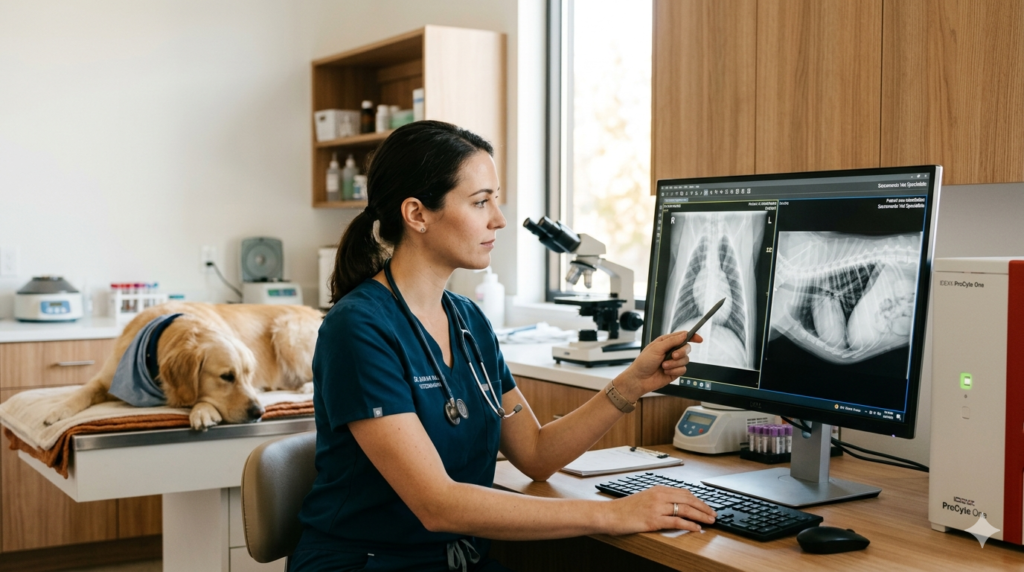
Digital X-ray for pets replaced film-based imaging more than a decade ago in most modern practices. Images appear on a screen within seconds, can be enlarged or contrast-adjusted, and are saved to the patient’s permanent file. They’re used to evaluate fractures, detect foreign objects (the sock your puppy ate), assess heart and lung shape, find bladder stones, and screen joints for arthritis.
Ultrasound Imaging
Where X-ray shows bones and shadows, ultrasound shows soft tissue in motion — the bladder filling, the heart contracting, fluid in an abdomen. Ultrasound vet services are essential for evaluating pregnancy, abdominal masses, the heart, and unexplained pain. It’s non-invasive, requires no sedation in most cases, and complements X-ray in nearly every diagnostic workup.
Complete Blood Count (CBC) and Chemistry Panels
Blood is the single most informative diagnostic sample in veterinary medicine. A CBC counts red cells, white cells, and platelets — flagging anemia, infection, or immune problems. A chemistry panel measures kidney values, liver enzymes, blood sugar, electrolytes, and protein levels. Together they form the backbone of nearly every sick visit, pre-anesthetic workup, and senior screening.
Cytology and Microscopy
A vet who can read slides on-site can answer questions in minutes that would otherwise require a courier. Skin cytology identifies bacterial or yeast infections. Ear cytology distinguishes between yeast otitis and bacterial otitis — critical, because they’re treated differently. Fine-needle aspirates of lumps can give early information about whether a mass looks benign or concerning.
Urinalysis, Fecal, and Snap Tests
Urinalysis catches early kidney disease, urinary tract infections, diabetes, and bladder crystals. Fecal exams identify intestinal parasites — important year-round in California’s mild climate. Snap tests provide same-visit answers for heartworm, parvovirus, FeLV/FIV in cats, and pancreatitis markers, usually in 10 minutes or less.
Why Same-Day Results Change Treatment Outcomes
Speed isn’t just convenience. It changes what a veterinarian can do during a single visit.
When bloodwork comes back during the appointment, the doctor can adjust the plan in real time — start IV fluids, prescribe a specific medication, schedule surgery for the next day, or send your pet home with peace of mind. Send-out labs force a wait-and-see approach, which sometimes means a sick pet gets supportive care for two days before the actual problem is identified.
Pets with diabetes, kidney disease, thyroid imbalances, or heart conditions need recurring labs. Running these in-house lets the veterinarian compare today’s values to last month’s during the same conversation with the owner — not in a callback the next afternoon. The American Animal Hospital Association’s chronic disease management guidelines consistently emphasize this kind of close, frequent monitoring.
In-House Diagnostics At a Glance
In-house bloodwork turnaround: 15–30 minutes
Reference lab turnaround: 24–72 hours
Same-day diagnosis rate (in-house labs): ~85% of routine sick visits
Most common in-house tests: CBC, chemistry, urinalysis, snap tests, X-ray
Common Conditions Caught Earlier With Faster Pet Diagnosis
Some conditions are easier to treat the earlier they’re identified. In-house diagnostics shift the discovery point closer to onset.
Cats hide kidney disease until 75% of kidney function is gone — they’re built that way. Routine bloodwork can flag rising creatinine and SDMA levels long before the cat shows symptoms. The same is true for diabetes, Cushing’s disease, and thyroid disorders, which a basic chemistry panel and urinalysis can catch in their asymptomatic phases.
A four-minute SNAP test screens for heartworm, Lyme disease, ehrlichia, and anaplasma in dogs. Sacramento County sees enough heartworm exposure that the American Heartworm Society recommends year-round prevention paired with annual screening.
For older pets with new heart murmurs, X-ray, ultrasound, and blood biomarkers can characterize the issue during the same visit. Routine senior bloodwork sometimes flags abnormalities that lead to early cancer detection, and same-day cytology of an unexpected lump can give an answer in twenty minutes instead of two days.
When Your Pet Needs Diagnostics — Beyond Sick Visits
People often think of diagnostics only when something’s wrong. They have a much broader role.
Every pet undergoing anesthesia benefits from a baseline workup. Bloodwork screens for hidden kidney, liver, or platelet problems that change anesthetic risk. Whether the procedure is a pet surgery near me consult or a routine spay, in-house pre-op labs give the surgeon current data to work from.
Dogs and cats age faster than people. Annual or semi-annual diagnostic screening for senior pet care catches age-related disease in the asymptomatic phase, when intervention is most effective.
Recurring itching, hot spots, and chronic ear infections benefit from fast in-house cytology to identify whether bacteria, yeast, mites, or allergies are driving the problem. Our pet dermatology workup almost always starts with bedside microscopy.
Even healthy pets benefit from baseline bloodwork. Knowing what “normal” looks like for your specific dog or cat makes future abnormalities easier to spot. Ask about diagnostic screening at your next pet wellness exam.
Annual fecal testing remains one of the most overlooked diagnostics. Our parasite prevention program includes routine screening because subclinical intestinal parasites are common in pets that look perfectly healthy.
Mochi’s Diagnosis — A Patient Story
Mochi, an eight-year-old domestic shorthair cat, came in for what her owner thought was a urinary problem — straining in the box, going more often. Standard urinalysis run in our in-house lab showed glucose where there shouldn’t be any. A chemistry panel run within the same hour confirmed elevated blood glucose. Mochi had new-onset feline diabetes.
Because the diagnosis happened in a single visit instead of after a callback two days later, her owner left with a treatment plan, an insulin prescription, dietary recommendations, and a follow-up schedule. By her recheck three weeks later, Mochi’s glucose was already trending in the right direction.
The takeaway isn’t that the diagnosis was unusual — feline diabetes is common. It’s that the speed of identification turned what could have been a vague “urinary issue” into a defined treatment plan within hours. That’s what in-house diagnostic capability buys.
In-House vs. Reference Lab Diagnostics — A Practical Comparison
Both serve a purpose. Here’s a side-by-side breakdown of how the two compare for typical small-animal practice:
A clinic with strong in-house capability can complete the diagnostic work for the vast majority of cases without ever touching a courier. Reference labs remain valuable for cases that need them — but they shouldn’t be the default for routine pet diagnostics in Sacramento.
How In-House Diagnostics Support Urgent Cases
Some of the highest-stakes moments in veterinary medicine involve urgent cases — a dog hit by a car, a cat with sudden breathing trouble, a senior pet that collapsed. The difference between a 20-minute in-house chemistry panel and a 24-hour send-out result can directly affect outcomes.
That’s why our urgent same-day care workflow leans heavily on in-house diagnostics: a blood gas, electrolytes, packed cell volume, and a quick chest X-ray during the first 30 minutes give the doctor enough information to start the right treatment immediately. The American Veterinary Medical Association’s animal health guidance consistently underscores the value of fast bedside diagnostics in critical cases.
Frequently Asked Questions
What does “in-house diagnostics” mean for my pet’s visit?
In-house diagnostics means the lab equipment, imaging tools, and microscopes used to diagnose your pet are physically at the clinic — not sent to an outside facility. Most routine bloodwork, urinalysis, X-rays, ultrasound, and SNAP tests can be completed during your visit, often within 15 to 30 minutes. The veterinarian can review results with you in person, adjust the treatment plan immediately, and avoid the wait of next-day callbacks from external labs.
How long does in-house bloodwork actually take?
A complete blood count and chemistry panel typically run in about 20 to 30 minutes once the sample is loaded into the analyzer. SNAP tests for heartworm, FeLV/FIV, parvo, or pancreatitis usually return results in 8 to 15 minutes. Imaging like digital X-rays appears on screen within seconds. The total turnaround for a standard sick-visit workup is usually under an hour, allowing diagnosis and treatment decisions during the same appointment instead of across multiple visits.
Are in-house results as accurate as reference lab results?
Yes, for the vast majority of routine tests. Modern in-house veterinary analyzers from manufacturers like IDEXX, Heska, and Abaxis are validated against reference-lab standards and undergo regular quality control. Reference labs still hold an edge for highly specialized panels — endocrinology profiles, certain cancer markers, complex microbiology — which are typically still sent out. For everyday CBCs, chemistries, and urinalyses, in-house results are clinically equivalent and substantially faster.
What kinds of tests still get sent to outside labs?
Highly specialized tests usually go to reference labs: detailed endocrinology panels, certain cancer biomarkers, complex microbiology cultures, biopsy histopathology, genetic testing, and rare infectious disease panels. These tests require equipment or expertise that’s rarely cost-effective for individual clinics. The veterinarian decides what’s run on-site versus sent out based on what your pet needs, balancing the speed of in-house results with the depth of specialty work that only reference labs can provide.
When should I expect my pet to need diagnostic testing?
More often than most owners realize. Diagnostic testing is recommended any time symptoms are unclear, before any anesthesia or surgery, during senior wellness visits, when monitoring chronic conditions, and as part of routine adult wellness care to establish a baseline. Pets with sudden behavior changes, weight loss, increased thirst, vomiting, or persistent skin issues almost always benefit from a workup. Discuss recommended frequency with your veterinarian based on your pet’s age, breed, and history.
Does my pet need to fast before in-house bloodwork?
It depends on the test. For most routine CBCs and chemistry panels, a 12-hour fast (water still allowed) is preferred because it gives more accurate cholesterol, triglyceride, and glucose readings. For urgent or sick visits, fasting is rarely required — getting the answer matters more than the cleanest sample. For pre-anesthetic screening, your clinic will give specific fasting instructions. When in doubt, ask before the appointment so the right preparation is in place.
The fastest path from “something’s wrong with my pet” to “here’s what we’re going to do about it” runs straight through a well-equipped in-house diagnostic lab.