
Searching for a vet near me in Sacramento usually happens at one of two moments: you have just brought home a new pet, or something feels off and you need help fast. Either way, the clinic you pick shapes every visit that follows, from routine checkups to the hard decisions no owner wants to face alone. This guide walks through what actually separates a good local practice from an average one, so you can book with confidence instead of guessing. Choosing well now saves you from switching clinics later, repeating records, and starting the trust-building process over from scratch.
Distance matters, but it is only the starting point. A clinic three minutes away is worthless if it cannot see your dog when he swallows something he should not have, or if the staff rush through appointments without answering your questions. The right fit balances proximity with the depth of care, communication style, and range of services your animal will need across its whole life. Below, we break the decision into the factors that carry the most weight, backed by what veterinary organizations recommend and what Sacramento pet owners consistently tell us matters most in 2026.
Why “Nearest” Is Not the Same as “Best”
Proximity is convenient, and in a genuine emergency, minutes count. But convenience alone is a weak reason to commit to a practice you will rely on for a decade or more. A veterinarian near me in Sacramento should be judged on whether it can grow with your pet, not just whether it sits on your commute.
Think about the full arc of pet ownership. A puppy or kitten needs a vaccination series, spay or neuter surgery, and parasite prevention. An adult animal needs annual wellness care and the occasional sick visit. A senior pet needs closer monitoring, bloodwork, and eventually compassionate end-of-life support. A clinic that handles all of that under one roof keeps your pet’s history in one place, which improves the quality of every decision a veterinarian makes. Scattered records across three different practices make it far harder to catch a slow trend, like gradual weight loss or a creeping kidney value, before it becomes a crisis.
The American Veterinary Medical Association, in its guidance on finding a veterinarian, stresses that a long-term veterinarian-client-patient relationship is one of the strongest arguments for choosing a primary practice and sticking with it. A veterinarian who has seen your dog every year recognizes what is normal for that specific animal, and that baseline is often what flags a problem early.
Green Flags and Red Flags: A Quick Comparison
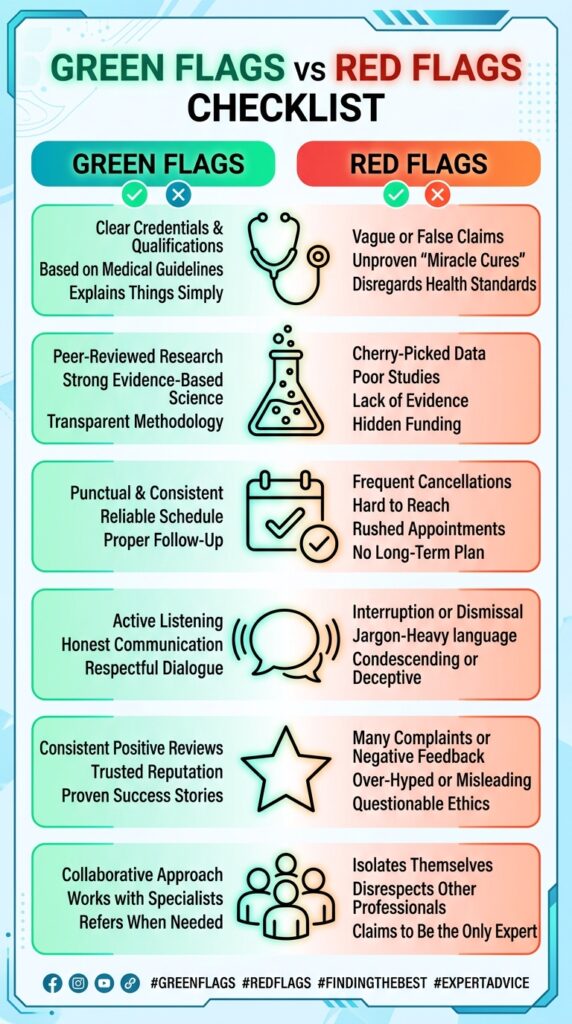
Before the deep dive, here is a fast reference for what to weigh when you compare local practices. Judge a clinic on the left column, not the distance on your map.
| Green flags (a practice worth booking) | Red flags (proceed with caution) |
|---|---|
| Licensed veterinarians and credentialed technicians | Vague or evasive answers about staff credentials |
| On-site diagnostics and bloodwork | Everything beyond a vaccine gets referred out |
| Same-day availability for sick pets | No sick-visit access for days at a time |
| Clear, patient communication that welcomes questions | Rushed calls, jargon, and pressure to decide fast |
| Consistent, recent reviews describing real experiences | Thin review history or a sudden spike of vague praise |
| Continuity so your pet sees a familiar team | High staff turnover and no record continuity |
Credentials, Team, and the Care Philosophy Behind the Front Desk
Any clinic you consider should be staffed by licensed veterinarians and credentialed veterinary technicians. In California, veterinarians are licensed through the Veterinary Medical Board, and that license is the floor, not the ceiling. Look for signs of ongoing investment: veterinarians who pursue continuing education, technicians who hold certifications, and a practice that keeps its diagnostic and surgical equipment current.
Culture matters just as much as credentials. On your first call or visit, notice how the team treats you. Do they explain things in plain language? Do they welcome questions instead of rushing you off the phone? A practice that respects your time and your intelligence tends to carry that same care into the exam room. When you look for a local vet you can trust long-term, the tone at the front desk is a surprisingly reliable preview of the whole experience.
Ask who sees your pet in an urgent situation, whether the same veterinarian follows your case through, and how the clinic handles referrals to specialists when something falls outside general practice. Clear answers signal a team that has thought carefully about how it delivers care.
Match the Services to Your Pet’s Real Needs
The single biggest mistake owners make is choosing a clinic before mapping out what their animal will actually need. A young, healthy cat has very different requirements from a senior dog with a heart murmur. Before you book, look at the clinic’s service list and check it against the road ahead.
Preventive and wellness care. This is the foundation. Annual or twice-yearly exams, vaccinations, and parasite screening catch problems while they are still cheap and easy to treat. A clinic with strong veterinary care near me as its backbone is investing in the kind of medicine that keeps pets out of the emergency room in the first place. Ask whether the practice sends reminders, tracks vaccine schedules, and builds a wellness plan tailored to your pet’s age and breed.
Same-day and urgent care. Emergencies do not schedule themselves. A clinic that offers same day vet appointment availability for sick pets is enormously valuable, because the alternative is often a long wait or an expensive after-hours facility across town. When you evaluate a practice, ask directly: if my pet is vomiting tomorrow morning, can I be seen that day? The answer tells you a lot about how the clinic prioritizes access.
Diagnostics under one roof. When a pet is unwell, speed of diagnosis changes outcomes. Clinics with an on-site laboratory can run bloodwork, urinalysis, and other tests during the visit rather than sending samples out and waiting days. In-house diagnostic testing means your veterinarian can often start treatment the same day, which is exactly what you want when your animal is clearly suffering.
Surgery and advanced procedures. At some point many pets need a procedure, whether it is a routine spay, a dental extraction, or something more involved. A practice that performs pet surgery in-house, with proper anesthetic monitoring and clear pre- and post-operative communication, spares you the stress of a cold handoff to an unfamiliar surgical center. Ask how the clinic monitors patients under anesthesia and what aftercare support it provides.
Senior and long-term care. Older pets are where the value of a well-chosen clinic really shows. Age brings arthritis, organ changes, dental disease, and the need for more frequent monitoring. A practice with dedicated senior pet care near me understands that a seven-year-old large-breed dog is entering a different life stage and adjusts its screening accordingly. Choosing a clinic that can walk this road with you means you will not be starting over with strangers when your pet needs continuity most.
Read Reviews Like a Veterinarian Would
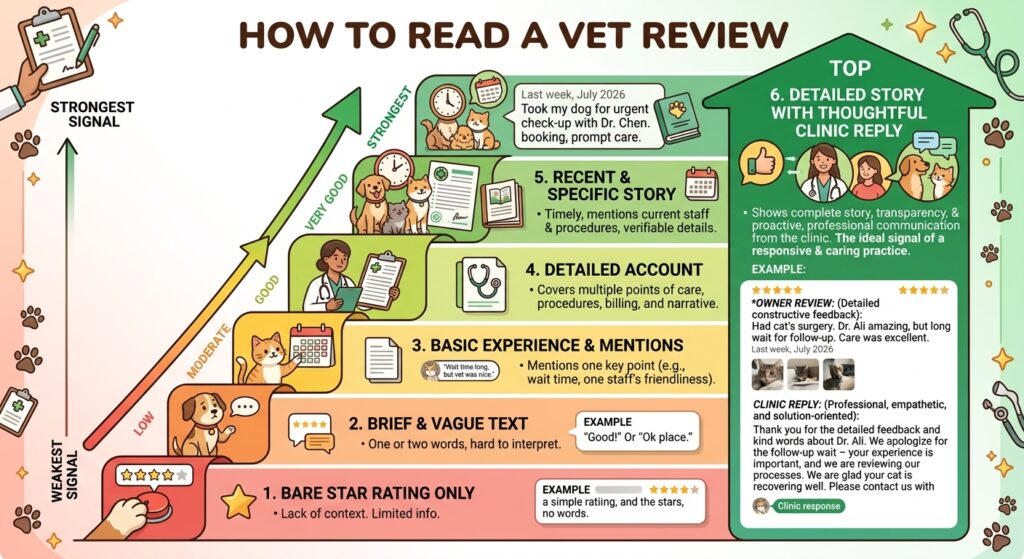
Online reviews are useful, but only if you read them well. A five-star average built on ten reviews tells you less than a 4.6 average across four hundred. Volume and recency matter, because they reflect a consistent pattern rather than a lucky streak or a single bad day.
Reviews are also a genuine ranking and trust signal, not just window dressing. Industry review research consistently finds that a majority of consumers read online reviews before choosing a local service provider, and that practices which respond promptly to feedback tend to earn stronger engagement. That means the way a clinic handles its reviews is itself a data point about how it will handle you.
Look past the star rating and into the substance. Reviews that mention specific things, like a technician who called to check on a pet after surgery, a veterinarian who sat on the floor to calm an anxious dog, or clear communication during a scary diagnosis, tell you far more than generic praise. Pay attention to how the clinic responds to criticism, too. A thoughtful, non-defensive reply to a negative review is a strong signal of a practice that takes accountability seriously.
Be skeptical of reviews that read as suspiciously uniform or that spike suddenly, and weigh the overall trend more than any single outlier. The ASPCA’s general pet care library offers a helpful grounding in what responsible care looks like, which pairs well with a careful read of local feedback.
Location, Hours, and Accessibility
Practical logistics deserve honest weight. A clinic you can reach quickly during a crisis has real value, and for owners searching a vet near me within 5 mi, that radius often reflects how far a stressed pet can comfortably travel. Consider parking, the ease of getting an anxious or large animal in and out, and whether the clinic’s schedule realistically fits your own.
Rather than memorize a clinic’s posted times, confirm current hours directly on its Google Business Profile before you drive over, since schedules shift around holidays and staffing. What you want to confirm is that the clinic’s general availability, including any weekend or extended weekday coverage, lines up with when you are most likely to need it. A practice that is only open when you are at work creates friction that eventually pushes owners toward less consistent care.
Communication, Transparency, and Comfort
The best clinical medicine in the world falls flat if you leave every visit confused. Strong communication is a genuine driver of how satisfied owners feel, and it is worth testing before you commit. During a first visit or phone call, notice whether the team explains findings clearly, walks you through options, and gives you space to decide without pressure.
Transparency around what a visit will involve, what tests are recommended and why, and what the next steps look like builds the trust that carries a relationship through hard moments. Fear-free and low-stress handling techniques, which more clinics now adopt, also make an enormous difference for anxious animals. The American Animal Hospital Association accredits practices against rigorous standards, and because fewer than 5,000 animal hospitals across the US and Canada hold that accreditation, it is a useful shorthand for a clinic that chooses to be measured against a higher bar than the legal minimum.
A Real Example: Choosing Under Pressure
When Sacramento resident Monica R. moved to the Del Paso Heights area with Biscuit, a nine-year-old beagle mix, she did what most people do and searched for the closest clinic. Biscuit had a history of ear infections and was starting to slow down on walks, so continuity and diagnostics mattered more than raw proximity.
Instead of booking the first result, Monica called two clinics. The first put her on hold twice and could not say when Biscuit could be seen. The second, Del Paso Veterinary Clinic, answered her questions directly, explained that they could run in-house bloodwork the same day if needed, and offered a wellness exam that week. During that first exam, the veterinarian caught early signs of dental disease and a mild kidney value worth watching, neither of which Monica had noticed. Because the clinic kept everything in one record, Biscuit’s follow-up bloodwork six months later showed the value had held steady, which reassured everyone that the monitoring plan was working.
Monica’s takeaway is one worth repeating: the clinic that answered thoughtfully on the phone turned out to be the one that caught problems early. The extra ten minutes she spent comparing was the best decision she made for Biscuit that year.
Questions to Ask Before You Book
A short phone call answers most of what you need to know. Consider asking:
- New patients: Are you accepting new patients, and how soon can I get a first appointment?
- Sick visits: Can you see sick pets the same day, and what happens after hours?
- Diagnostics: Do you run bloodwork and other diagnostics on-site?
- Surgery: Do you perform surgery and dental procedures in-house?
- Handling: How do you handle anxious or fearful animals?
- Continuity: Will my pet see the same veterinarian each visit where possible?
The answers, and the tone in which they are given, will separate the clinic you will happily stay with from the one you will quietly leave within a year.
Frequently Asked Questions
-
How do I find the best vet near me in Sacramento?
Start by matching a clinic’s services to your pet’s full life stage rather than choosing on distance alone. Look for licensed veterinarians, on-site diagnostics, same-day sick visits, and strong, recent reviews that mention specific care experiences. Call two or three practices and notice how clearly they answer your questions. The clinic that communicates well on the phone usually delivers that same care in the exam room.
-
What should I look for when choosing a veterinary clinic?
Prioritize continuity of care, a broad service range, and transparent communication. A good clinic keeps your pet’s full history in one place, offers preventive care, urgent visits, diagnostics, and surgery, and explains findings in plain language. Credentials are the baseline, but culture and accessibility often decide whether a practice is one you will actually stick with over the years.
-
How important are online reviews when picking a vet?
Reviews are valuable when you read them well. Weigh volume and recency over a perfect star average, since a large body of consistent feedback reflects a real pattern. Focus on reviews that describe specific experiences, and notice how the clinic responds to criticism. A thoughtful reply to a negative review signals accountability, which matters more than any single glowing or angry comment.
-
Should I choose a vet before my pet gets sick?
Yes. Establishing a relationship with a clinic while your pet is healthy means a veterinarian already knows your animal’s normal baseline when something changes. That history helps catch problems early and spares you from scrambling to find care during a stressful emergency. A first wellness visit is the ideal moment to evaluate the clinic and build the trust you will lean on later.
-
What makes a vet clinic good for senior pets?
Senior pets benefit from more frequent monitoring, routine bloodwork, and clinicians who understand age-related changes like arthritis, dental disease, and organ decline. Look for a practice that adjusts its screening as pets age and keeps consistent records over time. Continuity is especially valuable in the senior years, when subtle trends in weight, appetite, or lab values often signal the earliest stages of a treatable condition.
-
How close does a vet need to be to me?
Proximity helps most in emergencies, when travel time genuinely matters, so many owners sensibly search within a few miles of home. Beyond that, weigh distance against service depth, communication, and continuity. A slightly farther clinic that handles diagnostics, surgery, and senior care in-house often serves your pet better than the nearest option that refers everything out. Balance convenience with the quality of care you will rely on for years.
The best time to choose your vet is before you ever urgently need one, so make the call while your pet is well.