
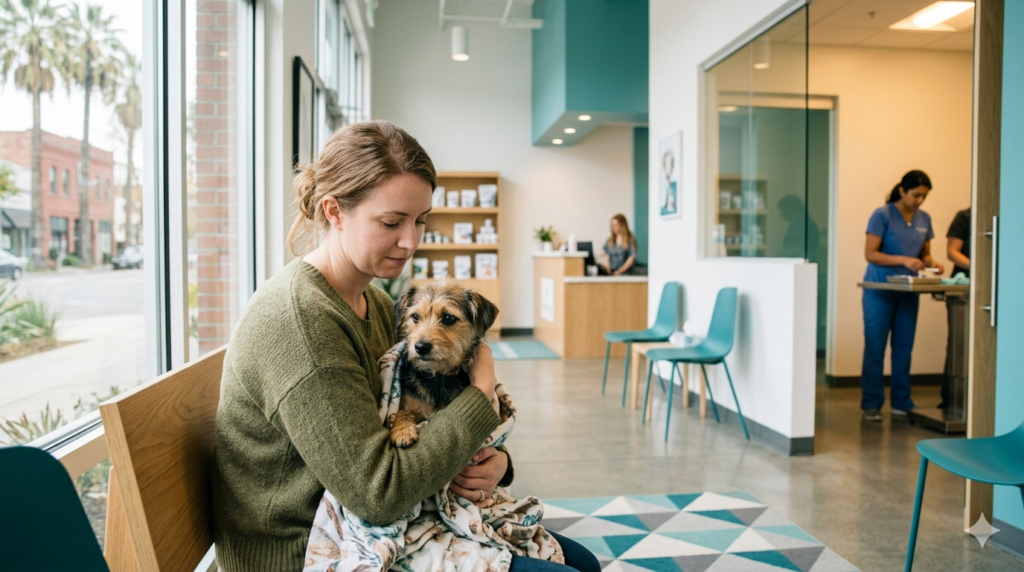
If you have ever watched your dog suddenly refuse to put weight on a leg, or noticed your cat breathing faster than usual on a Saturday morning, you already know how that panic feels. The mental math starts immediately — is this an emergency? Can it wait until Monday? Where do I even take them right now?
Living in Sacramento, you are fortunate to have options. But knowing which option fits your situation is the part most pet owners struggle with. That gap between “this seems off” and “we need the ER” is exactly where urgent pet care fills a critical role — and it is the space most people misunderstand.
This guide breaks down everything Sacramento pet owners need to know about urgent and same-day veterinary care. We will cover when to act, what qualifies as urgent versus a true emergency, what you can do at home before you leave, and how Del Paso Veterinary Clinic handles same-day cases for dogs and cats throughout the Sacramento area.
Urgent Care vs. Emergency Care — Why the Difference Matters
Most pet owners use the words “urgent” and “emergency” interchangeably. Veterinary professionals do not, and understanding the distinction can save you hundreds of dollars and a lot of unnecessary stress.
Emergency veterinary care involves life-threatening situations. Think uncontrolled bleeding, seizures lasting more than three minutes, suspected poisoning, difficulty breathing, or being hit by a vehicle. These cases require an emergency animal hospital with 24-hour staffing, overnight monitoring, and critical care equipment. Sacramento has several dedicated emergency veterinary hospitals for exactly these situations.
Urgent veterinary care covers everything that needs attention today but is not immediately life-threatening. A dog with a swollen ear that is shaking its head nonstop. A cat that has been vomiting since this morning. A limp that appeared after a jump off the couch. A wound from a scuffle at the dog park that needs cleaning and possibly stitches.
These situations absolutely require professional attention, but they do not typically need the overhead and cost of an emergency room visit. This is exactly where a same-day vet appointment at a general practice becomes the smartest move. If you are searching for an emergency vet in Sacramento and your pet is stable but clearly uncomfortable, same-day urgent care is often the better fit.
When Your Pet Needs to Be Seen Today
Knowing the warning signs helps you make faster decisions. Here are the situations where a same-day vet visit is warranted — not next week, today.
Digestive Distress That Will Not Quit
A single episode of vomiting after eating grass is usually nothing. But when your dog has vomited three or four times in a few hours, or your cat has had diarrhea for more than a day, dehydration becomes a real concern quickly. Pets — especially smaller breeds and kittens — can decline faster than people expect.
Limping or Sudden Lameness
If your pet woke up fine and is now refusing to bear weight on a limb, something happened. It could be a soft tissue injury, a sprain, or something more involved. The longer you wait, the harder it becomes for a veterinarian to assess whether the injury is muscular or skeletal, because swelling obscures the clinical picture.
Eye and Ear Issues
Red, swollen, or weepy eyes need prompt evaluation because certain conditions — corneal ulcers in particular — can worsen within hours. Similarly, ear infections that have your dog scratching and whimpering deserve same-day attention. Left untreated for even a few days, a simple outer ear infection can push deeper and become significantly more painful and expensive to treat.
Skin Wounds and Bite Injuries
Any wound that breaks the skin, especially bite wounds from another animal, carries infection risk. Cat bites are notorious for this — they create small puncture wounds that seal over quickly on the surface while bacteria multiply underneath. Cleaning and antibiotics within the first several hours make a meaningful difference in outcomes.
Sudden Behavior Changes
A normally playful dog that is suddenly lethargic and hiding. A cat that has stopped eating entirely for more than 24 hours. A pet that cries or snaps when you touch a specific area. These behavioral shifts almost always indicate pain or illness that a veterinarian needs to evaluate.
Pet First Aid: What You Can Do Before the Vet Visit
Here is where most online guides fall apart — they either scare you into doing nothing or suggest treatments that belong in a clinical setting. Practical pet first aid is about stabilization, not treatment. Your job is to keep things from getting worse on the way to the veterinarian.
For Wounds and Bleeding
Apply gentle, direct pressure with a clean cloth. Do not use hydrogen peroxide on wounds — despite the old advice, it damages healthy tissue and slows healing. If a wound is bleeding heavily and pressure alone is not controlling it, wrap the area firmly (not tightly enough to cut off circulation) and head to the vet immediately.
For Vomiting and Diarrhea
Withhold food for two to four hours to let the stomach settle, but keep fresh water available. If your pet will not drink water on their own and seems lethargic, that is your signal to get to a veterinarian near me rather than continuing to wait it out.
For Suspected Poisoning
Do not induce vomiting unless a veterinarian or poison control hotline specifically instructs you to do so. Some substances cause more damage coming back up. If you can, bring the packaging or a photo of whatever your pet ingested. This information saves valuable diagnostic time.
For Limping
Restrict your pet’s movement. No walks, no stairs, no jumping on or off furniture. Carry smaller pets. Crate larger dogs if they are crate-trained. Cold compresses wrapped in a towel can be applied to a visibly swollen area for ten minutes at a time while you arrange your vet visit.
What Happens During an Urgent Vet Visit
If you have never brought a pet in for same-day urgent care, it helps to know what to expect so you arrive prepared.
The veterinarian starts with a focused physical examination — targeted to the presenting problem rather than a full annual wellness workup. Vitals are checked, the affected area is examined, and the vet asks detailed questions about timeline, appetite, bathroom habits, and any recent changes in environment or routine.
Depending on what the exam reveals, same-day diagnostics may be recommended. Practices with in-house diagnostics and lab capabilities can run bloodwork, urinalysis, and imaging on the spot rather than sending samples to an outside laboratory and waiting days for results. This is a significant advantage for urgent cases where a rapid answer changes the treatment plan.
For injuries or masses that require intervention beyond wound care and medication, the veterinarian may recommend veterinary surgical services. Not every urgent visit leads to surgery, but having that capability available in-house means your pet does not need to be transferred to a separate facility and re-examined by an unfamiliar team.
Urgent Care for Dogs vs. Cats — Different Animals, Different Signals
Dogs tend to broadcast pain more obviously. They whimper, limp visibly, pant excessively, or lose interest in food. Cats are a different story entirely.
Cats evolved to hide illness. In the wild, a sick cat is a vulnerable cat. That evolutionary wiring means your housecat may be seriously unwell before you notice anything beyond a subtle change — sleeping in an unusual spot, eating slightly less, being a little quieter than normal. By the time a cat is visibly ill, the problem has often been developing for days.
This is why veterinary professionals strongly encourage cat owners to act faster on subtle changes. If your normally social cat has been hiding under the bed for two days, that warrants urgent care for cats at a vet clinic, not a “let’s see how she does tomorrow” approach.
For dogs, the urgency signals are usually more straightforward. Sudden onset of any of the symptoms described above — vomiting, lameness, visible pain, wounds, eye or ear issues — means today is the day to call for a same-day vet appointment.
How to Choose the Right Urgent Care Vet in Sacramento
Not all veterinary clinics handle same-day urgent cases, and the ones that do vary in how they manage the workflow. When you are searching for a vet near me open now, ask these questions before you drive across town:
Can they actually see your pet today? Some clinics advertise urgent care but book two weeks out. A clinic that reserves appointment slots specifically for same-day urgent cases is what you need.
Do they have diagnostic equipment on-site? If your pet needs X-rays or blood panels, you want results in minutes, not days. In-house lab capability is a major differentiator for urgent situations.
Who is performing the exam? Ideally, a licensed veterinarian — not a technician screening before a vet is available later in the week.
What is their scope? Some urgent care clinics handle only minor issues. A full-service animal hospital in Sacramento that also offers surgery, dental work, and advanced diagnostics gives you more options under one roof if the urgent visit reveals something that needs further treatment.
At Del Paso Veterinary Clinic, same-day appointments are built into how the practice operates. Dr. Khabra and his team see urgent cases alongside scheduled visits, which means pet owners throughout Sacramento — from Natomas and Del Paso Heights to Arden-Arcade and West Sacramento — can get their pet evaluated quickly without the wait and cost of an emergency hospital.
Preventing Future Urgent Visits: The Role of Routine Care
Urgent care exists because not everything is preventable. But a significant number of urgent vet visits could have been avoided — or at least made less severe — with consistent preventive care.
Regular wellness exams at a pet clinic in Sacramento catch developing conditions before they become urgent. Bloodwork during an annual checkup can reveal early kidney changes in a senior cat months before symptoms appear. A dental exam might identify a cracked tooth before it abscesses and causes a painful emergency.
Keeping vaccinations current through a walk-in vaccine clinic protects against diseases like parvovirus and distemper that still circulate in the Sacramento region — diseases that absolutely qualify as emergencies when they strike an unvaccinated pet.
Parasite prevention, maintaining a healthy weight, and staying on top of age-related changes all reduce the odds that your next vet visit will be an urgent one. None of this eliminates risk entirely, but it shifts the probability in your favor.
What Sacramento Pet Owners Get Wrong About Urgent Care
There are a few persistent misconceptions worth addressing directly.
“I should just go to the emergency vet to be safe.” If your pet is stable, conscious, breathing normally, and the issue is clearly non-life-threatening, the emergency room is not the best use of your time or money. Emergency hospitals are designed for critical cases. You will often wait longer and pay more for a condition that your regular vet or an urgent care veterinarian could handle that same day.
“If my pet is still eating, it can wait.” Appetite is one indicator of wellbeing, but it is not the only one. Plenty of dogs will eat through significant pain. Cats with urinary blockages — a genuine life-threatening condition — may still nibble at food in the early stages. Eating does not mean everything is fine.
“The internet says to wait 24–48 hours.” Generic online advice cannot examine your specific pet. If your gut says something is wrong, trust that instinct. A brief phone call to your vet can often clarify whether you need a same-day appointment or can safely monitor at home.
Frequently Asked Questions About Urgent Pet Care in Sacramento
-
What counts as urgent pet care vs. an emergency?
Urgent pet care addresses health concerns that need same-day attention but are not immediately life-threatening. Examples include persistent vomiting, sudden limping, minor wounds, ear infections, and eye irritation. True emergencies involve uncontrolled bleeding, seizures, difficulty breathing, suspected poisoning, or trauma from being hit by a vehicle. When in doubt, call your veterinarian near me for guidance on the right level of care.
-
Can I get a same-day vet appointment in Sacramento without calling ahead?
Most veterinary clinics require at least a phone call to schedule a same-day urgent visit. Calling ahead helps the team prepare for your pet’s specific situation and ensures a veterinarian is available. Some Sacramento veterinary practices do keep same-day appointment slots open specifically for urgent cases, so availability is often better than pet owners expect.
-
What should I bring to a same-day vet visit for my pet?
Bring any medications your pet currently takes, a list of symptoms you have observed and when they started, vaccination records if available, and anything your pet may have ingested if poisoning is suspected. Having this information ready helps the veterinarian make faster and more accurate decisions during a veterinary urgent care visit without unnecessary delays.
-
How do I know if my pet needs the emergency vet or urgent care?
Assess your pet’s breathing, consciousness, and the severity of any bleeding. If your pet is unconscious, having a seizure, struggling to breathe, bleeding heavily, or may have been poisoned, go directly to an emergency animal hospital. For stable pets showing concerning but non-critical symptoms like vomiting, limping, or sudden lethargy, a same-day appointment at your regular vet is typically the appropriate and more accessible option.
-
Is urgent pet care near me more affordable than an emergency vet hospital?
Generally, yes. Emergency veterinary hospitals in Sacramento operate around the clock with specialized staffing, and their fees reflect that overhead. Urgent care at a regular veterinary clinic during business hours typically costs significantly less for the same quality of examination and treatment. This makes same-day vet appointments a practical choice for pet owners who want prompt care without emergency-level costs.
-
My cat seems slightly off but is still eating — should I wait or go in?
Do not wait. Cats instinctively mask illness, and subtle changes in behavior often indicate a problem that has been developing for days. If your cat is hiding more than usual, sleeping in odd locations, eating less (even slightly), or seems quieter than normal, schedule urgent care for cats the same day. Early intervention for feline health issues consistently leads to better outcomes and lower treatment costs.