
There is a question that comes up at nearly every first appointment with a new client, and it sounds deceptively simple: “How often should I actually bring my pet in?”
The honest answer is that it depends — on your pet’s age, breed, health history, and lifestyle. A two-year-old indoor cat and a ten-year-old Labrador that spends weekends at the river have very different needs. But what does not change is the underlying principle: routine pet checkups are the single most effective way to catch problems before they become expensive, painful, or irreversible.
At Del Paso Veterinary Clinic, we have been guiding Sacramento pet owners through preventive care decisions since 1940. That is more than eight decades of seeing what happens when families stay on top of wellness visits — and what happens when they don’t. This guide lays out exactly how often your pet needs to see a veterinarian, what happens during those visits, and why the schedule changes as your pet ages.
Why Routine Pet Checkups Matter More Than Most Owners Realize
Here is something that catches a lot of pet owners off guard: by the time you notice symptoms at home, the underlying condition has often been progressing for weeks or months.
Dogs and cats are hardwired to mask discomfort. It is an evolutionary survival mechanism — showing weakness in the wild makes you a target. That instinct does not disappear because your golden retriever sleeps on a memory foam bed. Your pet can be walking around with early kidney disease, a developing heart murmur, or a dental infection that is silently destroying bone — and still greet you at the door with a wagging tail.
This is exactly what preventive vet care is designed to address. A wellness exam is not just a quick once-over to confirm your pet looks healthy. It is a structured, head-to-tail evaluation that catches the things you cannot see, hear, or feel at home. Blood chemistry shifts. Heart sounds that weren’t there six months ago. A lump beneath the fur that is half a centimeter today but could be three centimeters by autumn.
The math on preventive care is straightforward. Catching a kidney value trending upward during routine bloodwork costs a fraction of managing full-blown renal failure a year later. Identifying a dental issue early with Sacramento veterinary dental services prevents the tooth abscess that eventually requires extraction under general anesthesia.
Preventive care does not eliminate every health crisis. But it stacks the odds in your pet’s favor in a way that nothing else can.
The Wellness Exam Schedule: Puppies, Adults, and Seniors
There is no single answer to “how often,” because your pet’s life stage fundamentally changes what their body needs.
Puppies and Kittens (Birth to 1 Year)
This is the most visit-intensive period of your pet’s life, and for good reason. Young animals need a series of vaccinations to build immunity, and those shots are spaced several weeks apart. A typical puppy or kitten will visit the vet every three to four weeks from roughly eight weeks old through sixteen weeks.
These visits are not just about vaccines, though. Each appointment is an opportunity to monitor growth, check for congenital issues that may not have been apparent at birth, discuss nutrition, and get ahead of behavioral habits before they solidify. Veterinarians also use these early visits to establish a relationship with both the pet and the owner — so that when something goes wrong later, you are calling someone who already knows your animal’s baseline.
During this stage, your veterinarian will typically recommend pet vaccination services on a specific schedule tailored to your pet’s risk factors. Core vaccines for dogs include DHPP and rabies. For cats, FVRCP and rabies are standard. Additional vaccines like bordetella, leptospirosis, or feline leukemia depend on your pet’s environment and exposure level.
Adult Pets (1 to 7 Years)
Once the puppy and kitten vaccination series is complete and your pet is spayed or neutered, the standard recommendation is one wellness exam per year. Think of it like an annual physical for yourself — except your pet ages five to seven years for every one of yours, so annual is actually a bare minimum.
A yearly annual pet checkup in Sacramento typically includes a complete physical examination, weight assessment, dental evaluation, vaccination boosters as needed, and a discussion of any changes you have noticed at home. For adult pets, this is also when baseline bloodwork becomes valuable. Running a blood panel when your pet is healthy establishes normal reference ranges, so when something changes later, your vet has a comparison point.
This is also the life stage where parasite prevention matters most in Sacramento’s climate. The Central Valley’s warm temperatures extend the flea and tick season well beyond what pet owners in cooler regions deal with. Year-round flea and tick prevention is not just recommended here — it is considered essential by most Sacramento veterinarians. Heartworm prevention falls into the same category, especially for dogs that spend time outdoors along the American River or in park areas where mosquitoes are active from March through November.
Senior Pets (7+ Years)
This is where the visit frequency should increase, and it is also where many pet owners fall behind.
Dogs and cats over seven years old — or over five for large and giant breed dogs — should be seen twice a year. Their bodies are changing faster, and the conditions that develop during this stage (arthritis, thyroid disorders, kidney disease, diabetes, cognitive decline) benefit enormously from early detection.
Semi-annual wellness exams for senior pets are not just a repeat of the annual visit done more often. They involve more comprehensive diagnostics — full blood panels, urinalysis, and sometimes imaging. The goal is to track trends over time. A single blood value might be within the normal range but still be climbing steadily compared to six months ago. That trend is the early warning, and it is only visible when you have multiple data points.
Veterinary care for senior pets also involves candid conversations about quality of life, pain management, mobility support, and nutritional adjustments. These are the visits that genuinely extend both the length and quality of your pet’s remaining years.
What Actually Happens During a Pet Wellness Exam
If you have never been through a thorough wellness exam — or if your previous vet rushed through appointments in ten minutes — here is what a proper preventive visit looks like.
The Physical Examination
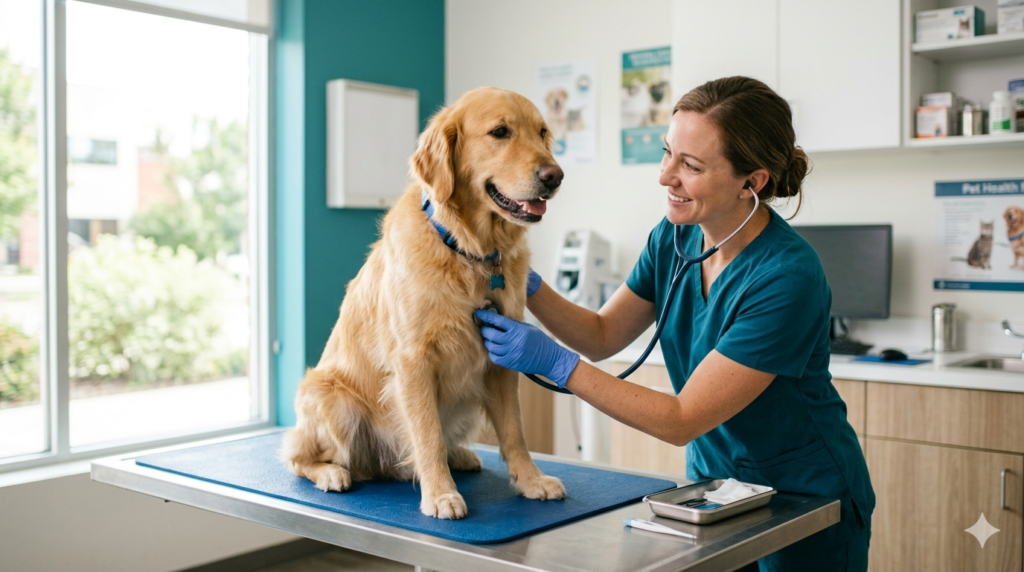
The veterinarian works systematically from nose to tail. Eyes are checked for clarity, discharge, and pupil response. Ears are examined for signs of infection, mites, or polyps. The mouth and teeth are evaluated for tartar buildup, gum disease, fractured teeth, and oral masses. Lymph nodes are palpated for swelling. The heart and lungs are auscultated with a stethoscope — this is how murmurs, arrhythmias, and respiratory abnormalities are detected. The abdomen is palpated for organ enlargement, masses, or pain responses. Joints and limbs are manipulated to assess range of motion. Skin and coat condition are evaluated, and any lumps or bumps are measured, mapped, and documented for comparison at the next visit.
This entire process takes ten to fifteen minutes when done correctly, and it provides an enormous amount of clinical information.
Diagnostics and Bloodwork
For adult and senior pets, the veterinarian may recommend diagnostics run through an in-house diagnostic lab. In-house capability means results come back the same day — often within minutes — rather than being sent to an outside laboratory with a multi-day turnaround.
Standard wellness bloodwork typically includes a complete blood count (CBC), which evaluates red and white blood cells and platelets, and a chemistry panel, which assesses organ function including kidneys, liver, pancreas, and blood glucose. For senior pets, thyroid levels and urinalysis are usually added. These numbers, compared against your pet’s own historical baselines, tell a story that the physical exam alone cannot.
Weight and Nutrition Assessment
This gets overlooked more often than it should. Pet obesity is one of the most common preventable health problems veterinarians deal with, and it contributes to joint disease, diabetes, respiratory problems, and shortened lifespan. A wellness exam includes an honest evaluation of your pet’s body condition score and a frank conversation about diet, treats, and exercise if adjustments are needed.
Preventive Care Beyond the Exam Room
A wellness exam is the foundation, but long-term pet health involves consistent preventive measures between visits.
Vaccination boosters keep immunity current against diseases that still circulate in the Sacramento region. Parvovirus, distemper, and rabies are not historical curiosities — unvaccinated pets are genuinely at risk. Your vet’s vaccine recommendations are based on your pet’s specific exposure profile, not a one-size-fits-all protocol.
Parasite prevention is a year-round commitment in Sacramento. Fleas, ticks, intestinal worms, and heartworms are all present in this area. A missed month of prevention is a gamble, and the treatment for an established heartworm infection in a dog is far more involved and stressful than the monthly preventive that would have stopped it.
Dental care between visits — or at least being aware of what to watch for — reduces the likelihood that your pet’s annual dental evaluation turns up advanced periodontal disease. Bad breath, difficulty eating, drooling, and pawing at the mouth are all signals that warrant attention before the next scheduled checkup.
What Happens When Wellness Visits Get Skipped
There is no judgment in this section — life gets busy, pets seem healthy, and it is easy to push a vet visit to next month indefinitely. But the clinical reality is that skipped wellness visits are where preventable conditions slip through.
A cat that has not been seen in two years might come in for vomiting and leave with a diagnosis of chronic kidney disease that has already progressed to a stage where management options are limited. A dog that skipped its annual exam last year might present with a mass that was marble-sized twelve months ago but is now the size of a golf ball and has become attached to underlying tissue.
These are not worst-case scenarios pulled from a textbook. They are the kinds of cases veterinary teams see regularly, and they are the reason every veterinarian you will ever meet advocates for consistent preventive care. Staying on schedule with routine checkups does not guarantee a problem-free life for your pet, but it gives your veterinarian the chance to intervene at a stage where intervention is most effective and least invasive.
Comparing Sacramento Preventive Care Options: What to Look For
Not all wellness visits are equal. When evaluating a veterinary animal hospital near me for your pet’s preventive care, consider these factors:
Continuity of care. Seeing the same veterinarian consistently means that doctor knows your pet’s history, temperament, and baseline health. They can spot changes that a new vet meeting your pet for the first time would miss. Practices where you see a different vet every visit lose that advantage.
In-house diagnostics. Clinics with their own laboratory and imaging equipment provide faster results during wellness visits. If bloodwork reveals something concerning, your vet can discuss it with you the same day rather than calling three days later when you may not remember the visit’s details clearly.
Comprehensive approach. A wellness visit should include more than a stethoscope and a vaccine. You want a clinic that does a full physical, discusses nutrition, assesses dental health, reviews parasite prevention, and adjusts the care plan as your pet ages. That comprehensive approach is what separates a genuine preventive care program from a quick annual shot appointment.
Willingness to educate. The best preventive vet care happens when the veterinarian treats pet health tips as a two-way conversation, not a lecture. You should leave every wellness visit understanding what was found, what it means, and what to watch for at home before the next appointment.
Frequently Asked Questions About Pet Wellness Exams
-
How often should a healthy adult dog or cat visit the veterinarian?
Healthy adult pets between one and seven years old should have a comprehensive wellness exam at least once per year. This annual visit includes a full physical examination, vaccination updates, weight and dental assessment, and a discussion of any behavioral or lifestyle changes. Annual baseline bloodwork is also recommended for adult pets so your veterinarian has comparison data if health concerns arise between visits.
-
At what age should my pet start getting twice-yearly checkups?
Most veterinarians recommend switching to semi-annual wellness exams when dogs and cats reach seven years of age. Large and giant breed dogs should start at five years because they age faster physiologically. These more frequent visits allow your veterinarian to track trends in bloodwork, monitor joint health, and detect age-related conditions like kidney disease, thyroid imbalances, and early cognitive changes before symptoms become obvious at home.
-
What vaccinations does my pet need during a wellness visit in Sacramento?
Core vaccines for dogs in Sacramento include DHPP and rabies, with additional recommendations for bordetella, leptospirosis, and canine influenza depending on lifestyle and exposure. Cats typically receive FVRCP and rabies as core vaccines, with feline leukemia recommended for cats that go outdoors. Your veterinarian tailors the vaccination schedule to your pet’s specific risk factors rather than following a generic one-size-fits-all protocol.
-
Why does my vet recommend bloodwork if my pet seems perfectly healthy?
Bloodwork during wellness visits establishes your pet’s individual baseline values for organ function, blood cell counts, and metabolic markers. Pets instinctively hide illness, so external appearance alone is an unreliable indicator of internal health. A liver value or kidney marker that is technically within normal range but climbing steadily compared to the prior year is a meaningful finding — one that only appears when your veterinarian has historical data to compare against current results.
-
Is flea and tick prevention really necessary year-round in Sacramento?
Yes. Sacramento’s Central Valley climate supports flea and tick activity for the vast majority of the year, unlike colder regions with a true winter freeze that interrupts the parasite lifecycle. Skipping prevention during cooler months creates gaps where infestations can establish and become significantly harder to control. Year-round protection also guards against tick-borne diseases that have been documented in the greater Sacramento region.
-
Can I combine my pet’s wellness exam with other preventive services like dental cleaning?
In many cases, yes. Your veterinarian can assess during the wellness exam whether your pet needs a professional dental cleaning and may be able to schedule it shortly after. However, dental cleanings require general anesthesia, so pre-anesthetic bloodwork — which may already be part of your wellness visit panel — needs to confirm your pet is a safe candidate. Combining services when clinically appropriate reduces the number of separate visits and anesthesia events for your pet.